
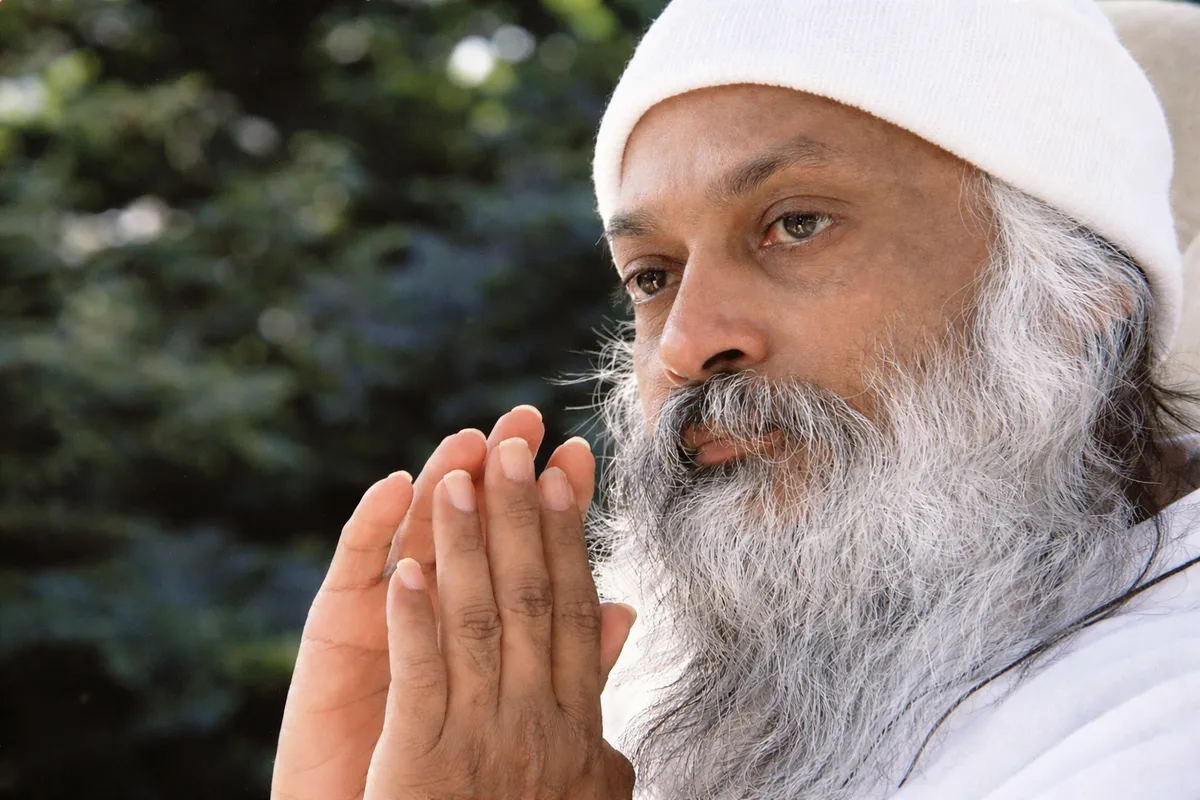
Osho's perspective on Divine Experience
When Osho Spoke About Divine Experience
Passages from the discourses where this theme comes alive.
Osho, with reference to “Raso Vai Sah,” can taste too be made a means to the experience of the Divine?
Brahman means “the expanding one”—that which keeps spreading, which is ever extending. That which does not stand still anywhere, which never makes any boundary into a boundary, which always flows beyond. If you would know the Divine, then—even on a small scale—do not make boundaries. Expand, keep expanding! If you have fragrance, share it with the winds! If you have light, give it to the paths! If you have awareness, give it to others! Whatever you have! And who is there who has nothing? There is no such human being. The Divine is within everyone; therefore something or other will surely be there. Search. You cannot be without purpose. Through you he wishes to sing some song. Through you he wishes to dance some dance. Through you he wishes to bloom some flower. You cannot be in vain. You have a destiny. There is a secret hidden within you. Open…
तीसरा प्रश्न: ओशो, ‘रसो वै सः’ के संदर्भ में बताएं कि क्या स्वाद को भी परमात्म-अनुभूति का साधन बनाया जा सकता है?
ब्रह्म शब्द का अर्थ होता है: ‘दि एक्सपैंडिंग वन।’ वह जो फैलता ही जा रहा है। ब्रह्म का अर्थ है: विस्तीर्ण होता जा रहा है। जो ठहरा नहीं है। जो कहीं ठहरता नहीं। जो किसी सीमा को सीमा नहीं बनाता, जो हमेशा सीमा के ऊपर से बह जाता है। अगर तुम्हें परमात्मा को जानना हो, तो छोटे पैमाने पर ही सही, लेकिन तुम भी सीमा मत बनाना। फैलना, फैलते जाना! सुगंध हो तुम्हारे पास, बांटना हवाओं को! प्रकाश हो, बांट देना रास्तों पर! बोध हो, दे देना दूसरों को! जो कुछ भी तुम्हारे पास हो.! और ऐसा तो कौन है मनुष्य जिसके पास कुछ भी न हो! ऐसा तो मनुष्य है ही नहीं कोई कि जिसके पास कुछ भी न हो। परमात्मा तो सभी के भीतर है, इसलिए कुछ न कुछ तो होगा। खोजना। तुम अकारण नहीं हो सकते। तुम्हारे द्वारा उसने कोई गीत गाना ही चाहा है। तुम्हारे द्वारा उसने कोई नाच नाचना ही चाहा है। तुम्हारे द्वारा उसने कोई फूल खिलाना ही चाहा है। व्यर्थ तुम नहीं हो सकते। तुम्हारी कोई नियति है। तुम्हारे भीतर छिपा हुआ कोई राज है। खोलो, खोजो! …
Osho, people listen to discourses with their eyes closed. But I’m afraid to close my eyes even for a moment. I want to keep looking at you—only looking. When the light of your eyes enters mine, the divine experience that happens is beyond description. In that experience I can hear only half the discourse. What kind of thirst is this? Can it be quenched?
This is a sacred thirst—the longing of love and devotion. Do not be afraid of it. - Don’t imitate others. If your eyes want to remain open, let them; follow your own truth. - Words are secondary; the essential transmission is silent, through presence and the meeting of eyes. Missing some words is not a loss. - Allow the thirst to deepen; it purifies and burns the ego. When separation drops, the longing transforms. - In one sense, desire is never “quenched” by objects; in another, it fulfills itself when you dissolve into the beloved—the seeker and the sought become one. - Open or closed eyes are not the point; totality is. Let the experience take you beyond seeing the other to simply being. Shanta has asked: There are two kinds of people in the world—those who live through the ear, and those who live through the eye. Everything in…
दूसरा प्रश्न: ओशो, लोग आंख बंद करके प्रवचन सुनते हैं। और मैं डरती हूं कि कहीं एक पल के लिए भी आंख न बंद हो। मैं चाहती हूं कि आपको देखती रहूं, देखती ही रहूं। आपकी आंखों की रोशनी जब मेरी आंखों में आती है तो जो दिव्य अनुभव होता है, उसका वर्णन नहीं कर सकती। इस अनुभव में मैं आधा प्रवचन ही सुन पाती हूं। यह कैसी प्यास है? क्या यह पूरी हो सकती है?
पूछा है शांता ने। दुनिया में दो तरह के लोग हैं। एक, जो कान से जीते हैं; और एक, जो आंख से जीते हैं। दुनिया में हर चीज दो में बंटी है। एक ही दो में बंटा है, मगर दो में बंटे बिना दुनिया नहीं बनती। कुछ लोग आंख से जीते हैं। कुछ लोग कान से जीते हैं। जो कान से जीते हैं, वे मुझे आंख बंद करके सुनना पसंद करेंगे। उनका रस, उनका मुझसे संबंध कान से जुड़ेगा। जो आंख से जीते हैं, वे आंख बंद न कर पाएंगे। आंख बंद करेंगे तो उन्हें लगेगा कुछ खोया। कान उनके लिए पर्याप्त नहीं होगा। वे आंख से ही पीएंगे, वे आंख से ही सुनेंगे; आंख ही उनका द्वार है। जो तुम्हें सहज हो, वैसा ही करना। अगर आंख खोले रखने में ही रस आता हो, तो फिकर छोड़ो प्रवचन की। आधा सुना, कि नहीं सुना, चिंता न करो। आधे से ज्यादा, जो चूक गया है, उससे ज्यादा तुम्हें आंख से मिलेगा। अपनी प्रकृति को समझो। दूसरे आंख बंद करके सुन रहे हैं, इसकी नकल में मत पड़ना। नकल अक्सर भ्रांति में डाल देती है, हानि में पहुंचा देती है। कभी किसी की भूल कर नकल मत करना। …
First, a friend has asked: The experience of the Divine—its grace, its bliss—sometimes arrives suddenly in a few moments and then is lost again. Then, even with much effort, that glimpse does not appear. So what should we do?
In a human being’s life, certainly, at times some hidden spring of joy opens unbidden; an inner resonance begins to be heard; a music seems to surround one’s very life-breath. Everyone will have a few such moments in memory. Then our mind longs to have that experience again—and just then, it is as if the doors to that experience close. Two things need to be understood here. First, whatever is truly important and supreme in life never becomes available through human effort. Man is very small, limited. His boundaries are tight—and joy has no boundary. Only when man is absent do the doors of joy open; and when, through great effort, man becomes very present, those doors close. No one has ever found God by effort—only by effortlessness. Not through effort, but in effortlessness does His presence become apparent and is He realized. If I give love to someone, and…
सबसे पहले एक मित्र ने पूछा है कि परमात्मा की अनुभूति, उसका प्रसाद, उसका आनंद किन्हीं-किन्हीं क्षणों में अचानक मिल जाता है और फिर, फिर खो जाता है। फिर बहुत प्रयास करने पर भी वह झलक दिखाई नहीं पड़ती। तो हम क्या करें?
मनुष्य के जीवन में निश्चित ही कभी-कभी अनायास ही कोई आनंद का स्रोत खुल जाता है, कोई अंतर्नाद सुनाई पड़ने लगता है, कोई स्वर-संगीत प्राणों को घेर लेता है। सभी के जीवन में ऐसे कुछ क्षण स्मृति में होंगे। फिर हमारा मन करता है उस अनुभूति को और पाने के लिए। और तब, तब जैसे उस अनुभूति के द्वार बंद हो जाते हैं।
Osho, while listening to your discourse my eyes start closing, my ears begin to go deaf, and even if I try I can’t manage the situation. My heart longs that, when the Divine is before me, I keep gazing at you and drink the nectar of your words. But it just doesn’t happen. Please tell me how I can listen to you consciously.
When the eyes close, the whole outward journey ends; all the energy turns inward. The Ganges flows back toward Gangotri, toward the source. Open eyes—perhaps the Shvetambaras found Mahavira’s eyes so beautiful that they wished to go on looking at them. With closed eyes, what will you see? So they kept Mahavira’s eyes open. That those eyes were worthy of seeing is true; that they were very beautiful is true; that worship and adoration arose toward those eyes is true. But this is a human weakness. Mahavira’s eyes would have been closed when he knew himself. And only when he knew himself did he become Mahavira; before that he was not Mahavira. Your eyes too will close. The ears too will close. All the senses will close—because the senses are the doors through which energy moves outward. When all the senses close, all the energy returns within. Mahavira called this…
तीसरा प्रश्न: ओशो, आपका प्रवचन सुनते-सुनते आंखें बंद होने लगती हैं, कान बहरे होने लगते हैं और चेष्टा करने पर भी स्थिति नहीं सम्हलती। जी चाहता है कि जब परमात्मा सामने है, तो उन्हें निहारता रहूं और उनके अमृतवचन का रसपान करता रहूं। लेकिन ऐसा हो नहीं पाता। कृपया बतायें कि मैं होशपूर्वक आपको किस प्रकार सुनूं?
आंख बंद हो जाती है तो बाहर की तरफ सारी यात्रा समाप्त हुई। सारी ऊर्जा भीतर लौटी। गंगा चली गंगोत्री की तरफ। मूलस्रोत की तरफ यात्रा हुई। खुली आंख--हो सकता है श्वेतांबरों को महावीर की आंख बड़ी प्यारी लगी हो, प्यारी रही होगी वह आंख--श्वेतांबरों की बात भी मेरी समझ में आती है। वह आंख इतनी प्यारी रही होगी कि उन्होंने चाहा होगा कि देखते ही रहें। बंद आंख में तो तुम क्या देखोगे? तो उन्होंने महावीर की आंख को खुला रखा है। वह आंख देखने योग्य रही होगी, यह सच है! वह आंख बड़ी प्यारी थी, यह सच है! उस आंख की उपासना और पूजा का भाव उठा होगा, यह सच है! लेकिन यह आदमी की कमजोरी है। महावीर की आंख तो बंद ही रही होगी जब उन्होंने स्वयं को जाना है। और जब स्वयं को जाना तभी तो वे महावीर हुए। उसके पहले तो वह महावीर नहीं। बंद होगी तुम्हारी आंख भी। कान भी बंद हो जाएंगे। इंद्रियां सब बंद हो जाएंगी। क्योंकि इंद्रियों का अर्थ ही होता है, ऊर्जा के बाहर जाने के द्वार। जब सारी इंद्रियां बंद हो जाती हैं, सारी ऊर्जा भीतर लौटती है। …
Profound Quotes on Divine Experience
Explore our structured collection of meaning-mapped quotes regarding Divine Experience.