
Osho's perspective on Hippies
When Osho Spoke About Hippies
Passages from the discourses where this theme comes alive.
A friend has asked: Osho, you said about a wayward son that one should let him pass through his experiences, and he will learn on his own. But even after experiencing, he still prefers the same thing—someone is asking about his wayward son—no matter how much suffering he has to endure, even if death itself should come, still he does the same. After stumbling again and again, he repeats it. What can be done? How to reform him?
You will not be able to reform him. If life cannot reform him, if even death cannot reform him, what will you be able to do? If what you say is true—that again and again, even after suffering, he does the same thing; even if death comes, he will still do the same thing, and he does not change—then take your hands off. You will not be able to reform him. You cannot be stronger than death. And one who does not learn from suffering—what will he learn from you? Do not call him a wayward son. You have found yourself a Jadabharata. Because those whom suffering does not reform, whom even death does not reform—these are great, arrived masters; they are in the ultimate state. Do not even try to reform such a one. And why are you so eager to reform another? It is enough to reform yourself.…
एक मित्र ने पूछा है कि ओशो, आपने कुपुत्र के बारे में बताया कि उसको अनुभवों में से गुजरने देना चाहिए, तो वह खुद सीख जाएगा। लेकिन अनुभव लेने के बाद भी वह वही पसंद करता है--कोई अपने कुपुत्र के संबंध में पूछ रहे हैं--चाहे कितना ही दुख झेलना पड़े, चाहे मौत भी क्यों न आ जाए, फिर भी वह वही करता है। बार-बार ठोकर खाकर भी वही दोहराता है। उसका क्या उपाय किया जाए? उसको सुधारने का क्या तरीका है?
आप न सुधार पाएंगे। जिसको जिंदगी नहीं सुधार पा रही, मौत नहीं सुधार पा रही, उसको आप क्या सुधार पाएंगे? अगर आपकी बात सच है कि बार-बार दुख पाकर भी वह वही करता है, मौत भी आ जाए तो भी वही करता है, और सुधरता नहीं, तो आप हाथ अलग कर लें। आपसे नहीं सुधर पाएगा। आप मौत से ज्यादा मजबूत नहीं हो सकते। और जो दुख से नहीं सीख पा रहा है, वह आपसे क्या सीख पाएगा? कुपुत्र मत कहिए उसको। आपको कोई जड़भरत मिल गया है। क्योंकि जिसको दुख नहीं सुधारते, मौत नहीं सुधारती, वे तो बड़े पहुंचे हुए महात्मा हैं, वे तो परम अवस्था में हैं। उनको आप सुधारने की कोशिश ही मत करिए।
Osho, if we proceed on the basis of your own argument, then today in America, after sociological analysis, they have concluded that despite so much affluence, among twenty-one- and twenty-two-year-old youth a restlessness, derangement, and despair toward society has arisen—what...
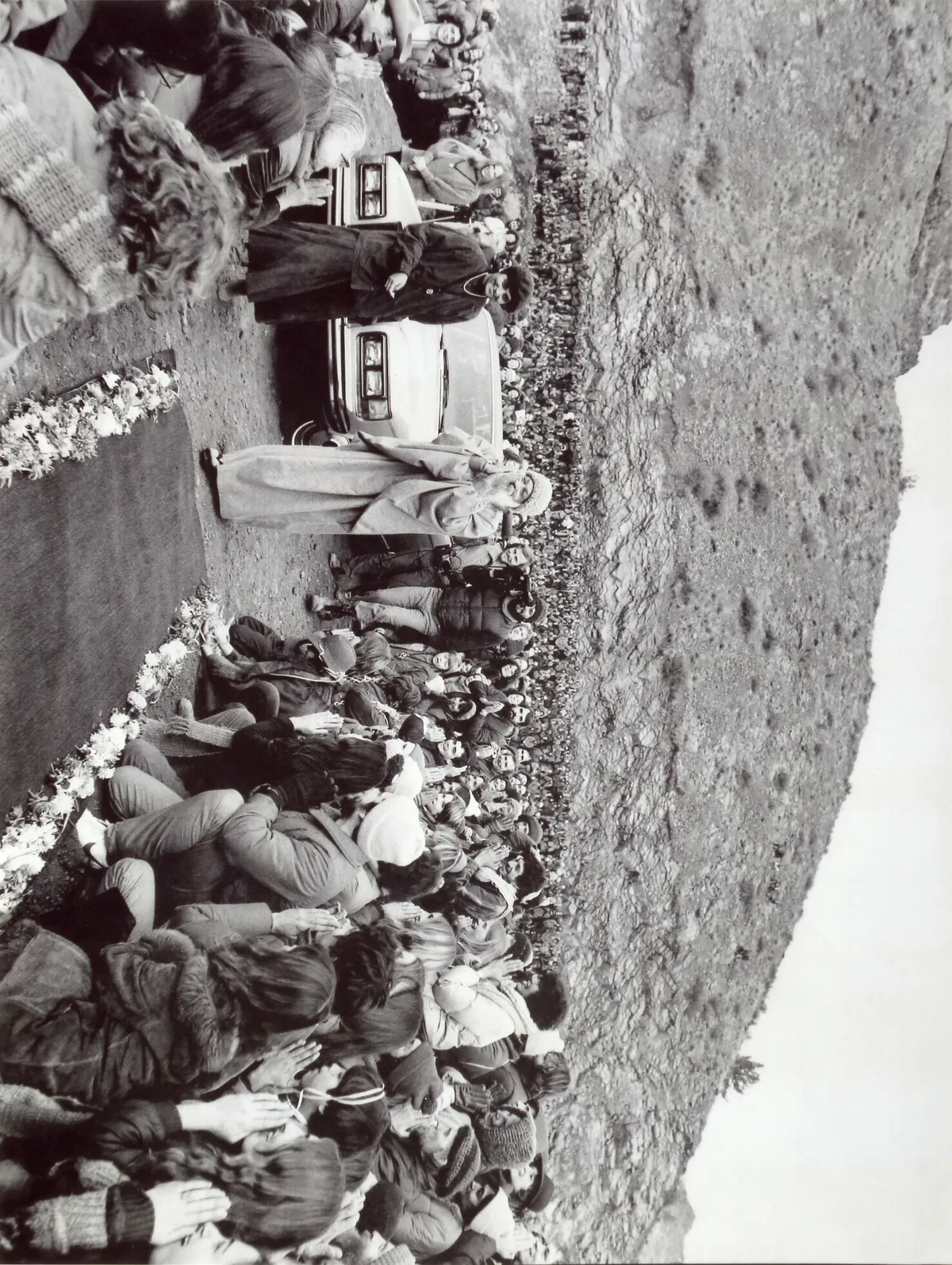
I understand; let me tell you. The restlessness in the hearts of American youth is the beginning of a religious era. Such a thing has never happened in the world before. Such restlessness did occur, but only in a few households. People like Buddha or Mahavira felt this kind of restlessness. They had everything. The most beautiful women were gathered around them. As many beautiful women as could be found in Bihar were confined within a single household. All the beautiful girls were there, all the wealth, all the splendor. When all this is attained, a restlessness arises—Now what? A difficulty arises—Now what shall we do? This used to happen now and then to a few great families. America has reached the point where millions of families are in the condition once experienced by the families of Buddha and Mahavira. For the first time an entire society has become affluent.…
ओशो, आप ही के तर्क की बुनियाद को लेकर अगर हम चलें, तो आज अमेरिका में समाजशास्त्री विश्लेषण के बाद यह निष्कर्ष निकला है कि वहां इतनी संपन्नता के बावजूद भी इक्कीस-बाईस साल के नौजवानों में जो बेचैनी, विक्षिप्तता, निराशा आ गई है समाज के प्रति वह क्या...
मैं समझा, मैं बताऊं आपको। अमेरिका में जो बेचैनी है युवकों के दिल में, वह एक धार्मिक युग के प्रारंभ की शुरुआत है। ऐसा कभी भी नहीं हुआ था दुनिया में। ऐसी बेचैनी होती थी, लेकिन किसी-किसी घर में होती थी। बुद्ध जो हैं या महावीर जो हैं, ऐसे लोगों को बेचैनी होती थी। सब इनके पास था। सुंदर से सुंदर स्त्रियां इकट्ठी कर रखी थीं। बिहार में जितनी सुंदर स्त्रियां हो सकती थीं, एक-एक घर में कैद थीं। सारी सुंदर लड़कियां थीं, सारा धन था, सब वैभव था। जब यह सब मिल जाता है तो बेचैनी होती है--अब क्या? परेशानी होती है--अब क्या करें? यह कभी-कभी एकाध बड़े परिवार के लोगों को होती रही।
But I am strongly of the view that the hippies have certainly raised a question for the whole of human culture, and the answer to that will provide significant hints for the future. So a lot of thinking is necessary on our part. As far as India is concerned, it cannot produce hippies as yet; a poor nation cannot afford this luxury. Hippies can flourish only in affluence. Mahavir was the son of a king. All the Tirthankars of the Jains belonged to royal families. similarly, Gautam Buddha, Rama and Krishna were all sons of kings. A rebellious and far-seeking mind is born only in such circumstances where all is available. In India, for the time being, there is no question of a hippie problem. Even if someone becomes a hippie now, he will merely be such a person who has grown long hair and nothing else.
What factors do you attribute the western youth revolt to, and why are so many young people from the west now becoming interested in eastern religion and philosophy?
The whole attitude of modern youth is one of boredom with an empty affluence. The youth are leaving the society, and they will go on leaving it unless the whole society becomes poor. Then they will not be able to leave. This leaving, this renunciation, can exist only in an affluent society. If it is taken to an extreme, the society will decline. Then technology will not progress, and if this continues the West will become like the East is today. In the East they are turning to the other extreme. They will create a society just like that of the West. The East is turning to the West and the West is turning to the East, but the disease remains the same. As I see it, the disease is the imbalance, the acceptance of one thing and the denial of the other. We have never allowed the human mind…
Profound Quotes on Hippies
Explore our structured collection of meaning-mapped quotes regarding Hippies.