
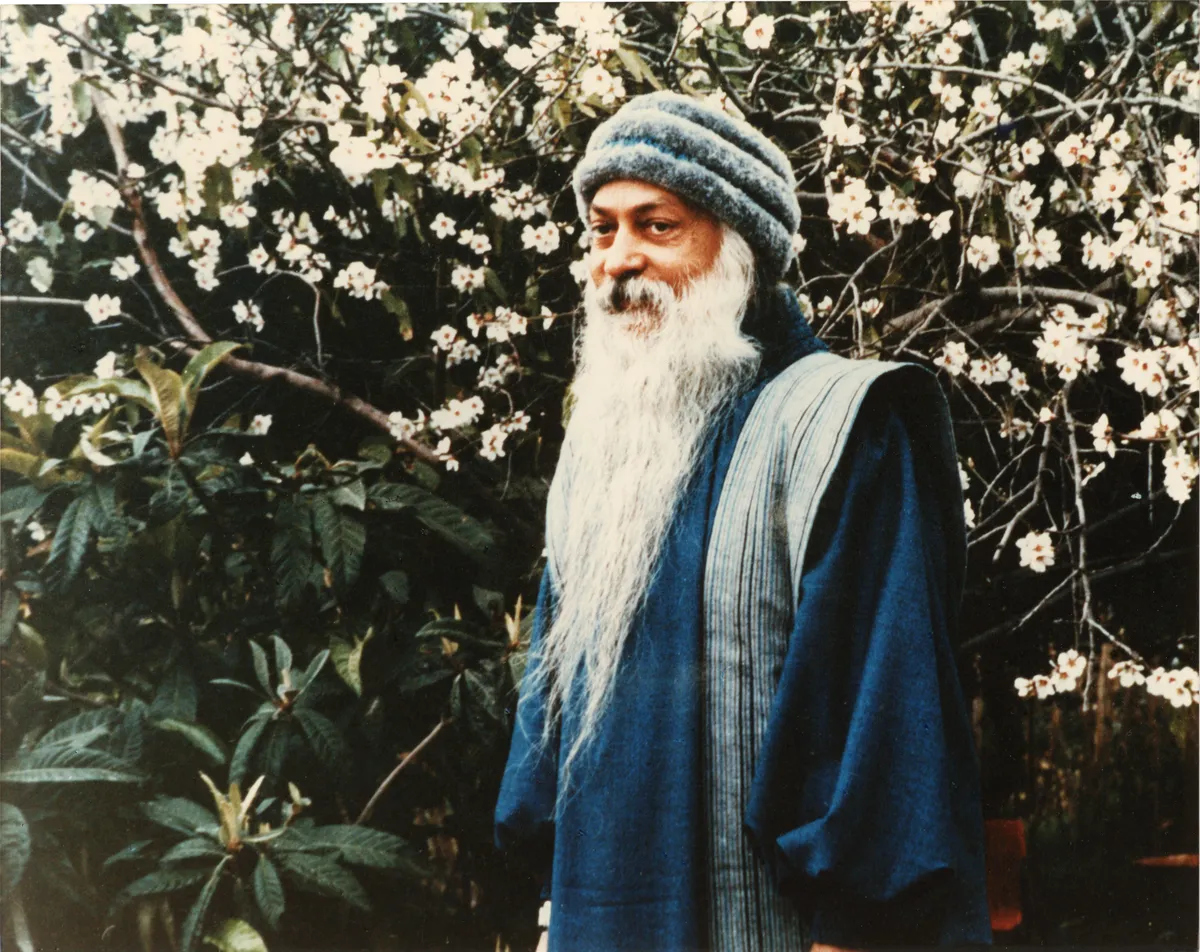
Stop trying so hard; relax, forget your “me,” and the joy comes back by itself.
From the Discourses
Passages where Osho speaks to this question — each links to the complete discourse.
First, a friend has asked: The experience of the Divine—its grace, its bliss—sometimes arrives suddenly in a few moments and then is lost again. Then, even with much effort, that glimpse does not appear. So what should we do?
In a human being’s life, certainly, at times some hidden spring of joy opens unbidden; an inner resonance begins to be heard; a music seems to surround one’s very life-breath. Everyone will have a few such moments in memory. Then our mind longs to have that experience again—and just then, it is as if the doors to that experience close. Two things need to be understood here. First, whatever is truly important and supreme in life never becomes available through human effort. Man is very small, limited. His boundaries are tight—and joy has no boundary. Only when man is absent do the doors of joy open; and when, through great effort, man becomes very present, those doors close. No one has ever found God by effort—only by effortlessness. Not through effort, but in effortlessness does His presence become apparent and is He realized. If I give love to someone, and…
सबसे पहले एक मित्र ने पूछा है कि परमात्मा की अनुभूति, उसका प्रसाद, उसका आनंद किन्हीं-किन्हीं क्षणों में अचानक मिल जाता है और फिर, फिर खो जाता है। फिर बहुत प्रयास करने पर भी वह झलक दिखाई नहीं पड़ती। तो हम क्या करें?
मनुष्य के जीवन में निश्चित ही कभी-कभी अनायास ही कोई आनंद का स्रोत खुल जाता है, कोई अंतर्नाद सुनाई पड़ने लगता है, कोई स्वर-संगीत प्राणों को घेर लेता है। सभी के जीवन में ऐसे कुछ क्षण स्मृति में होंगे। फिर हमारा मन करता है उस अनुभूति को और पाने के लिए। और तब, तब जैसे उस अनुभूति के द्वार बंद हो जाते हैं।
Osho, what is the relationship between meditation and patience?
If you sit to meditate to remove mental restlessness, you will keep looking back again and again: “Has it gone yet?” And the irony is that when you begin to meditate, restlessness will increase. Because what has been repressed will start surfacing; catharsis will begin. The rubbish you have kept hidden within and never allowed to express—meditation will break open those doors too. It will clean the house. Dust piled up for years, for births, will rise again; there will be gusts and storms. For a while even the little peace you had will be lost. Then you will panic: “I came for peace, and even what I had is gone.” Without patience, you could even become unhinged, because meditation brings such a great storm. The disease is not from a day or two; it’s from lifetimes. Meditation will break through all the layers to reach your innermost core. In…
दूसरा प्रश्न: ओशो, ध्यान और धैर्य में क्या संबंध है?
अगर मन की अशांति को मिटाने के लिए तुम ध्यान करने बैठे हो, तो तुम बार-बार लौटकर देखोगे, अब तक मिटी नहीं! और मजा तो यह है कि जब ध्यान शुरू करोगे, तो अशांति बढ़ेगी। क्योंकि जो दबी पड़ी है, वह भी प्रकट होगी। जो सदा-सदा से दबाई है, उसका भी रेचन शुरू होगा, कैथार्सिस होगी। जो कूड़ा-करकट भीतर छिपाकर बैठे रहे हो, प्रकट नहीं किया है, ध्यान उन द्वारों को भी तोड़ेगा। घर की सफाई करेगा। वर्षों की जमी धूल, जन्मों की जमी धूल उठेगी फिर से, अंधड़-तूफान होंगे। कुछ देर तो थोड़ी-बहुत जो शांति तुम्हारे पास थी, वह भी खो जाएगी। …
Osho, tell us of some lure that would set us moving toward God—some temptation that would engage our mind in God-realization.
Difficult today, difficult tomorrow; the day after, not so difficult—if you persist and don’t jump up, “Oh, a bad thought—get rid of it!” The witness has nothing to do with good or bad. Thorns have the same worth as flowers. We label; the witness does not. Soon, an amazing thing begins: now and then a gap appears—an interval. A thought comes, then the next does not; a space remains. In that empty space, the first glimpses begin. In that emptiness, even you are not—there is only emptiness. That is the door. Keep at it, and thoughts lessen; spaces grow. It’s like a road where a person passes, then for an hour no one—emptiness. A thought appears on the screen, then none for a long while; the screen is blank. From that blankness, your first contacts with God begin—because in that moment you are present. Thought can take you to past…
ओशो, ऐसे कोई लालच बताएं कि जिससे हम भगवान की तरफ चल पड़ें, ऐसे कोई प्रलोभन जिससे हमारा मन भगवत्-प्राप्ति में लग जाए।
आज कठिन होगा, कल कठिन होगा, परसों कठिन नहीं होगा। बस हिम्मत इतनी रखनी है कि कूद मत जाना, कि अरे यह बुरा विचार आ गया, इसे अलग करो। बुरे-भले से कुछ लेना-देना नहीं है। साक्षी को न कुछ बुरा है, न कुछ भला है। कांटे भी उतना ही अर्थ रखते हैं, फूल जितना अर्थ रखते हैं। न कांटा बुरा है, न फूल अच्छा है। हम हमारी अपनी समझ के हिसाब से अच्छा-बुरा कर लेते हैं। सब चीजें हैं, और आप चुपचाप बैठे रहें। कुछ ही दिनों में, अगर चुपचाप बैठे हैं, तो एक अदभुत अनुभव शुरू होगा। और वह अनुभव यह होगा कि कभी-कभी ऐसा होगा कि गैप आ जाएगा, इंटरवल आ जाएगा, अंतराल आ जाएगा। कभी-कभी ऐसा होगा कि विचार थोड़ी देर के लिए नहीं होंगे, एकदम लुप्त हो जाएंगे। एक विचार आया और फिर दूसरा नहीं आया और बीच में खाली जगह छूट जाएगी। उसी खाली जगह से आपको पहली झलकें मिलनी शुरू होंगी। और उस खाली जगह में आप भी नहीं होंगे, इतनी खाली जगह होगी कि बस खालीपन होगा, जस्ट एंप्टीनेस। वही द्वार है, वहीं से पहली झलकें आपको मिलनी शुरू होंगी। …
Osho, how does the remembrance of the Divine begin? How am I to remember God? I have no clue to God at all.
Have you ever known any joy through the ego? The ego aches like a wound; the smallest things hurt. The greater the ego, the greater the pain in life. Remove the source of this pain. Then some true Master will knock at your door. Or, unawares, you will recognize a Master in one in whom you had never seen one before. Sometimes he was living right next door and you did not hear; you met daily on the road, exchanged greetings—and still you never saw. You need the eye to see; the ego does not allow such an eye to be born. Ego is a great curtain. One way is this. If this too feels hard—if letting the ego drop is not easy, if recognizing the Master is not easy—then there is another way: search in nature. In waterfalls, trees, winds, the moon and the stars. Do not search for…
पहला प्रश्न: ओशो, परमात्मा की स्मृति प्रारंभ कैसे होती है? मैं परमात्मा को याद कैसे करूं? मुझे तो परमात्मा का कोई भी पता नहीं है।
अहंकार से तुमने कभी कोई सुख जाना है? घाव की तरह अहंकार दुखता है। हर छोटी-छोटी बात दुखाती है। जितना अहंकार होता है उतनी जीवन में पीड़ा होती है। इस पीड़ा के स्रोत को हटा दो। और कोई सदगुरु तुम्हारे द्वार पर दस्तक दे देगा। या कि तुम अनायास, जिसमें कभी सदगुरु नहीं देखा था, उसमें सदगुरु को पहचान लोगे। कभी-कभी ऐसा होता है कि तुम्हारे पड़ोस में ही मौजूद था और तुमने नहीं सुना। तुम रोज रास्ते पर मिलते-जुलते थे, जय रामजी भी होती थी, और फिर भी तुम्हें दिखाई नहीं पड़ा।
Another friend has asked: If truth cannot be expressed in words and cannot be written in scriptures, then what is the way to express it?
Think of that man who went into that room and sat silently. What did he do? He left all words and cared only to fall silent—utterly silent. When he became perfectly silent, an answer came—not his own; it came from above, from depths; it was God’s. Let us too, for ten minutes in this quiet night, try to be silent. It is possible; there is no difficulty. We have simply never experimented—that is why it has not happened. But what has never happened may happen today; if not today, tomorrow. The possibility is always there. For those who put in a little effort, the possibility becomes a reality. What will we do here for ten minutes? Look: the night is utterly still—the trees are still, the moon and stars are still, the breezes are still. Can we not, for ten minutes, be still with them and sit quietly? There will…
एक और मित्र ने पूछा है कि अगर सत्य शब्द से नहीं कहा जा सकता और शास्त्र में नहीं लिखा जा सकता, तो फिर क्या रास्ता है उसे कहने का?
… क्या किया होगा उसने? वह आदमी क्या किया उतनी देर? उतनी देर उसने अपने सारे शब्दों को छोड़ दिया और फिकर की चुप हो जाने की, साइलेंट हो जाने की, मौन हो जाने की। और जब वह परिपूर्ण मौन हो गया तो उसे कुछ उत्तर मिला--जो उत्तर उसका अपना नहीं था; जो कहीं ऊपर से आया था, गहराई से आया था, जो परमात्मा का था। हम भी दस मिनट इस शांत रात में चुप होने की कोशिश करें। यह हो सकता है, इसमें कोई कठिनाई नहीं है। चूंकि हमने कभी कोई प्रयोग ही नहीं किया है, इसलिए नहीं हुआ है। लेकिन जो कभी नहीं हुआ है, वह आज हो सकता है। जो आज नहीं हुआ है, वह कल हो सकता है। संभावना हमेशा शेष है। जो थोड़ा सा श्रम करते हैं, उनकी संभावना वास्तविक बन जाती है। क्या करेंगे दस मिनट के लिए हम यहां? देखते हैं, रात चारों तरफ बिलकुल शांत है--वृक्ष शांत हैं, चांद-तारे शांत हैं, हवाएं शांत हैं। क्या इनके साथ दस मिनट के लिए हम भी शांत होकर चुप नहीं बैठ सकते हैं?