
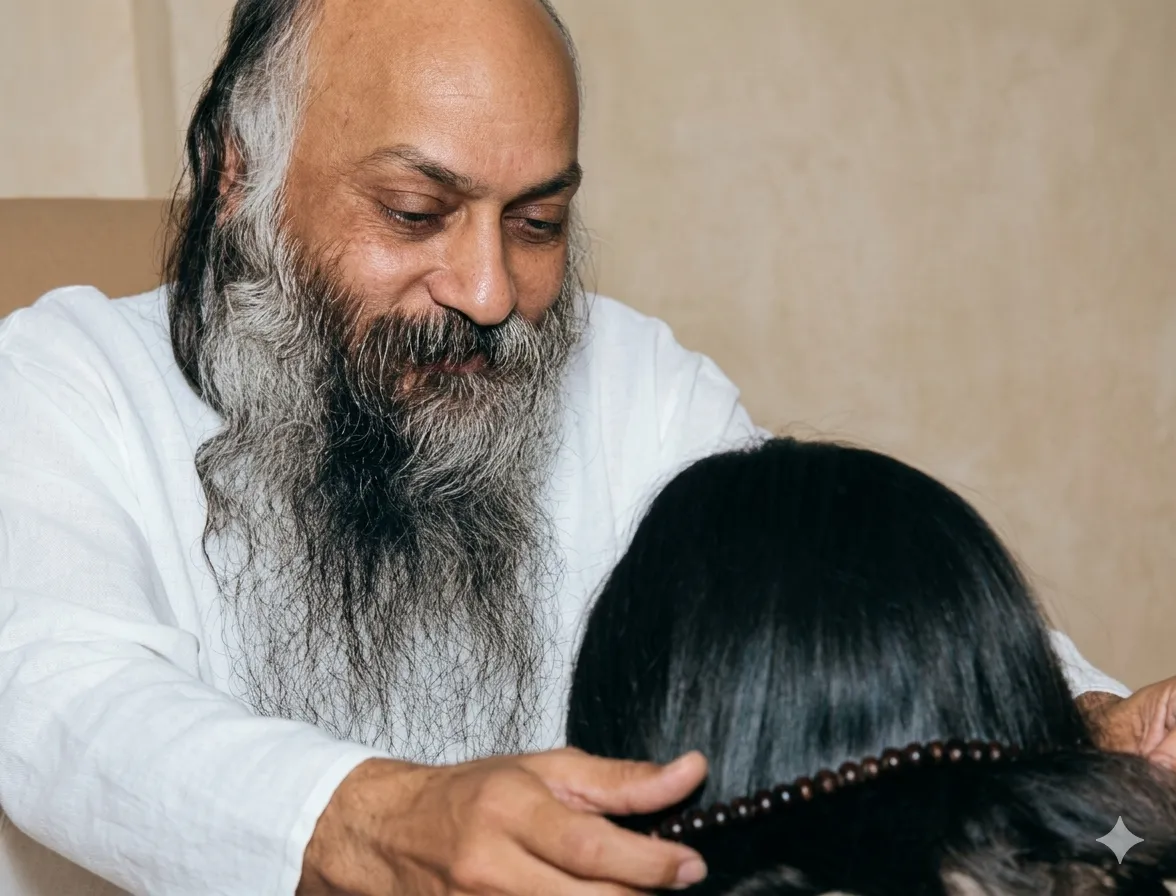
Osho's perspective on Discernment
When Osho Spoke About Discernment
Passages from the discourses where this theme comes alive.
Does discernment arise in man by itself?
Yes, discernment is within, asleep. If we give it a little support, it will awaken. Like a seed: we put it in the garden—water it, add fertilizer; we don’t draw the sprout out from anywhere, the sprout is within. We simply arrange the conditions.
प्रश्न: विवेक हैज कम इन मैन बाय इटसेल्फ।
हां, विवेक भीतर है, सोया हुआ है। हम थोड़ा सहारा दें, तो वह जग जाएगा। जैसे एक बीज है, हम उसे बगीचे में डाल देते हैं--पानी डालते हैं, खाद डालते हैं; अंकुर थोड़े ही निकालते हैं, अंकुर तो भीतर है। सारी स्थिति जमा देते हैं।
Osho, you said... then you will find that the devotee is God. The question arises: if one devotee prefers to be God and another wants to remain only a devotee, then which of the two is superior?
The one who wants to be God will not be able to be. And the one who wants to remain a devotee will become God. The question of superior or inferior does not arise, because only one of the two will happen. The one who does not want to be will be. The one who wants to be will be deprived. That very wanting is of the ego. But the matter is a little delicate. Sometimes humility too belongs to the ego. Beware that your humility may not be of the ego. Perhaps you are saying, “No, I don’t want to be,” because you know that those who refuse are the ones who attain. Then you are clever. Then your humility is adulterous. Your humility is not pure, not sacred, not virginal—it is like a prostitute. The one who wants to be God, whose ego says, “I must become God,”…
दूसरा प्रश्न: ओशो, आपने कहा... तब पाओगे कि भक्त ही भगवान है। प्रश्न उठता है कि एक भक्त भगवान होना पसंद करे और दूसरा सिर्फ भक्त रहना चाहे, तो दोनों में श्रेष्ठ कौन है?
जो भगवान होना चाहे वह तो हो न पाएगा। और जो भक्त भक्त ही रहना चाहे वह भगवान हो जाएगा। श्रेष्ठ-अश्रेष्ठ का सवाल नहीं उठता, क्योंकि एक ही हो पाएगा। जो नहीं होना चाहता वही हो पाएगा। जो होना चाहता है, वह तो वंचित रह जाएगा। वह तो चाह भी अहंकार की ही है। लेकिन मामला थोड़ा नाजुक है। कभी-कभी ऐसा होता है कि विनम्रता भी अहंकार की ही होती है। कहीं तुम्हारी विनम्र्रता भी अहंकार की ही न हो। कहीं तुम इसलिए ही न कर रहे होओ कि नहीं मैं नहीं होना चाहता, क्योंकि तुम जानते हो कि जो इनकार करते हैं वही हो पाते हैं। तो तुम चालाक हो। तो तुम्हारी विनम्रता व्यभिचारी है। तो तुम्हारी विनम्रता शुद्ध नहीं, पवित्र नहीं, कुंआरी नहीं, वेश्या जैसी है।
Beloved Osho, how far can one rely on one's 'inner voice'?
The thief said, "But one thing let me say first: don't tell me to stop stealing. Because whenever I go -- and I go to mystics and saints and I am a famous thief around here, so they all know -- they immediately say, 'First you stop stealing,' and that I cannot do. I have tried but that I cannot do, so please don't make that condition. Whatsoever else you say I will do." Nagarjuna said, "Then you could not have yet met a mystic or a saint. You must have been meeting ex-thieves; otherwise, why should one bother about your being a thief? Be a thief! -- that is your business, that is not my worry. Just one thing I would like to tell you, and that is: Go, do whatsoever you feel, but be aware, alert. Don't do anything unconsciously, mechanically, robot-like." The thief said, "This is perfectly…
Osho, is it necessary to qualify awakening with the adjective “discernment” (vivek), or not? Because perhaps there could be an undiscerning awakening as well.
No, an undiscerning awakening is not possible. Awakening is intrinsically discerning. In fact, awakening and vivek mean the same. Just as we cannot speak of a living corpse, we cannot speak of an undiscerning awakening; they are opposing terms. Vivek means awakening. What commonly comes to mind with the word vivek is discrimination—hence your question: the idea of sorting out, “this is wrong and this is right.” But so long as you are making such discriminations—so long as you are saying, “let me take this as right and that as wrong”—you do not yet have vivek. Up to that point you have merely picked up what the truly discerning have lived as right and what they have regarded as wrong. The day real vivek dawns, there is no need to decide, “this is wrong, this is right.” What is right simply happens; what is wrong does not happen. From one…
प्रश्न: ओशो, जागरण के साथ विशेषण विवेक का लगाना जरूरी है अथवा नहीं? क्योंकि अविवेकपूर्ण भी जागरण हो सकता है।
… विवेक यानी जागरण। विवेक से जो आम खयाल पैदा होता है, वह होता है डिस्क्रिमिनेशन का। इसलिए आप कह रहे हैं। विवेक से आम खयाल होता है कि यह गलत है और यह सही है, ऐसा डिस्क्रिमिनेशन करने का। लेकिन ऐसा डिस्क्रिमिनेशन आप जब तक करते हैं, जब तक आप कहते हैं कि यह ठीक मानूं, यह गलत मानूं, तब तक आपको विवेक नहीं है। तब तक विवेकशील लोगों ने जिसको ठीक जीया है और जिसको उन्होंने गलत माना है, वह आपने पकड़ लिया है। जिस दिन आपका विवेक होगा, उस दिन यह तय नहीं करना पड़ता, यह गलत है, यह सही है। जो सही है, वह होता है; जो गलत है, वह नहीं होता। जो सही है, वही होता है जागे हुए व्यक्ति से। …
Does discernment arise in man by itself?
definitionHow can discernment grow?
practiceProfound Quotes on Discernment
Explore our structured collection of meaning-mapped quotes regarding Discernment.