
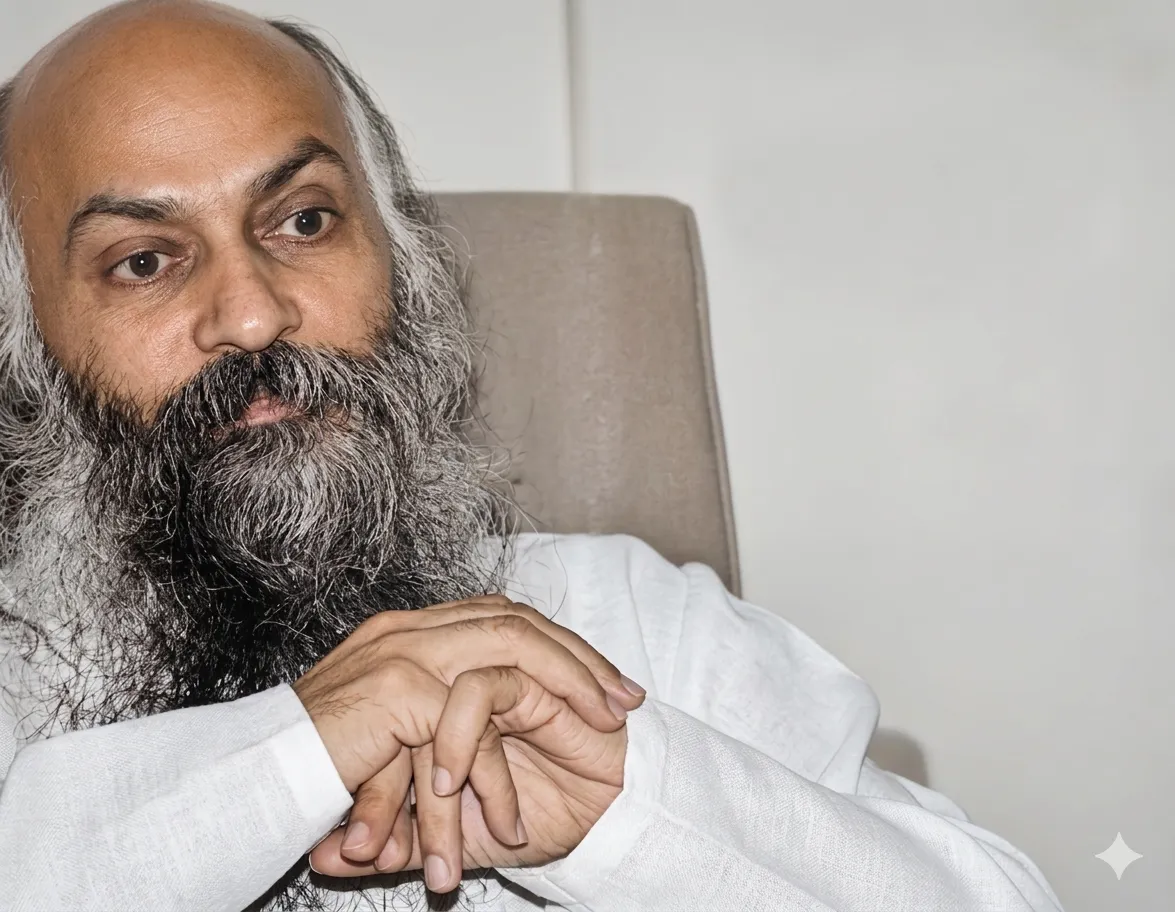
Wisdom is a seed inside you; give it care—quiet, kindness, good company—and it naturally wakes up and grows.
From the Discourses
Passages where Osho speaks to this question — each links to the complete discourse.
Does discernment arise in man by itself?
Yes, discernment is within, asleep. If we give it a little support, it will awaken. Like a seed: we put it in the garden—water it, add fertilizer; we don’t draw the sprout out from anywhere, the sprout is within. We simply arrange the conditions.
प्रश्न: विवेक हैज कम इन मैन बाय इटसेल्फ।
हां, विवेक भीतर है, सोया हुआ है। हम थोड़ा सहारा दें, तो वह जग जाएगा। जैसे एक बीज है, हम उसे बगीचे में डाल देते हैं--पानी डालते हैं, खाद डालते हैं; अंकुर थोड़े ही निकालते हैं, अंकुर तो भीतर है। सारी स्थिति जमा देते हैं।
Osho, you said... then you will find that the devotee is God. The question arises: if one devotee prefers to be God and another wants to remain only a devotee, then which of the two is superior?
The one who wants to be God will not be able to be. And the one who wants to remain a devotee will become God. The question of superior or inferior does not arise, because only one of the two will happen. The one who does not want to be will be. The one who wants to be will be deprived. That very wanting is of the ego. But the matter is a little delicate. Sometimes humility too belongs to the ego. Beware that your humility may not be of the ego. Perhaps you are saying, “No, I don’t want to be,” because you know that those who refuse are the ones who attain. Then you are clever. Then your humility is adulterous. Your humility is not pure, not sacred, not virginal—it is like a prostitute. The one who wants to be God, whose ego says, “I must become God,”…
दूसरा प्रश्न: ओशो, आपने कहा... तब पाओगे कि भक्त ही भगवान है। प्रश्न उठता है कि एक भक्त भगवान होना पसंद करे और दूसरा सिर्फ भक्त रहना चाहे, तो दोनों में श्रेष्ठ कौन है?
जो भगवान होना चाहे वह तो हो न पाएगा। और जो भक्त भक्त ही रहना चाहे वह भगवान हो जाएगा। श्रेष्ठ-अश्रेष्ठ का सवाल नहीं उठता, क्योंकि एक ही हो पाएगा। जो नहीं होना चाहता वही हो पाएगा। जो होना चाहता है, वह तो वंचित रह जाएगा। वह तो चाह भी अहंकार की ही है। लेकिन मामला थोड़ा नाजुक है। कभी-कभी ऐसा होता है कि विनम्रता भी अहंकार की ही होती है। कहीं तुम्हारी विनम्र्रता भी अहंकार की ही न हो। कहीं तुम इसलिए ही न कर रहे होओ कि नहीं मैं नहीं होना चाहता, क्योंकि तुम जानते हो कि जो इनकार करते हैं वही हो पाते हैं। तो तुम चालाक हो। तो तुम्हारी विनम्रता व्यभिचारी है। तो तुम्हारी विनम्रता शुद्ध नहीं, पवित्र नहीं, कुंआरी नहीं, वेश्या जैसी है।
Osho, if you don’t mind, just one more question. In your talks you lay more emphasis on discernment, truth, and thought. So what do you say about the place of faith, devotion, and love in a person’s growth?
They have a great place—indeed, a very great place. But in my view their place is as a result. If someone lives life with discernment, one day he will come to faith. But that faith will not be opposed to discernment; it will arise from discernment. The faith you commonly call “faith” is anti-discernment—it comes beforehand, without discernment. I am against that. The faith that arrives without discernment, and in opposition to it—I am against it. That is blindness. My understanding is that if a person lives with discernment, faith will also arise in his life, but it will be the fruit of discernment, the outcome of his thinking. We talk so much about devotion, but the devotion that is blind and stands upon belief has no value for me. In my view, a person who inquires also attains to love in life; a thinking person can one day reach…
ओशो, इफ यू डोंट माइंड, जस्ट वन मोर क्वेश्चन। आप आपके व्याख्यान वगैरह में विवेक और सत्य और विचार की ओर ज्यादा जोर दे रहे हैं। तो आदमी के विकास में श्रद्धा, भक्ति, प्रेम के स्थान के बारे में आप क्या कहते हैं?
बहुत स्थान है उनका, बहुत स्थान है। लेकिन मेरी दृष्टि में उनका स्थान परिणाम की तरह है। जैसे अगर कोई आदमी जीवन में विवेक से जीए, तो एक दिन श्रद्धा को उपलब्ध हो जाएगा। लेकिन वह श्रद्धा विवेक-विरोधी नहीं होगी, वह विवेक से ही आएगी। और जिसको आप श्रद्धा कहते हैं, वह विवेक-विरोधी है। वह बिना विवेक के पहले ही आ जाती है। मैं उसके विरोध में हूं। जो श्रद्धा बिना विवेक के और विवेक के विरोध की तरह आ जाती है, मैं उसके विरोध में हूं। वह अंधापन है। मेरा मानना है कि अगर आदमी विवेक से जीए, तो भी उसके जीवन में एक श्रद्धा आएगी। लेकिन वह विवेक का ही फल होगी, वह उसके विचार की ही निष्पत्ति होगी। भक्ति का हम सारा का सारा बात करते हैं, लेकिन जो भक्ति अंधी है और विश्वास पर खड़ी है, उसका मेरे लिए कोई मूल्य नहीं है। …
Osho, how does one attain the discerning intelligence to sift the few grains from the many pebbles?
But beads of sweat stood on his forehead, because he knew he was ill. He couldn’t climb stairs. He panted easily. His heart was weak. That is exactly what he feared—that something serious might be wrong. On the way he said to me, “Is this really necessary?” I said, “Nothing is necessary—because you are not ill.” He said, “Come on, drop it. You know I’m afraid. And you know my condition isn’t good. And I don’t want to know. I’m afraid because my father died of TB; my mother died of TB; what if I have TB!” I said, “Fear won’t cure TB. Denial won’t cure TB. And now TB is treatable; TB isn’t even much of a disease now. Compared to the common cold, TB is a weaker illness. The cold never goes away; TB does—TB has a cure. The common cold has no cure. So you’re not in…
तीसरा प्रश्न: ओशो, ‘कन थोड़े कांकर घने’ की परख-बुद्धि कैसे पाई जाती है?
लेकिन माथे पर पसीने की बूंदें हैं, क्योंकि वे जानते हैं कि बीमार वे हैं। सीढ़ियां चढ़ते नहीं बनता उनसे। जरा में हांफने लगते हैं। हृदय दुर्बल हुआ है। उसी से तो डरते हैं वे कि कहीं कुछ मामला न हो जाए। रास्ते में मुझसे कहने लगे: ऐसा कुछ जरूरी है क्या? मैंने कहा: जरूरी कुछ भी नहीं है, क्योंकि तुम बीमार हो ही नहीं। उन्होंने कहा: छोड़ो जी, यह बात क्या लगा रखी है कि बीमार हो ही नहीं। तुम्हें पता है कि मैं डर रहा हूं। और तुम्हें मालूम है कि मेरी हालत ठीक नहीं है। और मैं नहीं चाहता जानना। मुझे डर है कि मेरे पिता टी. बी. से मरे; मेरी मां टी. बी. से मरी; कहीं मुझे टी.बी. न हो! पर मैंने कहा: डरने के कारण तो टी.बी. मिटेगा नहीं। सिर्फ झुठलाने से तो टी.बी. मिटेगा नहीं। अब तो टी.बी. का इलाज है; अब टी.बी. कोई बीमारी है? सर्दी-जुकाम से कमजोर बीमारी है टी.बी.। सर्दी-जुकाम नहीं मिटता; टी.बी. तो मिट जाती है; टी.बी. का तो इलाज है। सर्दी-जुकाम का कोई इलाज नहीं है। तो तुम कोई बड़ी खतरनाक बीमारी में नहीं पड़े हो। …
Osho, is it necessary to qualify awakening with the adjective “discernment” (vivek), or not? Because perhaps there could be an undiscerning awakening as well.
No, an undiscerning awakening is not possible. Awakening is intrinsically discerning. In fact, awakening and vivek mean the same. Just as we cannot speak of a living corpse, we cannot speak of an undiscerning awakening; they are opposing terms. Vivek means awakening. What commonly comes to mind with the word vivek is discrimination—hence your question: the idea of sorting out, “this is wrong and this is right.” But so long as you are making such discriminations—so long as you are saying, “let me take this as right and that as wrong”—you do not yet have vivek. Up to that point you have merely picked up what the truly discerning have lived as right and what they have regarded as wrong. The day real vivek dawns, there is no need to decide, “this is wrong, this is right.” What is right simply happens; what is wrong does not happen. From one…
प्रश्न: ओशो, जागरण के साथ विशेषण विवेक का लगाना जरूरी है अथवा नहीं? क्योंकि अविवेकपूर्ण भी जागरण हो सकता है।
… विवेक यानी जागरण। विवेक से जो आम खयाल पैदा होता है, वह होता है डिस्क्रिमिनेशन का। इसलिए आप कह रहे हैं। विवेक से आम खयाल होता है कि यह गलत है और यह सही है, ऐसा डिस्क्रिमिनेशन करने का। लेकिन ऐसा डिस्क्रिमिनेशन आप जब तक करते हैं, जब तक आप कहते हैं कि यह ठीक मानूं, यह गलत मानूं, तब तक आपको विवेक नहीं है। तब तक विवेकशील लोगों ने जिसको ठीक जीया है और जिसको उन्होंने गलत माना है, वह आपने पकड़ लिया है। जिस दिन आपका विवेक होगा, उस दिन यह तय नहीं करना पड़ता, यह गलत है, यह सही है। जो सही है, वह होता है; जो गलत है, वह नहीं होता। जो सही है, वही होता है जागे हुए व्यक्ति से। …