
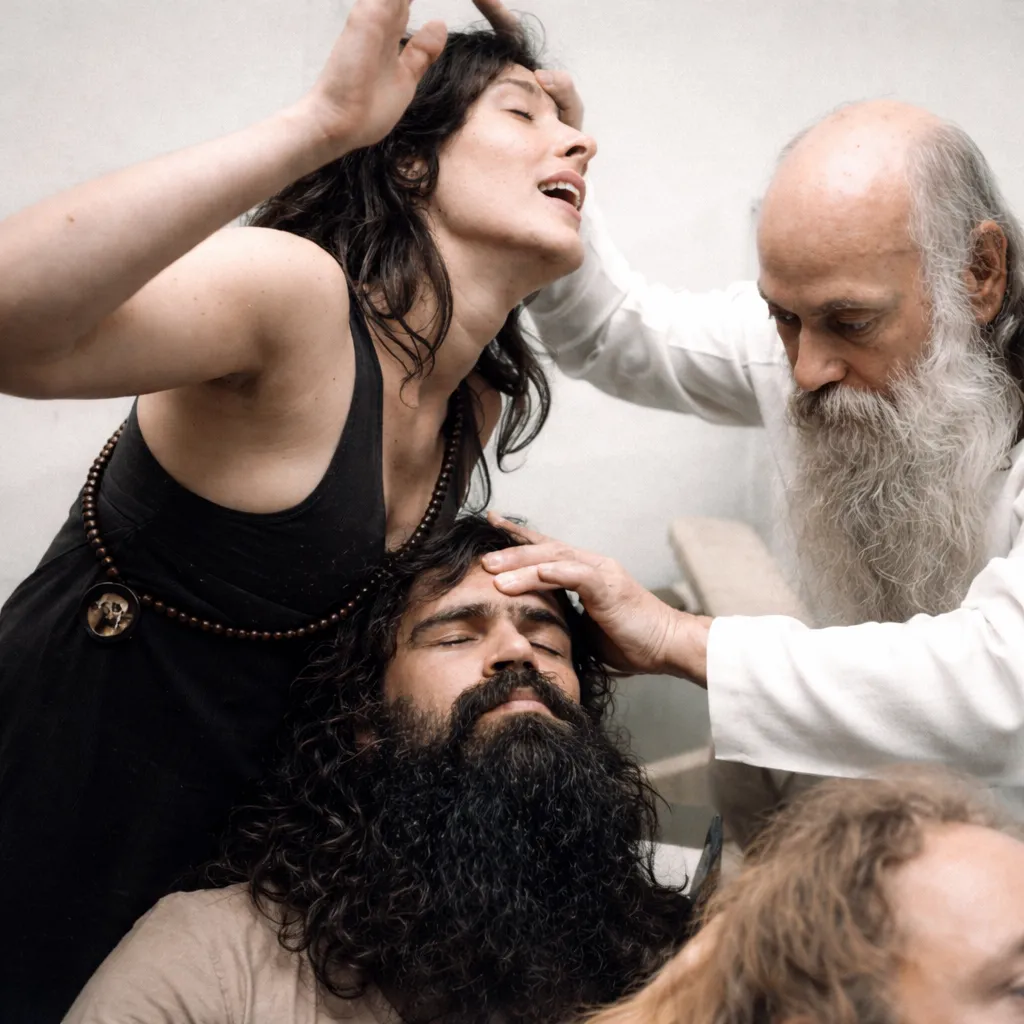
According to Osho, beauty, grandeur, and power are not paths but the spontaneous qualities of an awakened soul. Beauty means pure awareness—nothing ugly survives in consciousness. Grandeur is the ineffable grace and wonder that is felt yet remains mysterious. Power is inner boundlessness—deathless, blissful, effortless discipline, divinity and oneness—not domination or control.
Wake up inside right now, and you naturally shine with clarity (beauty), feel sacred wonder (grandeur), and have a quiet, limitless strength (power).
From the Discourses
Passages where Osho speaks to this question — each links to the complete discourse.
The experience of bliss will give you for the first time, a beauty that is indestructible. Not only that, it will give you for the first time, an insight into the very phenomenon of beauty. Not only does it make you beautiful, it suddenly transforms the whole world. The whole world becomes beautiful because the world reflects you, it is a mirror. If you are carrying ugly things inside you those ugly things are bound to be reflected. From the trees, from the mountains, from the rivers, you cannot get more than that which you put in. And you don't have anything beautiful to put in. That's why people live such monotonous, bored lives.
Meditation reveals many things but the first revelation is the playfulness of existence -- and then one becomes like a child. Jesus says 'Unless you are like small children you will not enter my kingdom of god.' He is right; you have to be like small children, so small that you don't have any weight of experience. Experience makes people serious and a meditator has tn drop all experience, the whole past. He has to bury his past, he has to die every moment to the past so that every moment he is renewed, so that every moment he is a new person. And then miracles become possible. If you are cheerful the whole existence starts laughing with you! The old proverb is right. Laugh and the whole world laughs with you, weep and you weep alone. Gyanda means wisdom.
The art of being total
And that's what meditation is all about: getting roots in your innermost being. Once your roots start growing, your branches become green, new leaves start coming, you gather great foliage, joy, life, and birds start singing around you, and flowers are bound to happen. Once the roots are healthy, flowers are bound to happen. And when a man flowers no other flower can compete with it, because it is a flowering of consciousness. Bliss is another name for the flowering of consciousness. And the moment you have tasted bliss, you have tasted deathlessness, eternity, you have tasted god. After that, life is a celebration, an eternal delight. Spring represents abundant life. Spring is the peak of life. Life celebrates, dances and sings, when the Spring comes. Sannyas has to be a Spring to you, because it is the beginning of abundant life. We are living in tiny cells while the…
To grow, it is necessary to lose it. But then one can attain to a new kind of innocence. Living in the world, seeing its futility, seeing its utter ridiculousness, one becomes detached, cool. One is no more involved in it. One passes through it but just as a witness, just like a mirror: reflecting everything and yet not affected by anything. That is the second kind of innocence, the innocence of the sage. It cannot be destroyed; you cannot lose it. Once it is gained it is yours forever. Hence the sage is like the child in one sense only, they are both innocent. But the child is bound to lose his gift because he has not earned it, it is a natural gift. And the sage has earned it, it is not a gift; it is the reward of his maturity.
Beloved Osho, is there any definition of the ultimate experience other than satyam-shivam-sundram -- "truth, godliness and beauty"?
But in the first definition the word sundram, beauty, gives a sense that your eyes are capable of seeing it; perhaps your hands can feel it, perhaps your ears can hear the beautiful music in it. The word 'beauty' functions almost as a bridge. In the second definition there is no bridge, but a quantum leap. You simply jump from the mind to no-mind. Only no-mind can be aware of truth; only no-mind can be filled with consciousness; only no-mind can be showered with thousands of flowers of bliss. Nothing relates to your ordinary world. In this way it is purer. Both have their own pros and cons, and I want you to be aware of them. But remember: don't choose the definition. First choose the experience, then the definition will come on its own accord. If you choose the definition first, it may not fit your individuality and the…