
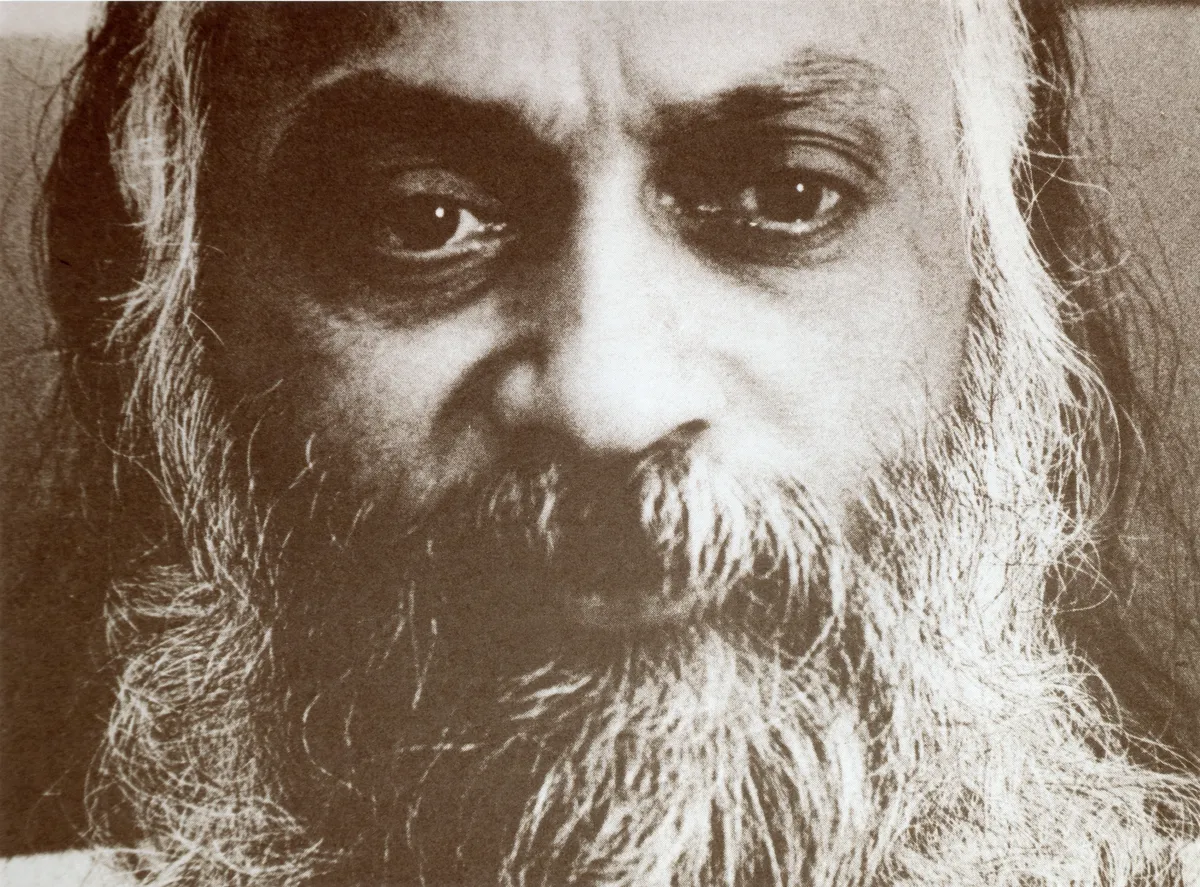
According to Osho, love is the flower of emptiness: when the mind is emptied of ego, concepts, and punditry, a living fullness appears, and compassion naturally blooms. Buddha used the language of negation to open the door to this inner fullness; true sunyata isn’t barren nothingness but the spacious ground from which love effortlessly arises.
When you empty yourself of ego and ideas, love appears on its own.
From the Discourses
Passages where Osho speaks to this question — each links to the complete discourse.
Question: Fifth question: Osho, why are you bringing love into Buddha’s emptiness? Not without cause. Not casually. Deliberately. Because love is the flower of emptiness. Buddha’s mode of speaking is negative. It was needed. The Upanishads had praised the affirmative too much; the Vedas kept singing the songs of the affirmative. The affirmative was discussed so much that the very word became meaningless. When certain words are used too much they become futile. Their depth, their profundity is lost. On shallow lips, words too become shallow. The Upanishadic affirmativeness, the songs of Brahman, were spoiled by the pundits. Then talk of God began to sound trivial. The pundit was going village to village, lane to lane, repeating the same thing. Hired men were hawking the knowledge of Brahman. The Upanishads became soiled. Buddha changed the taste of this land. He gave the language of negation.
You said that love is possible only with death. Then will you please explain buddha's love.
When your lover is not with you, when your beloved is not with you, the love disappears, the perfume is not there. It is an effort on your part, it is not simply your being. You have to do something to bring it out. When no one is there and Buddha is sitting alone under his Bodhi tree, then too he is a lover. It looks absurd that then too he is a lover. There is no one to be loved but still he is a lover. This being a lover is his state. And because it is his state, it is never a tension. Buddha cannot get tired of his love. You will get tired, because it is something you are doing. So lovers get tired of each other if there is too much love. They get tired, they need gaps, intervals, to recuperate. If you are with your…
Where is the love in buddha's teachings? I can't feel it.
Buddha is an emperor. He gives, and he is thankful to all those who receive. When you go in love, you are just a beggar: two beggars begging each other. The outcome is misery, the outcome is ugly, the outcome is hell. Buddha's love is not a relationship, it is relating. He simply relates; but there is no bondage in it, there is no obsession with any per-son in particular. Buddha talking about love will be saying one thing, you will understand something else. That's what happened with Jesus: he talked about love, but he has not been understood at all. A church has arisen around him which is unloving, absolutely unloving; other-wise, how can you explain all the wars which have happened between Christianity and other religions, all the crusades, all the murder, the killing, and all the bloodshed? Jesus may have talked about love, which is the love…
What is love?
The monk went on, ordering the removal of the parts one by one, and to each inquiry the emperor had to reply, "This is not the chariot." At last nothing remained. The monk asked, "Where is your chariot now? To each and every item taken away you have said, `This is not the chariot.' Then tell me, where is your chariot now?" The revelation startled the emperor. The monk continued. "Do you follow me? The chariot was an assembly; it was a collection of certain things. The chariot had no being of its own. Please look inside. Where is your ego? Where is your `I'?" You will not find that "I" anywhere. It is a manifestation of many energies; that is all. Think about each and every limb, about each and every aspect of yourself, and then eliminate everything, one by one. Ultimately, nothingness will remain. Love is born of…
Osho, why did Bhagwan Buddha not use the word “love” in place of avair?
Buddha’s words are worth hearing: “I did not love you because you did not spit on me. If that were the reason, then a spit would break love. I love you because I cannot do otherwise. It is my nature. Whether you spit or not is your affair. Whether you accept my love or not is also your affair. My love is like a flower: it blossoms and the fragrance spreads. If an enemy passes by, his nostrils are filled too. He may hold a handkerchief to his nose—that is his matter. A friend passes; his nostrils are filled too. If the friend lingers by the flower and shares its bliss—that is another matter. Even if no one passes on the path, the fragrance keeps falling—in empty solitude. My love is my nature.” Understand this. What you call love is not nature; it is your act, a mood-state of your…