
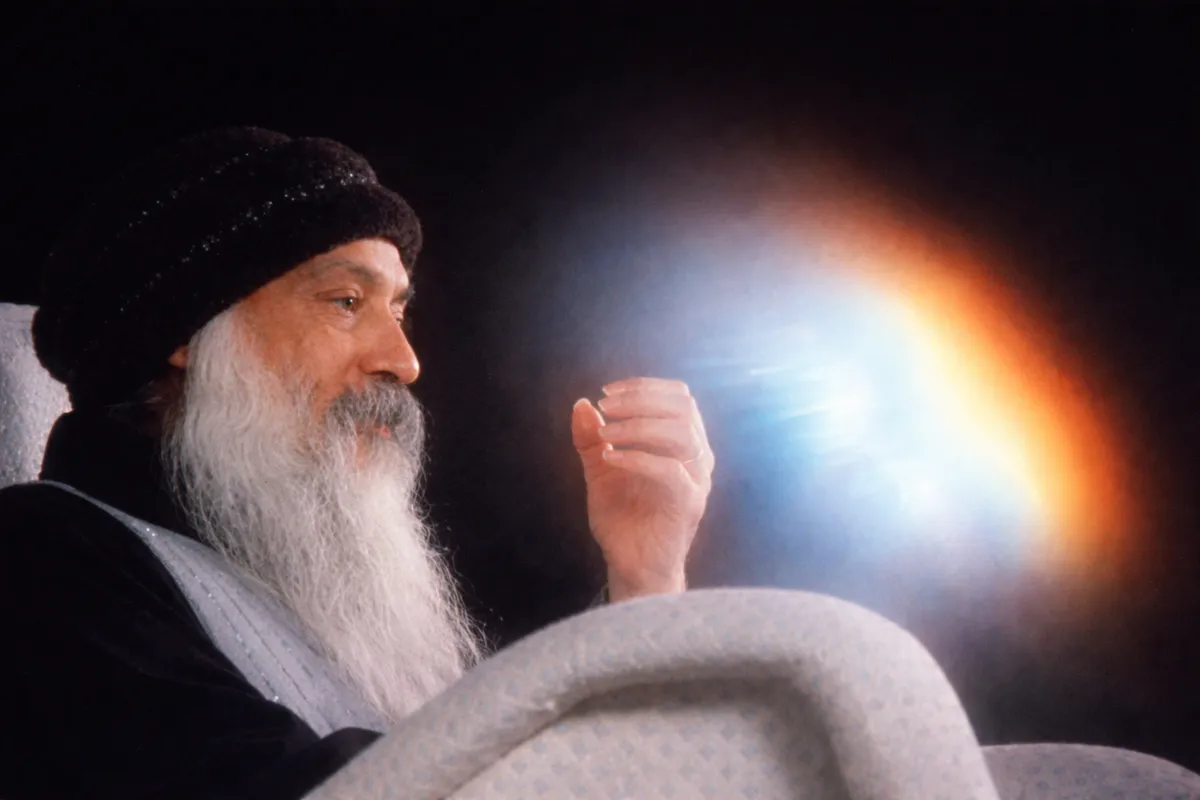
Saints aren’t gloomy; they’re just telling the truth that life hurts until we find the divine, and pretending otherwise only tricks us.
From the Discourses
Passages where Osho speaks to this question — each links to the complete discourse.
Osho, why have the saints always portrayed life as sorrow? Is this pessimism justified?
The saints have not portrayed life as sorrow. The saints looked into life and found it to be sorrow. That is not a “portrayal.” They never tried to prove that life is sorrow; they saw it—and it was sorrow. Now, if a thorn pierces your foot and you say, “I feel pain,” will anyone object, “Why are you depicting it like that? This is pessimism”? Someone has a festering ulcer, is in excruciating pain, and says, “I am suffering.” And you say, “Don’t describe it like that; that’s pessimism. One ought to be an optimist—say the ulcer gives you great joy!” What will change by saying so? The saints looked at life and described it as it is. That is not a philosophy of the saints—that life is sorrow; it is their experience that life is of the nature of suffering. Leave the saints aside—what is your experience? Just examine…
चौथा प्रश्न: ओशो, संतपुरुषों ने जीवन को सदा दुख की भांति क्यों निरूपित किया है? क्या यह दुखवाद उचित है?
संतों ने जीवन को दुख की भांति निरूपित नहीं किया है। संतों ने जीवन को देखा और दुखरूप पाया। यह निरूपण नहीं है। संतों ने चेष्टा नहीं की है इसे सिद्ध करने की कि यह दुख है। संतों ने देखा: यह दुख है। अब तुम्हारे पैर में कांटा गड़े और तुम कहो कि मुझे पीड़ा हो रही है, तो क्या कोई कहेगा कि आप ऐसा क्यों निरूपण कर रहे हैं! कि पैर में पीड़ा हो रही है! यह तो दुखवाद है। अब किसी के नासूर हो गया है, और जघन्य पीड़ा हो रही है और वह कहे: मुझे पीड़ा हो रही है। और आप कहो: ऐसा निरूपण न करो। यह तो दुखवाद है! …
Osho, you said that if even a little thirst has arisen and even a little courage, surrender to God. But how can a surrender done out of fear lead to fearlessness?
Resolve is the effort of a miserly mind. Surrender is a wholly different matter. Resolve stands near the ego. And now and then a rare person has reached by resolve. One can arrive by resolve too; but in the last moment he must drop his immense ego—and that is very difficult. Once in a while some Mahavira succeeds; that is why I say it is right to call Mahavira by that name—for hardly anyone ever succeeds on that journey. It is very difficult. Difficult because first you build up the ego, refine it; you take everything into your own hands. And in the final moment, when all has ripened, when the ego has been fashioned in its subtlest form, hard as a diamond—so that it can cut through all things and nothing can cut through it—at that very moment you must surrender. At that moment you have to let go…
चौथा प्रश्न: ओशो, आपने कहा कि थोड़ी भी प्यास जगी हो और थोड़ा सा भी साहस हो तो प्रभु को समर्पण कर दो। लेकिन भय से किया गया समर्पण निर्भयता को कैसे उपलब्ध होगा?
… और संकल्प से कभी-कभी एकाध व्यक्ति पहुंच पाया है। पहुंच जाता है संकल्प से भी; लेकिन आखिरी क्षण में उसको अपने विराट अहंकार को गिराना पड़ता है। वह बहुत कठिन मामला है। कोई महावीर कभी सफल हो पाता है। इसलिए मैं कहता हूं, महावीर को महावीर नाम देना ठीक है। क्योंकि मुश्किल से कभी उस यात्रा में कोई सफल होता है। बड़ी कठिन है। कठिन इस लिहाज से है कि पहले तुम अहंकार को निर्मित करते हो, शुद्ध करते हो। …
Osho, why is there so much secrecy in the ashram?
The ashram is not a marketplace; it is not open to the crowd. Here I am available to those few who genuinely want to be transformed. Sightseers, passersby—there is no purpose in their coming here. The invitation is only for those who have truly come close to transformation, for that small number. Therefore there is privacy in every respect. And the privacy will increase. Because as I see that more of the unnecessary can be sifted out, I will sift them out—since they themselves gain nothing, and by their presence they do not let others gain either. I have remained open to all for a long time and have seen what happens. I found that the crowd of the pointless becomes so thick that the meaningful person gets no chance at all. The merely curious surround so much that the true inquirer is left standing at the back. The mumukshu—the…
तीसरा प्रश्न: ओशो, आश्रम में इतनी गोपनीयता क्यों है?
… यहां मैं उन थोड़े से लोगों के लिए उपलब्ध हूं, जो वस्तुतः रूपांतरित होना चाहते हैं। तमाशबीन, राह चलते लोग, उनके लिए कोई यहां आने का प्रयोजन नहीं है। यहां तो उन्हीं के लिए निमंत्रण है जो सच में ही रूपांतरित होने के करीब आ गए हैं, उन थोड़े से लोगों के लिए है। इसलिए सब तरह की गोपनीयता है। और गोपनीयता बढ़ती जाएगी। क्योंकि जैसे-जैसे मैं पाऊंगा कि और व्यर्थ लोग छांटे जा सकते हैं, उनको मैं छांट दूंगा। क्योंकि न तो उनको कोई लाभ होता, न उनके कारण दूसरों को वे लाभ होने देते। मैंने बहुत दिन सबके लिए खुला रह कर देख लिया। मैंने पाया, उसमें जो व्यर्थ के लोग हैं उनकी भीड़ इतनी हो जाती है कि सार्थक आदमी को मौका ही नहीं मिल पाता। …
Smiling is not acceptable. That is why people look so sad, so weary, carrying such loads. Mountains sit on their chests; centuries of burden press on their heads. They can hardly walk and yet they crawl on. They won’t put the load down, because if they set it down, they themselves start to doubt: “Do I remain?” Because your burden is you. And if you lay it down, others also begin to doubt: “What happened to you? You’re laughing a lot today—have you started taking bhang or ganja? You look very cheerful—haven’t you fallen into some delusion?” And not only do others doubt; you doubt within: “What’s this freshness today? Something’s wrong—things aren’t as they should be.” If one morning you were suddenly to find yourself in samadhi, would you believe it? Here it happens sometimes. Suddenly a flood of samadhi overtakes someone.
मुस्कुराहट स्वीकार नहीं है। इसीलिए तो लोग इतने उदास दिखाई पड़ते हैं, इतने थके-हारे दिखाई पड़ते हैं, इतना बोझ ढोते दिखाई पड़ते हैं। पहाड़ उनकी छाती पर रखे हैं, उनके सिर पर इतना सदियों का बोझ है कि चल भी नहीं सकते, लेकिन घसिट रहे हैं। बोझ को उतार कर भी नहीं रखते, क्योंकि बोझ को उतार कर रखो तो तुम्हें खुद भी शक होता है कि मैं बचा? क्योंकि तुम्हारा बोझ ही तुम हो। और तुम बोझ को उतारो तो दूसरों को शक पैदा होता है, दूसरे कहते हैं--क्या हुआ है तुम्हें? आज बड़े हंस रहे हो, कुछ भांग-गांजा तो नहीं पीने लगे? आज बड़े प्रसन्न मालूम पड़ते हो, किसी धोखे में तो नहीं आ गए? और यही नहीं कि दूसरों को शक होता है, तुम्हें भी भीतर शक होता है कि यह आज मेरे भीतर ताजगी-ताजगी, बात क्या है? कुछ गड़बड़ हुई जाती है, जैसा होना चाहिए वैसा नहीं हो रहा है। एक दिन सुबह उठ कर अगर तुम अचानक अपने को समाधिस्थ पाओ, विश्वास करोगे?
Osho, why is life nothing but suffering? What kind of life has God created?
Awaken a little. Search a little. Who told you life is nothing but sorrow? Your so-called renouncers and ascetics keep saying such futile things: “Life is only suffering, only thorns—everything is bad. Renounce it. Run away. Leave it.” But be careful: whoever renounces life, whoever leaves life, insults God. He is an atheist, not a theist. Why do I say this? I say it after deep reflection. If you love the painter, how can you renounce his painting? If you love the sculptor, how can you renounce his sculpture? If you love the musician, you will carry his veena upon your head in reverence. If God created this existence, how can you renounce it? In renunciation there is complaint against God: “What have you made?” In renunciation is the declaration: “We know better than you what the world should be like—given a chance, we would have made a better world.…
तीसरा प्रश्न: ओशो, जीवन में दुख-ही-दुख क्यों हैं? परमात्मा ने यह कैसा जीवन रचा है?
थोड़ा जागो। थोड़ा खोजो। किसने तुमसे कहा कि जीवन में दुख ही दुख है? ये तुम्हारे तथाकथित त्यागी-तपस्वी, ये तुम्हें इसी तरह के व्यर्थ बातें कहते रहे हैं: जीवन में दुख ही दुख है, कांटे ही कांटे हैं, सब बुरा ही बुरा है। त्यागो। भागो। छोड़ो। लेकिन खयाल रखना, जो जीवन को त्यागता है, जीवन को छोड़ता है, उसने परमात्मा का अपमान किया है। वह नास्तिक है। वह आस्तिक नहीं है। क्यों मैं ऐसा कह रहा हूं? खूब सोचकर ऐसा कह रहा हूं। अगर तुम चित्रकार को प्रेम करते हो तो उसके चित्र का त्याग कैसे करोगे? और अगर तुम मूर्तिकार को प्रेम करते हो तो उसकी मूर्ति का त्याग कैसे करोगे? और अगर तुमने संगीतज्ञ को चाहा है तो तुम उसकी वीणा को सिर-माथे धरोगे। परमात्मा ने अगर यह सृष्टि की है तो तुम इसका त्याग कैसे करोगे? इसके त्याग में तो परमात्मा के प्रति शिकायत है। इसके त्याग में तो यह घोषणा है कि यह तूने क्या बनाया? …