
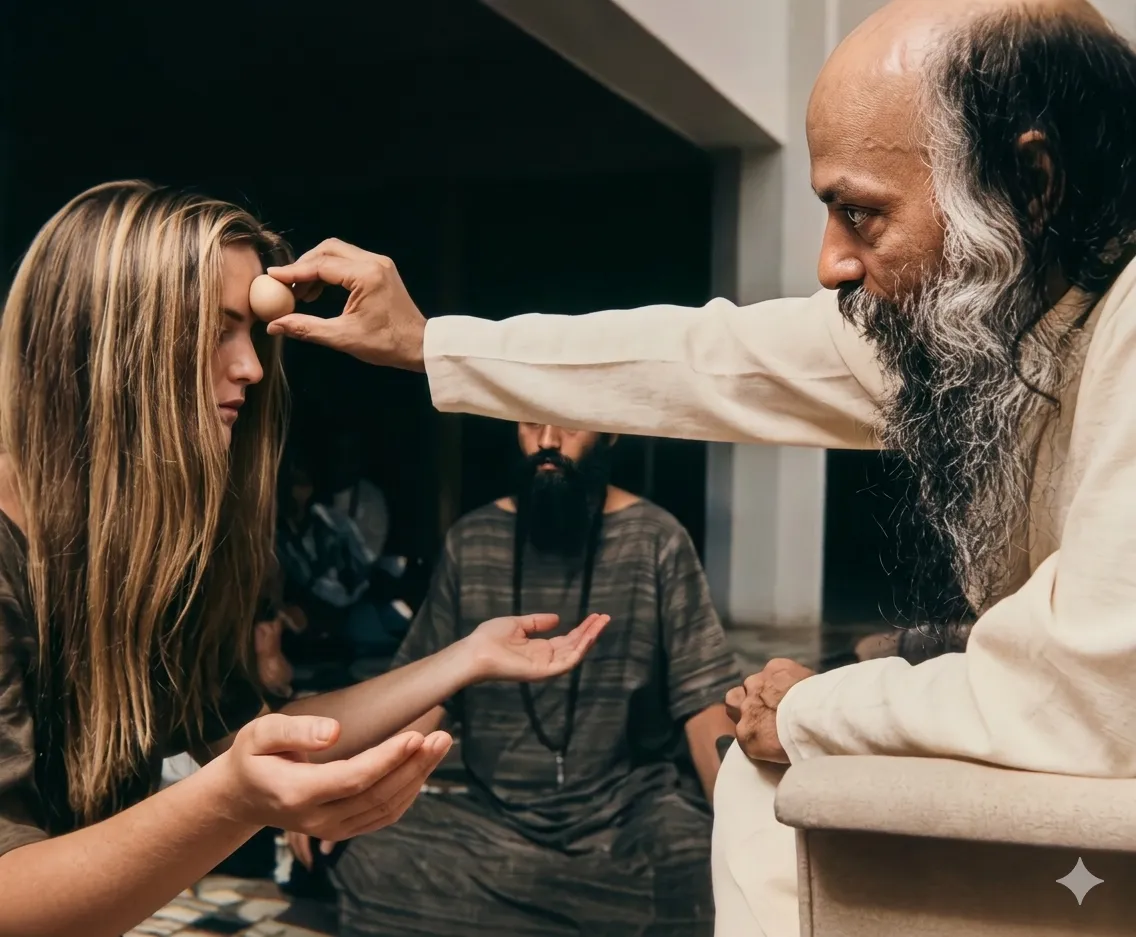
They last because most people choose easy comfort instead of the hard work of real truth and change.
From the Discourses
Passages where Osho speaks to this question — each links to the complete discourse.
Osho, you say the religions run by pandits and priests are fake. Then how have they continued for centuries and centuries? Why?
Paper flowers outlast real flowers. More people drink cocktails than straight liquor, for we Indians worship Ardhanarishvara— we are synthesizers, accustomed to adulteration, fond of mixtures. “Live with give-and-take,” our grandparents told us. We fancy the “other” more than our own; we like the mixed more than the pure. Where’s the fun in plain milk? We prefer tea, because fake things sell more than the real. Listen even to the doctors: “Don’t feed real milk to children. If it’s in their fate, Amul or Lactogen will be found in the market— bring that home.” Children’s health is built on tinned milk; only fools keep a cow at home nowadays, because fake things sell more than the real. Wisdom weeps, cunning laughs; dishonesty smiles, honesty gets trapped. All the lamps burn out, but the darkness doesn’t lift. Life ends, but death doesn’t die. Feet grow tired, the crutch never tires— because…
Question: Second question: Osho, why has the man of this century become irreligious? Understand this: religion lives from the future. The pandit-priest lives off the past. Therefore the pandit-priest and religion never truly meet. In my view, the pandit-priest is the most irreligious person in the world. He has only one concern—that his shop keep running. He drags in the old by any excuse. There is unrest in the world—he says, “Perform a yajna—a great Shatachandi—for world peace!” What has your fire sacrifice to do with world peace? How many have you performed already—has world peace come? Leave the world; bring peace to a single neighborhood and show us! Leave the neighborhood—those five hundred Brahmins who gather to burn up ten million rupees in a ritual, there is such turmoil among them—constant quarrels over who grabs how much.
Osho, what is the relationship between meditation and patience?
If you sit to meditate to remove mental restlessness, you will keep looking back again and again: “Has it gone yet?” And the irony is that when you begin to meditate, restlessness will increase. Because what has been repressed will start surfacing; catharsis will begin. The rubbish you have kept hidden within and never allowed to express—meditation will break open those doors too. It will clean the house. Dust piled up for years, for births, will rise again; there will be gusts and storms. For a while even the little peace you had will be lost. Then you will panic: “I came for peace, and even what I had is gone.” Without patience, you could even become unhinged, because meditation brings such a great storm. The disease is not from a day or two; it’s from lifetimes. Meditation will break through all the layers to reach your innermost core. In…
Osho, why have priests and pundits always opposed awakening human beings? And why do the masses keep getting caught in their nets again and again?
I went to Surat. A friend said, “Listening to you felt refreshing. I was born in a sect where there is a strange arrangement. You donate a lakh rupees to the sect’s chief mullah now, and he writes a letter in God’s name—an official certificate—detailing everything that will be arranged for you in heaven for that lakh. And when you die, that letter is placed on your chest in the grave. People are doing this. The money doesn’t reach God. Nor does the letter—because it stays right there in the grave! Who is going to carry it?” I said, “Dig up a few graves and see—you’ll find the letters lying right there.” He said, “They are still there; they haven’t gone anywhere!” Yet people keep giving. Greed! Man is so weak he is easy to exploit. It is easy to frighten him, to unnerve him. And the whole art of…
You said that priests, pundits, and religious authorities have kept people from moving toward God and the knowing of God. The question is: Do priests know nothing at all? In thousands of years have they learned nothing? Are they utterly ignorant?
No; priests know a great deal. That is precisely the danger. If they were ignorant, there would be far less danger. They know a lot—and the danger lies in what they know. Let me tell a small story; perhaps it will make my point clear. Early one morning a royal court was filling, and a stranger arrived—a traveler from a distant land, it seemed. His dress was unfamiliar, his face unknown. But he carried himself with great dignity and presence. Everyone in the court found their eyes drawn to him. He wore a magnificent turban—unlike anything seen in that country—rich with multicolored patterns and glittering ornaments on top. The king asked, “Honored guest, may I ask how expensive this turban is and where you bought it?” The man said, “It is very expensive. I had to spend a thousand gold coins.” The vizier, seated beside the king—and viziers are naturally…