
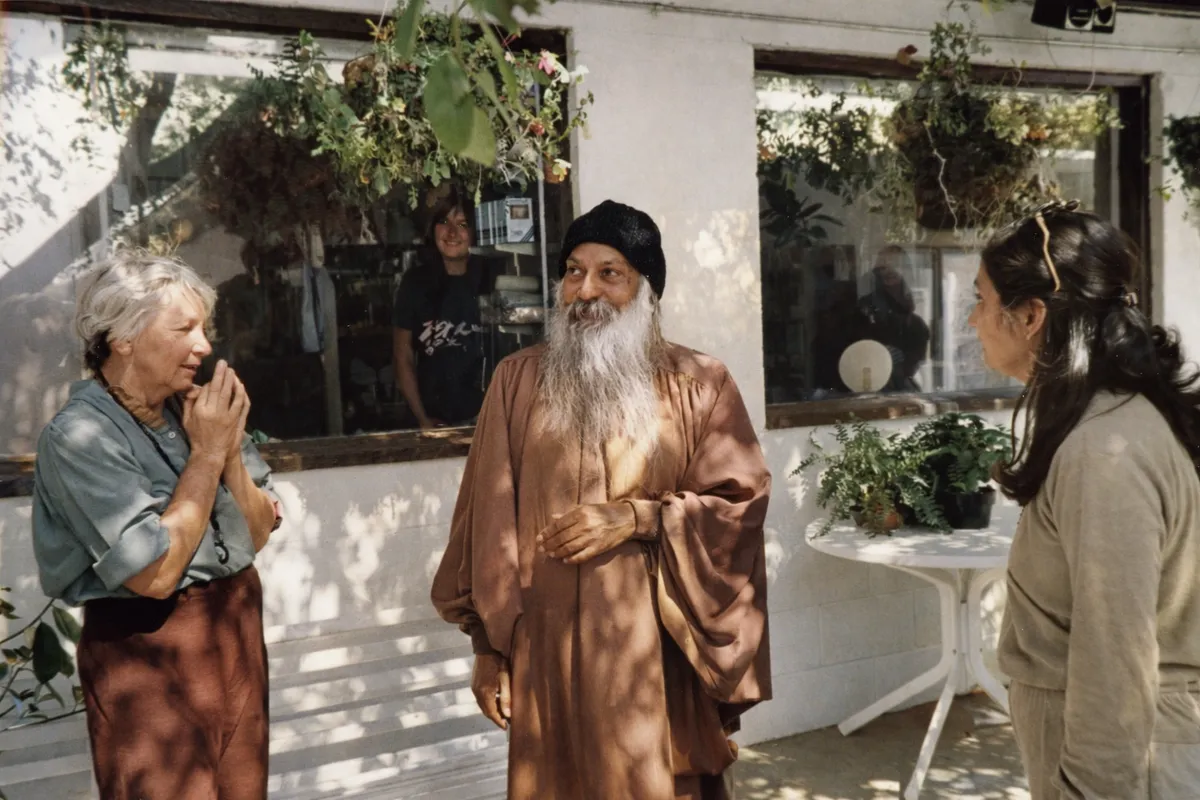
According to Osho, you remember God in suffering not out of love but as a shield against pain—mere bargaining, not prayer. Authentic remembrance arises in gratitude, beauty, and joy: a rose, a child’s smile, love, dawn. First link God with celebration, then even in sorrow remembrance is true. Let God be blessing, not emergency rescue.
We remember God when we hurt because we want rescue, but real remembering is thanking and celebrating God when life is beautiful, so it becomes genuine even in hard times.
From the Discourses
Passages where Osho speaks to this question — each links to the complete discourse.
Why do I remember god only when I am in suffering?
You don't remember God. When you are in suffering your remembering God is just meaningless. Just because you want to avoid suffering, you remember God as a protection. You are not interested in God, you are only interested in how to avoid the suffering. So that's why when you are happy you forget all about God. But know well, only when you remember God in happiness is there remembrance, otherwise not. In suffering everybody remembers God -- even an atheist. That's why even atheists start becoming theists as they become older. And at the death point almost every atheist becomes a theist -- when the real suffering of death comes then all your philosophy of atheism disappears. But that is not real, authentic prayer, authentic remembrance. Religious persons are those who remember when they are happy, because they remember in gratitude. When you see a rose flower, that will be…
Osho, how does the remembrance of the Divine begin? How am I to remember God? I have no clue to God at all.
Have you ever known any joy through the ego? The ego aches like a wound; the smallest things hurt. The greater the ego, the greater the pain in life. Remove the source of this pain. Then some true Master will knock at your door. Or, unawares, you will recognize a Master in one in whom you had never seen one before. Sometimes he was living right next door and you did not hear; you met daily on the road, exchanged greetings—and still you never saw. You need the eye to see; the ego does not allow such an eye to be born. Ego is a great curtain. One way is this. If this too feels hard—if letting the ego drop is not easy, if recognizing the Master is not easy—then there is another way: search in nature. In waterfalls, trees, winds, the moon and the stars. Do not search for…
Osho, I remember God so much, but a question arises in my mind: does God ever remember me, or not?
Teach a parrot “Ram-Ram” or teach it abuses—nothing goes deep; a parrot is a parrot. And most of your prayers are parrot-like—learnt by rote, taught by others. I am not asking for such prayers. At the very least, let your prayer be yours, your own. Don’t repeat borrowed words before the Divine. Don’t just chant the Gayatri. Sing your own song. Gayatri was someone’s own song once—then it was beautiful. When it arose from a living heart, it was filled with divinity. For the first singer, Gayatri’s glory is beyond telling. But Gayatri is not yours. You sit and mutter it—parrot-fashion. Your own Gayatri is waiting within you. Sing your own song. Even if it is halting, lisping, out of meter, without polished poetry—don’t worry. The Divine does not care for meter, or grammar, or language. The Divine cares for one thing only—your love, your loving call, exactly as it…
Hence the strange fact: when a man is happy, he does not remember God; only in sorrow does he remember. Because only in sorrow does the question of shifting responsibility to another arise; in happiness we can carry it ourselves. When happiness comes, we are the cause; and when sorrow comes, then it is due to someone else. Then we want to point a finger at God: “With you around, and we suffer like this! Your very being is useless! If you are, prove it—remove our suffering.” A man once told me he had firm faith in God now; because he had said, “If my son doesn’t get a job within fifteen days, I will never be able to trust you again”—and the job came. I said, “God has made a poor bargain with you; it will break any day.
John 13 1 now before the feast of the passover, when jesus knew that his hour was come that he should depart out of this world unto the father, having loved his own which were in the world, he loved them unto the end.
Matthew 26 17 NOW THE FIRST DAY OF THE FEAST OF UNLEAVENED BREAD THE DISCIPLES CAME TO JESUS, SAYING UNTO HIM: WHERE WILT THOU THAT WE PREPARE FOR THEE TO EAT THE PASSOVER? 18 AND HE SAID: GO INTO THE CITY TO SUCH A MAN, AND SAY UNTO HIM: THE MASTER SAITH, MY TIME IS AT HAND; I WILL KEEP THE PASSOVER AT THY HOUSE WITH MY DISCIPLES. 19 AND THE DISCIPLES DID AS JESUS HAD APPOINTED THEM; AND THEY MADE READY THE PASSOVER. 14 Luke 22 14 AND WHEN THE HOUR WAS COME, HE SAT DOWN, AND THE TWELVE APOSTLES WITH HIM. 15 AND HE SAID UNTO THEM: WITH DESIRE I HAVE DESIRED TO EAT THIS PASSOVER WITH YOU BEFORE I SUFFER: 16 FOR I SAY UNTO YOU, I WILL NOT ANY MORE EAT THEREOF, UNTIL IT BE FULFILLED IN THE KINGDOM OF GOD. 17 AND HE TOOK THE…