
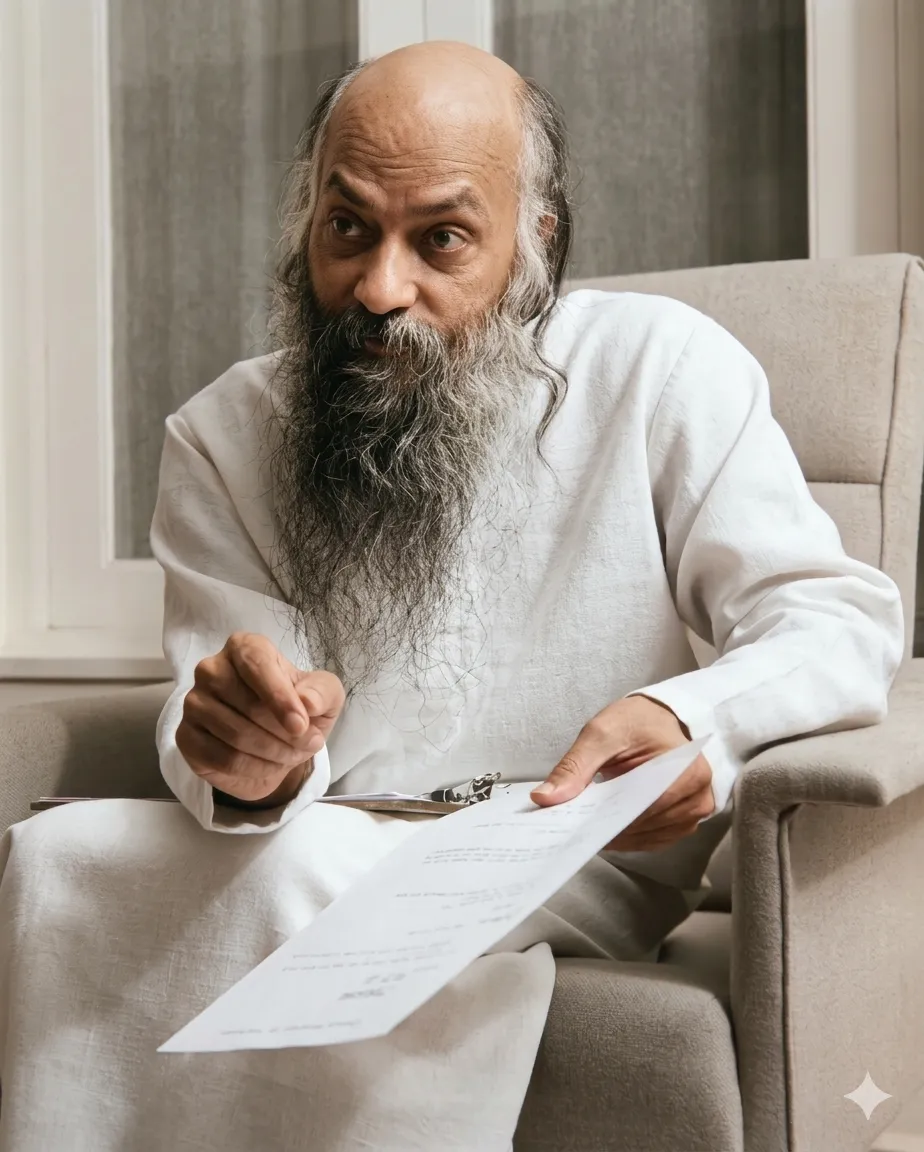
No one is better—both teach that the real harm is the ‘I’ that thinks it’s doing; drop that, and you won’t hurt anyone.
From the Discourses
Passages where Osho speaks to this question — each links to the complete discourse.
Osho, Krishna says “kill,” and Mahavira says that even the mere thought of violence is violence. Please tell us who is superior between the two?
In the smoke and dust, the hustle and bustle of the road, you will be lost: you won’t even have time to enter the temple or the mosque. If you want to pray, you must choose somewhere. But be mindful about the basis of your choice—choose because of “me,” not because of which of them is superior. Keep the relativity on your side. I cannot choose both together. My heart is not that vast yet. My vision is not so immense that I can hold both together. My house is not so spacious that I can host both as guests at once. Accept this compulsion and choose: the house is small; I can invite only one. The day you awaken, you will find both are two different faces of the same truth. But until then, you must decide. And decide very consciously. Do not leave this decision to your birth—“I…
पहला प्रश्न: ओशो, कृष्ण कहते हैं कि मारो और महावीर कहते हैं कि हिंसा का विचार-मात्र हिंसा है। कृपया बतायें कि दोनों में श्रेष्ठ कौन है?
धुआं, धूल, राह की आपा-धापी में ही तुम नष्ट हो जाओगे: समय ही न बचेगा मंदिर में प्रवेश करने का कि मस्जिद में प्रवेश करने का। प्रार्थना करनी है तो कहीं तो चुनना ही होगा। लेकिन चुनाव का ध्यान रखना--‘मेरे’ कारण चुन रहा हूं; उनमें कौन श्रेष्ठ है, इस कारण नहीं। सापेक्षता अपनी तरफ रखना। यह मैं दोनों को साथ नहीं चुन सकता। इतना बड़ा मेरे पास हृदय नहीं। इतनी विराट मेरी दृष्टि नहीं कि दोनों को साथ-साथ सम्हालूं! इतना मेरे घर में स्थान नहीं कि दोनों को साथ-साथ मेहमान बना लूं! यह मजबूरी मानकर चुनना कि घर छोटा है और एक को ही बुला सकता हूं।
A friend has asked: Osho, Gautam Buddha taught truth, nonviolence, not to lie, not to steal, not to do evil. But in Krishna’s Gita the path of violence is shown. Krishna teaches stealing, lying, and moving from sex to samadhi. So tell us: one who teaches the path of violence—can he be called God?
The teachings of Buddha and Mahavira are ethical and given with the ordinary person in mind. Krishna’s teachings are religious and addressed to a very extraordinary person. The teachings of Buddha and Mahavira can be understood even by a very ordinary intelligence; there is hardly any obstacle there. They consider the third-rate mind—the last rung of intelligence. Krishna’s teachings can be understood only by first-rate human beings. They are exceedingly subtle, and far higher than the teachings of Buddha and Mahavira. It will be a bit difficult to grasp them. We all understand that stealing is a sin; even a thief understands it. It is not only you who see it; the thief, too, knows stealing is wrong. But why is stealing wrong? Stealing can be wrong only if property is real; that’s the first premise. Money must be of great value, and personal ownership must be accepted; only then…
एक मित्र ने पूछा है कि ओशो, भगवान बुद्ध ने सत्य, अहिंसा, झूठ न बोलना, चोरी न करना, बुरा न करना, यह सिखाया है। परंतु कृष्ण की गीता में हिंसा का मार्ग बतलाया गया है। कृष्ण चोरी करना, झूठ बोलना, संभोग से समाधि की ओर जाना सिखाते हैं। तो आप यह कहिए कि जो हिंसा का मार्ग बताता है, क्या वह भगवान माना जा सकता है?
बुद्ध, महावीर की शिक्षाएं नैतिक हैं और बहुत साधारण आदमी को ध्यान में रखकर दी गई हैं। कृष्ण की शिक्षाएं धार्मिक हैं और बहुत असाधारण आदमी को ध्यान में रखकर दी गई हैं। बुद्ध, महावीर की शिक्षाएं अत्यंत साधारण बुद्धि के आदमी की भी समझ में आ जाएंगी; उनमें जरा भी अड़चन नहीं है। उसमें थर्ड रेट, जो आखिरी बुद्धि का आदमी है, उसको ध्यान में रखा गया है। कृष्ण की शिक्षाएं प्रथम कोटि के मनुष्य की ही समझ में आ सकती हैं। वे अति जटिल हैं। और महावीर और बुद्ध की शिक्षाओं से बहुत ऊंची हैं। थोड़ा कठिन होगा समझना। हम सबको समझ में आ जाता है कि चोरी करना पाप है। चोर को भी समझ में आता है। आपको ही समझ में आता है, ऐसा नहीं; चोर को भी समझ में आता है कि चोरी करना बुरा है। लेकिन चोरी करना बुरा क्यों है? चोरी करना बुरा तभी हो सकता है, जब संपत्ति सत्य हो; पहली बात। धन बहुत मूल्यवान हो और धन पर किसी का कब्जा माना जाए, व्यक्तिगत अधिकार माना जाए, तब चोरी करना बुरा हो सकता है। धन किसका है? …
Osho, you said... then you will find that the devotee is God. The question arises: if one devotee prefers to be God and another wants to remain only a devotee, then which of the two is superior?
The one who wants to be God will not be able to be. And the one who wants to remain a devotee will become God. The question of superior or inferior does not arise, because only one of the two will happen. The one who does not want to be will be. The one who wants to be will be deprived. That very wanting is of the ego. But the matter is a little delicate. Sometimes humility too belongs to the ego. Beware that your humility may not be of the ego. Perhaps you are saying, “No, I don’t want to be,” because you know that those who refuse are the ones who attain. Then you are clever. Then your humility is adulterous. Your humility is not pure, not sacred, not virginal—it is like a prostitute. The one who wants to be God, whose ego says, “I must become God,”…
दूसरा प्रश्न: ओशो, आपने कहा... तब पाओगे कि भक्त ही भगवान है। प्रश्न उठता है कि एक भक्त भगवान होना पसंद करे और दूसरा सिर्फ भक्त रहना चाहे, तो दोनों में श्रेष्ठ कौन है?
जो भगवान होना चाहे वह तो हो न पाएगा। और जो भक्त भक्त ही रहना चाहे वह भगवान हो जाएगा। श्रेष्ठ-अश्रेष्ठ का सवाल नहीं उठता, क्योंकि एक ही हो पाएगा। जो नहीं होना चाहता वही हो पाएगा। जो होना चाहता है, वह तो वंचित रह जाएगा। वह तो चाह भी अहंकार की ही है। लेकिन मामला थोड़ा नाजुक है। कभी-कभी ऐसा होता है कि विनम्रता भी अहंकार की ही होती है। कहीं तुम्हारी विनम्र्रता भी अहंकार की ही न हो। कहीं तुम इसलिए ही न कर रहे होओ कि नहीं मैं नहीं होना चाहता, क्योंकि तुम जानते हो कि जो इनकार करते हैं वही हो पाते हैं। तो तुम चालाक हो। तो तुम्हारी विनम्रता व्यभिचारी है। तो तुम्हारी विनम्रता शुद्ध नहीं, पवित्र नहीं, कुंआरी नहीं, वेश्या जैसी है।
Osho, yesterday you said that when anger is watched consciously, it dissolves. But why is it that when sexual desire arises, even in awareness its intensity persists? Why is it so?
There is no entanglement in the breath. If you try to practice on anger… Anger is not happening every moment; it happens sometimes. And when it happens, it happens with such intensity that you are already going deep into it; so much is at stake in those moments that you may think, “We will look into awareness later; first let’s settle this now.” Lust is very deep, because existence has made it so deep; life depends on it. If lust were so easy that you decided and were freed, perhaps you would not even have been born—because many before you would have become free, and the possibility of your being would have been almost nil. But your parents, and their parents, did not become free; therefore you are. You too will not get free so easily, because your children are also to be—they are waiting: “Do not run away midway.”…
दूसरा प्रश्न: ओशो, आपने कल कहा कि क्रोध को होशपूर्वक देखने पर क्रोध विलीन हो जाता है। लेकिन क्या कारण है कि कामवासना के उठने पर होश में भी उसकी प्रगाढ़ता बनी रहती है। ऐसा क्यों है?
श्वास में कुछ झंझट नहीं है। अब तुम या तो क्रोध पर साधोगे...। क्रोध रोज तो होता नहीं, प्रतिपल होता नहीं, कभी-कभी होता है; जब होता है तब इतनी प्रगाढ़ता से होता है कि तुम गहरे में उतर रहे हो; जब होता है तब इतनी बातें दांव पर लग जाती हैं कि शायद तुम सोचोगे, ‘फिर देख लेंगे होश इत्यादि! यह अभी, अभी तो निपट लें।’ कामवासना तो बहुत गहरी है, क्योंकि प्रकृति ने उसे बहुत गहरा बनाया है, क्योंकि जीवन उस पर निर्भर है। अगर कामवासना इतनी आसान हो कि तुमने चाहा और छूट गए, तो तुम शायद पैदा ही न होते, क्योंकि तुमसे पहले बहुत लोग छूट चुके होते; तुम्हारे होने की संभावना न के बराबर होती। मगर वह तो तुम्हारे माता-पिता उनके माता-पिता नहीं छूट सके, इसलिए तुम हो। तुम भी इतनी आसानी से न छूट जाओगे, क्योंकि तुम्हारे बच्चों को भी होना है; वे भी प्रतीक्षा कर रहे हैं कि ऐसे भाग मत जाना बीच से। जीवन बहुत कुछ टिका है कामवासना पर। इसलिए उसका छूटना इतना आसान नहीं है। असंभव नहीं है, आसान भी नहीं है। …
Osho, you just said that sannyasins like Buddha and Mahavira are sorrow-centered. But their sannyas arose out of a life of great splendor; renunciation was the next phase of their opulence. So you can’t put sorrow at the base of it.
But Gandhi was far removed in time; there are five thousand years between Krishna and Gandhi. So calling a five-thousand-year-old story “myth” is not hard. The Jains did not have such distance, so they could not call the story a tale—the event happened. Jain thought is as ancient as the Vedas; the first Jain Tirthankara is mentioned in the Vedas. The antiquity of Hindus and Jains is equal. The Jains could not deny the war, nor that Krishna had it fought. So what could they do? Had they had Gandhi’s convenience, they would have done what Gandhi did—who, in the body a Hindu but in mind deeply Jain—dismissed it as myth. The Jains could not; it was contemporaneous. They had to consign Krishna to hell. Their scriptures had to say that Krishna went to hell. If someone causes so great a violence and does not go to hell, then what…
ओशो, आपने अभी कहा कि बुद्ध और महावीर जैसे संन्यासी दुखवादी हैं। लेकिन संन्यास उनके वैभवपूर्ण जीवन से निकला, संन्यास उनके वैभव का अगला चरण था, इसलिए उसके आधार में आप दुख को नहीं रख सकेंगे।
लेकिन गांधी को बहुत वक्त हुआ, कृष्ण और गांधी के बीच पांच हजार साल का फासला पड़ता है। इसलिए किसी पांच हजार साल पुरानी कहानी को मिथ कहना, कल्पना कहना कठिन नहीं है। जैनों को इतना फासला नहीं था। इसलिए जैन कृष्ण की कथा को कहानी नहीं कह सके, वह घटना घटी है। जैन-चिंतन उतना ही पुराना है जितने वेद पुराने हैं। जैनों के पहले तीर्थंकर का नाम वेद में उपलब्ध है। हिंदुओं और जैनों की प्राचीनता बिलकुल बराबर है। जैन इनकार नहीं कर सकते थे कि युद्ध नहीं हुआ और कृष्ण ने युद्ध नहीं करवाया। तो जैन क्या करें, अगर उनको भी सुविधा होती तो जो गांधी ने किया, जो कि बहुत गहरे मन से जैन थे--शरीर से हिंदू थे, मन से जैन थे--गांधी तो पुराण कह कर टाल सके, जैन नहीं टाल सकते थे, वह समसामयिक थे। उनको कृष्ण को नरक में डालना पड़ा। उन्हें अपने शास्त्रों में लिखना पड़ा कि कृष्ण नरक गए। इतनी बड़ी हिंसा करवा कर कोई आदमी नरक न जाए, तो फिर चींटी मारने वाले का क्या होगा? …