
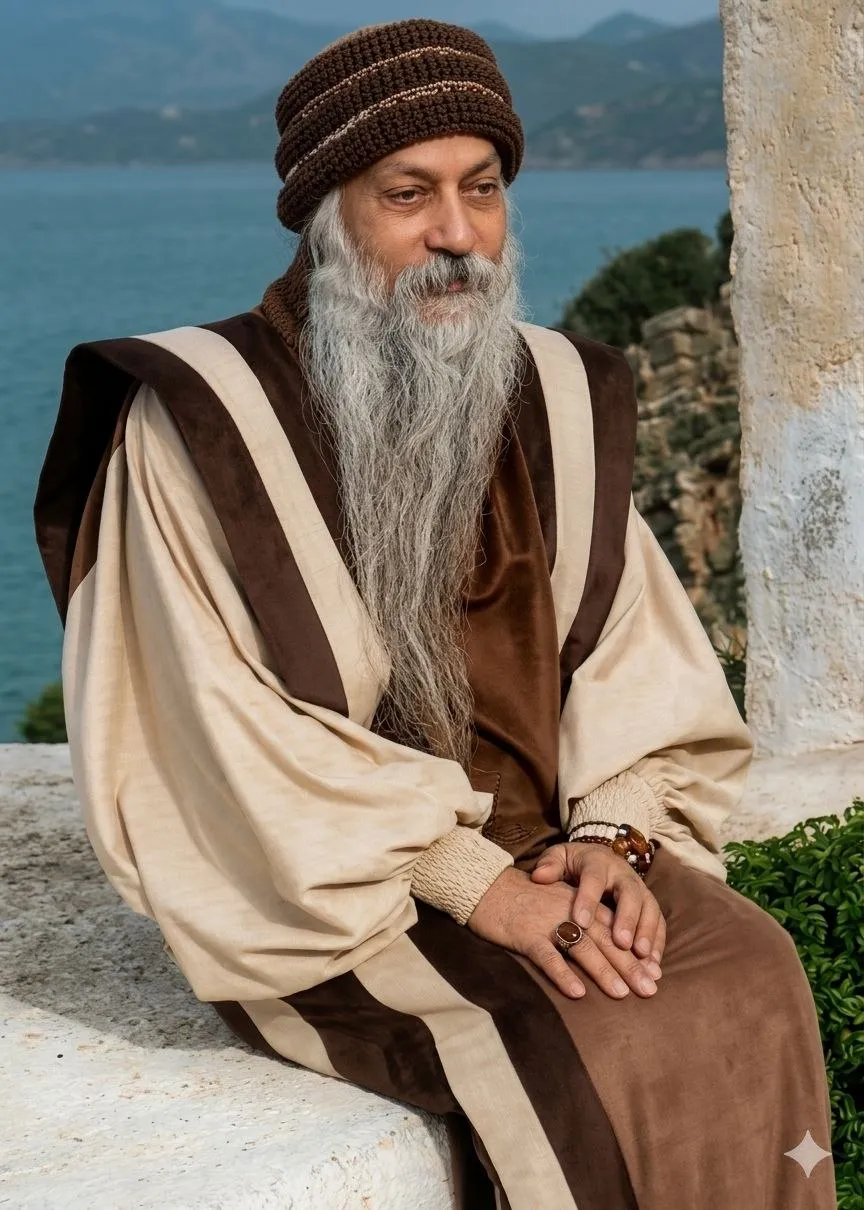
Keep watching yourself all day and you’ll spot violence whenever you try to control, impress, or force respect from others—even without raising a hand.
From the Discourses
Passages where Osho speaks to this question — each links to the complete discourse.
Another friend has asked: Osho, what is the relationship between the method of meditation and jati-smaran (recollection of past lives)?
But the one who becomes skilled in this—who can fully awaken any day’s memory up to the age of five—will find that the memories begin to awaken completely. And you should test it. As today passes, note down some events and lock them up. After two years, try to recall today. Most of it will have been forgotten. Then remember—and after remembering, break the lock and compare whether what you recalled matches what you had written. You will be amazed—astonished—that besides what you wrote, many more details have come back which you did not even note at the time. They will all be there in memory. Buddha called this alaya-vijnana. There is a corner of the human mind he called the storehouse of consciousness. Like a junk room in the house where we keep all the odds and ends, there is a storehouse that collects memories—where everything from birth after…
एक और मित्र ने पूछा है कि ओशो, ध्यान की विधि और जाति-स्मरण में क्या संबंध है?
लेकिन जो व्यक्ति इसमें समर्थ हो जाएगा, पांच वर्ष की उम्र तक की किसी भी दिन की स्मृति को पूरा जगाने लगेगा...और वह पूरी जगने लगती है। और फिर उसको इस तरह जांच कर लेनी चाहिए। जैसे आज का दिन गुजर रहा है, तो आज के दिन की कुछ बातें नोट करके ताले में बंद कर दें। दो साल बाद आज के दिन को याद करें। वह सब खो जाएगा आज का दिन। और तब स्मरण करें, और स्मरण करके फिर ताला तोड़ें, और फिर मेल करें कि वह बात मेल खा गई कि नहीं। और आप हैरान होंगे--आप हैरान होंगे कि जितनी आपने लिखी थीं, उससे बहुत ज्यादा बातें और भी याद आई हैं जो कि आप उस दिन भी नोट नहीं कर पाए थे। वे तो सब बातें याद आ ही जाएंगी। इसको बुद्ध ने नाम दिया है, आलय-विज्ञान। मनुष्य के मन का एक कोना है, जिसको उन्होंने आलय-विज्ञान कहा है। आलय-विज्ञान का मतलब होता है, स्टोर हाउस आफ कांशसनेस। जैसे घर में एक कबाड़खाना होता है, जहां हम सब बेकार हो गई चीजों को डालते चले जाते हैं। …
Osho, in a discourse at Shanmukhananda Hall you said that the tendency toward violence is a disease, and that recognizing it in all its forms is the first condition of becoming nonviolent. So please shed light on the biochemical and psychic structure of the violent tendency, so that we can recognize violence more deeply.
For man, violence is a disease; for the animal, it is not. For the animal, violence is natural. On the animal plane there is no possibility of nonviolence, therefore there is no awareness of violence either. For the animal, violence is natural—nonviolence is impossible. For man, violence is a conditioning inherited from the animal. But for his evolved consciousness, it is a disease that obstructs. The moment consciousness begins to evolve, its past becomes chains for it. For those who are growing, their “yesterday” becomes a bondage every day. Therefore, one who wishes to evolve must drop yesterday each day and go on. One who is unwilling to erase his past is refusing to evolve. If I remain today what I was yesterday, then my today is wasted. And if I am to evolve today, there is no way except to go beyond my yesterday. The past must be transcended.…
ओशो, षणमुखानंद हॉल में हुए एक प्रवचन में आपने कहा है कि हिंसा-वृत्ति एक बीमारी है और उसे उसके समस्त रूपों में पहचान लेना अहिंसक होने की पहली शर्त है। तो कृपया हिंसा-वृत्ति के जीव-रासायनिक अर्थात बायोकेमिकल तथा साइकिक संरचना पर प्रकाश डालें, ताकि हिंसा को हम अधिक गहराई से पहचान सकें।
… पशु के तल पर अहिंसा की कोई संभावना नहीं है, इसलिए हिंसा का कोई बोध भी नहीं है। पशु के लिए स्वाभाविक है हिंसा--अहिंसा असंभव है। मनुष्य के लिए हिंसा पशु से मिला हुआ संस्कार है। लेकिन उसकी विकसित चेतना के लिए रोकने वाली बीमारी है। चेतना जैसे ही विकसित होती है, वैसे ही उसका अतीत भी उसके लिए जंजीरें बन जाता है। जो विकासमान हैं, उनके लिए रोज ही उनका ‘कल’ बंधन बन जाता है। इसलिए जिसे विकास करना है, उसे रोज अपने कल को छोड़ कर आगे बढ़ जाना पड़ता है। जो अपने अतीत को मिटाने के लिए राजी नहीं है, वह विकसित होने से इनकार कर रहा है। मैं जो कल था, अगर आज भी वही होऊं, तो मेरा आज व्यर्थ गया। और यदि मुझे आज विकसित होना है, तो मेरे कल के पार जाने के अतिरिक्त और कोई मार्ग नहीं है। दि पास्ट मस्ट बी ट्रांसेंडेड। …
Therefore, the first necessity on the path of ahimsa is to recognize the faces of violence — especially those non-violent faces. Violence cannot deceive anyone directly. No sin can deceive directly. Sin must deceive from behind the veil of virtue. This is the glory of virtue. It shows that even when sin wins, it wins wearing the face of virtue — or as one’s own inner voice. Sin never truly wins; sin is defeated in itself. Violence cannot win. Yet violence does not disappear from the world because we have discovered too many non-violent masks for it. Let us first endeavor to recognize the faces of violence. The very first form, the first dimension of violence is very deep; begin there. The first violence begins in taking the other as the other. The moment I say, you are the other, I have become violent toward you.
इसलिए अहिंसा की दिशा में जो पहली बात जरूरी है, वह हिंसा के चेहरे पहचान लेना जरूरी हैं। खासकर उसके अहिंसक चेहरे, नॉन-वायलेंट फेसेज़ पहचान लेना बहुत जरूरी हैं। हिंसा सीधा धोखा किसी को भी नहीं दे सकती है। दुनिया में कोई भी पाप सीधा धोखा देने में असमर्थ है। पाप को भी पुण्य की आड़ में ही धोखा देना पड़ता है। यह पुण्य के गुण-गौरव की कथा है। इससे पता चलता है कि पाप भी अगर जीतता है, तो पुण्य का चेहरा लगा कर ही जीतता है। जीतता सदा पुण्य ही है। चाहे पाप के ऊपर चेहरा बन कर जीतता हो और चाहे खुद की अंतरात्मा बन कर जीतता हो। पाप कभी जीतता नहीं। पाप अपने में हारा हुआ है। हिंसा जीत नहीं सकती। लेकिन दुनिया से हिंसा मिटती नहीं, क्योंकि हमने हिंसा के बहुत से अहिंसक चेहरे खोज निकाले हैं। तो पहले हम हिंसा के चेहरों को समझने की कोशिश करें। हिंसा का सबसे पहला रूप, सबसे पहली डाइमेन्शन, उसका जो पहला आयाम है, वह बहुत गहरा है, वहीं से पकड़ें। …
Bahaudin el-shah, great teacher of the naqshbandi dervishes, one day met a confrere in the great square of bokhara.
THE NEWCOMER WAS A WANDERING KALENDAR OF THE MALAMATI, THE "BLAMEWORTHY". BAHAUDIN WAS SURROUNDED BY DISCIPLES. "FROM WHERE DO YOU COME?" HE ASKED THE TRAVELER, IN THE USUAL SUFI PHRASE. "I HAVE NO IDEA," SAID THE OTHER, GRINNING FOOLISHLY. SOME OF BAHAUDIN'S DISCIPLES MURMURED THEIR DISAPPROVAL OF THIS DISRESPECT. " WHERE ARE YOU GOING?" PERSISTED BAHAUDIN. "I DO NOT KNOW," SHOUTED THE DERVISH. WHAT IS GOOD?" BY NOW A LARGE CROWD HAD GATHERED. "I DO NOT KNOW." " WHAT IS EVIL?" "I HAVE NO IDEA." " WHAT IS RIGHT?" "WHATEVER IS GOOD FOR ME." "WHAT IS WRONG?" "WHATEVER IS BAD FOR ME." THE CROWD, IRRITATED BEYOND ITS PATIENCE BY THIS DERVISH, DROVE HIM AWAY. HE WENT OFF, STRIDING PURPOSEFULLY IN A DIRECTION WHICH LED NOWHERE, AS FAR AS ANYONE KNEW. "FOOLS" SAID BAHAUDIN NAQSHBAND. "THIS MAN IS ACTING THE PART OF HUMANITY. WHILE YOU WERE DESPISING HIM,' HE WAS DELIBERATELY…
People come and say, “We have something to ask; but we don’t know what to ask.” And they’re not wrong—they’re very honest. That is the situation. People want to ask; they feel something must be asked. Somewhere inside there is a pressure, a swell—something wants to be asked. But what? Nothing is graspable. No shape forms, no outline settles. One wants to seek—but what? Who is this Godot? No one knows. Wake up from this waiting! This waiting has gone on too long. No one has ever come, and no one will ever come. Close the doors. Now seek the one who you are. At one time you waited for wealth, then for status; you sought respect in people’s eyes, you prayed, looked up to the sky for some God—but all of it was Godot! You are not clear what you are seeking, what you are asking for.