
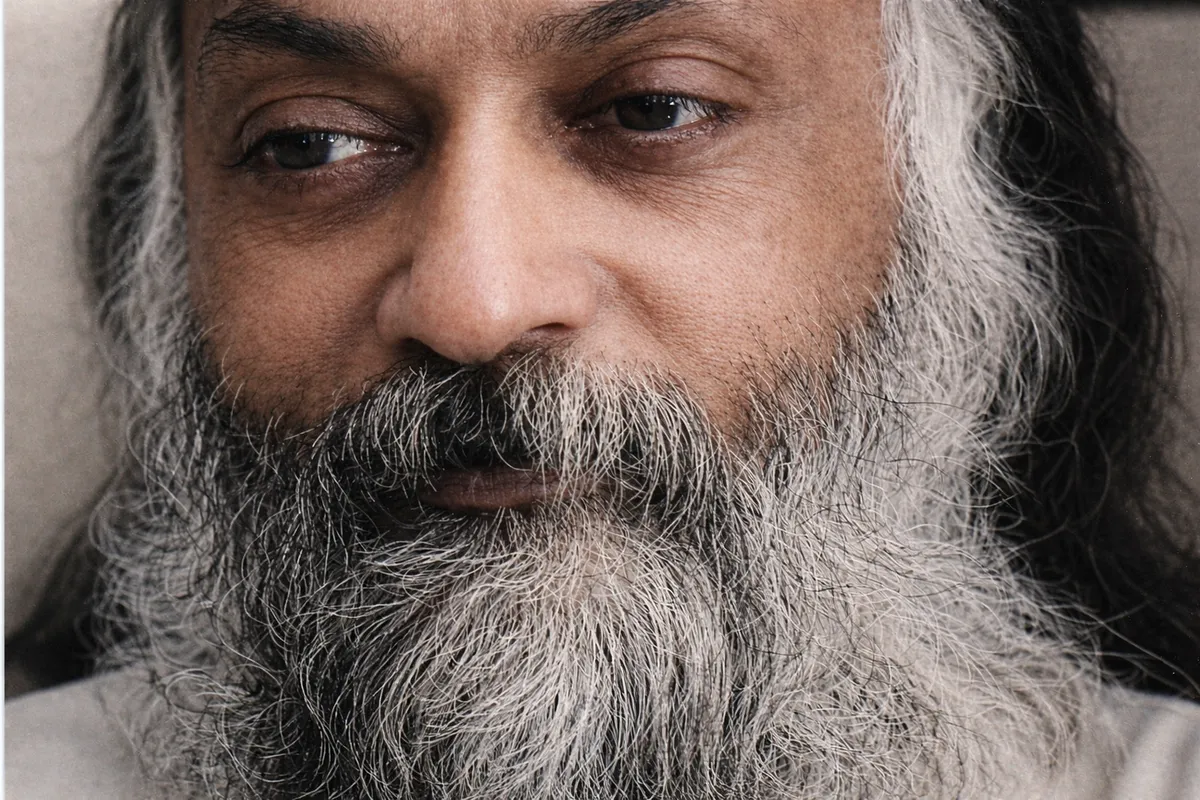
It means your true self is gentle and caring, and real wisdom is keeping that softness while using strength only when it’s truly needed.
From the Discourses
Passages where Osho speaks to this question — each links to the complete discourse.
Someone has asked: Buddha, Mahavira, Krishna, Jesus, Mohammed, Lao Tzu, Rajneesh—meaning, all men! Then why has no woman ever carried the news of Buddhahood to the world? Is becoming a bodhisattva harder from a woman’s point of view?
Many things have to be understood in this regard. First, woman and man are fundamentally different. Different does not mean higher or lower; they are equal, but opposite. Neither is above, neither below. Equal—but polar opposites. And their polarity is essential; from the union of these two opposites, birth happens and the current of life flows. Because they are opposite there is attraction; because they are opposite there is also love and there is conflict. Love, because there is attraction; conflict, because they are opposite. Between woman and man there can never be a final reconciliation—nor can there be. Their polarity creates a pull, and the same polarity creates attraction. Man is incomplete without woman; woman is incomplete without man. Man wants to be whole with woman; woman wants to be whole with man. To be whole alone is very difficult—until the inner journey begins, one goes on seeking outer…
पूछा है किसी ने: बुद्ध, महावीर, कृष्ण, जीसस, मोहम्मद, लाओत्सु, रजनीश, मतलब सभी पुरुष ही! तो किसी स्त्री ने बुद्धत्व की खबर दुनिया तक क्यों नहीं पहुंचाई? क्या बोधिसत्व बनना स्त्री की दृष्टि से कठिन है?
… एक-दूसरे से बिलकुल विपरीत हैं। और यह उनकी विपरीतता जरूरी है। इन दो विपरीतताओं से मिल कर ही तो जन्म होता है, जीवन की धारा बहती है। वे विपरीत हैं, इसलिए उनमें आकर्षण है। वे विपरीत हैं, इसलिए उनमें प्रेम भी है और कलह भी है। प्रेम है, क्योंकि आकर्षण है। कलह है, क्योंकि वे विपरीत हैं। स्त्री-पुरुष के बीच कभी भी सुलह नहीं हो पाती है। हो नहीं सकती है। उनकी विपरीतता के कारण खिंचाव है, और विपरीतता के कारण ही आकर्षण भी है। पुरुष अधूरा है, स्त्री के बिना; स्त्री अधूरी है, पुरुष के बिना। पुरुष पूरा होना चाहता है स्त्री के साथ। स्त्री भी पूरी होना चाहती है पुरुष के साथ। …
If you understand Buddha’s life, you will find in it the kind of femininity that sometimes becomes available in the very finest women—the same delicate feeling. Call it compassion, but if you look deeply you will see: that compassion is the shadow, the accompaniment, of a new woman being born within Buddha. In Mahavira you will find it as nonviolence. Whenever a man becomes liberated you will suddenly find a profound feminine sweetness entering his life. All the qualities Farid praised—patience, modesty—these are feminine qualities. Modesty is feminine, very delicate. And patience—endurance—is a feminine gift. Men have no patience. Man is restless, always in a hurry. If men had to raise children the world would soon be childless—there isn’t enough patience. If men had to carry pregnancy, the world would be full only of abortions—no man would agree to sustain a pregnancy—who can wait nine months?
अगर तुम बुद्ध के जीवन को समझो, तो तुम बुद्ध के जीवन में वैसी स्त्रैणता पाओगे जैसी श्रेष्ठतम स्त्री में कभी-कभी उपलब्ध होती है--वही सुकोमल भाव पाओगे। कहो उसे करुणा, लेकिन अगर गहरे में झांक कर देखोगे तो पाओगे, वह करुणा बुद्ध के भीतर जन्म रही नई स्त्री का अनुसंग है, छाया है। महावीर में तुम उसे अहिंसा की तरह पाओगे। लेकिन जब भी कोई पुरुष मुक्त होगा, तो अचानक तुम पाओगे उसके जीवन में बड़ा स्त्रैण माधुर्य आ गया। ये सभी गुण जिनकी फरीद ने चर्चा की--धीरज, शील--ये सभी गुण स्त्रैण हैं। शील स्त्रैण गुण है, बहुत सुकोमल है। और धीरज--धैर्य--स्त्रैण गुण है। पुरुष में धैर्य नहीं है। पुरुष बड़ा अधीर है, सदा जल्दी में है। अगर पुरुष को बच्चे पालने पड़ें तो संसार में बच्चे नहीं बचेंगे--उतना धैर्य नहीं है। …
Beloved Osho, lao tzu described buddha nature to be more like a woman than a man -- which makes the story of meeting the buddha on the path and killing him highly suspect. In other words, suppose I meet her on the path? Osho, this surely spells trouble. Any suggestions?
Milarepa, as far as you are concerned, if a buddha -- as a woman -- meets you on the way, your job is easier. You are a great ladykiller. So kill her lovingly -- what is the problem in it? Lao Tzu has made things very easy for you. It is true that all great qualities are feminine -- love, compassion, sympathy, kindness. All these qualities have a flavor of the feminine. There are male qualities, qualities of the warrior, courage. They are hard qualities, one has to be like steel. Because man's qualities have developed through war, and female qualities have developed at home, in the garden of love, with the husband and children -- she has lived in a totally different world. Man has lived continuously fighting. In three thousand years there have been five thousand wars on the earth -- as if killing is man's only profession.…
First. Lao Tzu takes the feminine—the feminine mind—to be more original, more foundational. Man is secondary. Throughout the world man has been considered primary, woman secondary. First, this point must be understood rightly; for the whole history of humankind has been built contrary to Lao Tzu. All civilizations have proceeded by taking man as primary and woman as secondary. Lao Tzu holds that woman is primary, man secondary. And today science also stands in support of Lao Tzu. For science too says that, in the mother’s womb, all embryos are primarily feminine. The journey begins in the womb as feminine for all. Then some embryos set out on a different journey—toward the masculine. But the beginning of all is feminine. The second point to understand is that man is born from woman. Hence, he can only be secondary; he cannot be primary.
और आज विज्ञान भी लाओत्से के समर्थन में है। क्योंकि विज्ञान भी मानता है कि सभी बच्चे मां के पेट में प्राथमिक रूप से स्त्रैण होते हैं। जो गर्भ का प्रारंभ है, मां के पेट में, सभी बच्चे स्त्री की तरह यात्रा शुरू करते हैं। फिर उनमें से कुछ बच्चे पुरुष की तरह विभिन्न यात्रा पर निकलते हैं। लेकिन प्रारंभ सभी बच्चों का स्त्रैण है। दूसरी बात समझ लेने जैसी है, वह यह कि पुरुष भी स्त्री से ही जन्मता है। इसलिए गौण ही होगा, प्रमुख नहीं हो सकता। वह भी स्त्री का ही फैलाव है। वह भी स्त्री की ही यात्रा है।