
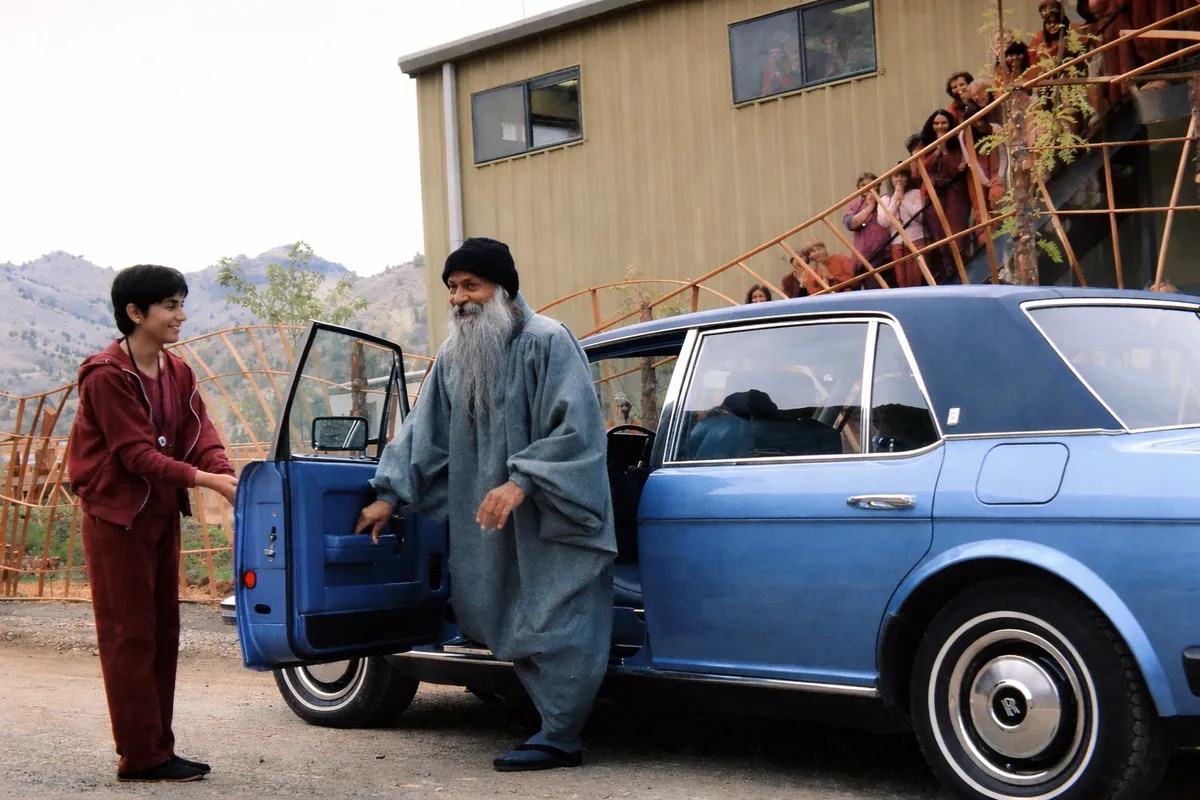
If you compare yourself to a wise person, you may feel small, but when you stop comparing and love, you remember you’re already whole.
From the Discourses
Passages where Osho speaks to this question — each links to the complete discourse.
How can anyone who has not realised his true buddha nature help feeling inferior in your presence every morning?
The Master said 'You wait. When everybody has gone, I will answer.' People continued coming, and the man was getting tired more and more tired, and by the evening the room was empty, there was nobody, and the samurai said 'Now, can you answer it?' And the Master said 'Now, come out.' A full moon night -- the moon was just rising on the horizon... And he said 'Look at these trees, this tree high in the sky and this small tree. They both have existed by the side of my window for years, and there has never been any problem, the smaller tree has never said "Why do I feel inferior before you?" to the big tree. How is it possible? This tree is small, and that tree is big, and I have never heard any whisper.' The samurai said 'Because they can't compare.' The Master said 'Then you…
Osho, when I see you, a longing arises in me that I too may one day touch heights like yours. Is this also comparison? Is it the outcome of an inferiority complex?
It happened: there was a Muslim fakir, Junoon. He lived in Egypt. He used to say that God has made everything perfect, for from the Perfect only the perfect can be born. As the Isha Upanishad says: from that Perfect, the perfect comes forth, and yet the Perfect remains. Junoon also used to say that God made everything complete. In the village there was a logician—a pundit as well. One day he came to hear Junoon. Junoon said that God has made everything complete. The logician said, “Wait!” He had brought a man with him—a hunchback. He was completely bent; he could hardly stand upright; his hands and feet were crooked; his back utterly hunched. The logician said, “Look at this man! Is he also perfect? And did God make him too?” Junoon laughed and said, “We have never seen a more perfect hunchback than this. I have seen many…
पहला प्रश्न: ओशो, आपको देख कर मेरे मन में भाव उठता है कि मैं भी आप जैसी ऊंचाई को कभी छुऊं। क्या यह भी तुलना है? हीनता की ग्रंथि का परिणाम है?
ऐसा हुआ, एक मुसलमान फकीर था, जुन्नून। इजिप्त में हुआ। वह कहा करता था कि परमात्मा ने सभी चीजें पूर्ण बनाई हैं, क्योंकि पूर्ण से पूर्ण ही पैदा हो सकता है। जैसा ईशावास्य उपनिषद में कहा है कि उस पूर्ण से पूर्ण ही पैदा होता है और फिर भी पीछे पूर्ण छूट जाता है, ऐसा जुन्नून भी कहा करता था कि परमात्मा ने हर चीज पूरी बनाई है। गांव में एक तार्किक था। तार्किक भी था, बड़ा पंडित भी था। वह एक दिन जुन्नून को सुनने आया। जुन्नून ने कहा कि परमात्मा ने हर चीज परिपूर्ण बनाई है। उस तार्किक ने कहा, रुको! वह एक आदमी को साथ ले आया था, एक कुबड़े को। जो बिलकुल झुका जा रहा था, जिससे खड़े होते नहीं बनता था, जिसके हाथ-पैर तिरछे थे, जिसकी कमर बिलकुल झुक गई थी। उसने कहा कि देखो इस आदमी को! यह भी पूर्ण है? और यह भी परमात्मा ने बनाया? …
Osho, kindly explain the meaning of inner closeness to the true Master.
Now the first man was making a mistake, but at least the mistake was his own. These others were making a borrowed mistake; even their mistake was not theirs. If you bow at someone’s feet because you saw someone else do it, it will be false. If you bow out of greed, it will be false. If you bow thinking you may gain something—standing in an election and hoping to win— People come to me. They touch my feet and say, “We are standing in the election; now your blessing is in your hands.” I tell them, “If you truly want my blessing, you will lose the election. Because I can only bless that God forbid you should win. It’s better to get out of this madhouse before you enter it. Once inside, getting out becomes very difficult. Once you reach Delhi, people die at Rajghat and never return. After…
तीसरा प्रश्न: ओशो, अनुकंपा कर समझाएं सदगुरु से आंतरिक निकटता का अर्थ।
अब यह पहला आदमी तो गलती कर ही रहा है लेकिन फिर भी इसकी गलती कम से कम इसकी निजी है। ये दूसरे जो आदमी गलती कर रहे हैं, ये उधार गलती कर रहे हैं, इनकी गलती भी अपनी नहीं है। अगर तुम किसी को देख कर किसी के चरणों में झुक जाओ तो वह झूठ होगा। अगर तुम किसी लोभ के वश झुक जाओ तो झूठ होगा। अगर तुम इसलिए झुक जाओ कि शायद कुछ लाभ होगा, चुनाव में खड़े हो गए हैं, शायद जीत जाएंगे। इधर मेरे पास लोग आ जाते हैं। चरण छूकर कहते हैं कि चुनाव में खड़े हो गए हैं, अब आपके हाथ में लाज है। मैं उनसे कहता हूं, अगर तुम सच में मेरा आशीर्वाद चाहते हो तो चुनाव में हारोगे। क्योंकि मैं वही आशीर्वाद दे सकता हूं कि भगवान न करे कि तुम जीत जाओ। क्योंकि पहले ही निकल आओ इस पागलखाने के बाहर तो अच्छा है। घुसने के बाद निकलना बहुत मुश्किल हो जाएगा। एक दफे दिल्ली पहुंच गए फिर राजघाट पर ही मरते हैं लोग, फिर लौट नहीं पाते। दिल्ली के बाद राजघाट ही बचता है, फिर और जाओ कहां? तो अभी बाहर से ही निकाल लूंगा तुम्हें। …
A friend has asked: Osho, you said about a wayward son that one should let him pass through his experiences, and he will learn on his own. But even after experiencing, he still prefers the same thing—someone is asking about his wayward son—no matter how much suffering he has to endure, even if death itself should come, still he does the same. After stumbling again and again, he repeats it. What can be done? How to reform him?
You will not be able to reform him. If life cannot reform him, if even death cannot reform him, what will you be able to do? If what you say is true—that again and again, even after suffering, he does the same thing; even if death comes, he will still do the same thing, and he does not change—then take your hands off. You will not be able to reform him. You cannot be stronger than death. And one who does not learn from suffering—what will he learn from you? Do not call him a wayward son. You have found yourself a Jadabharata. Because those whom suffering does not reform, whom even death does not reform—these are great, arrived masters; they are in the ultimate state. Do not even try to reform such a one. And why are you so eager to reform another? It is enough to reform yourself.…
एक मित्र ने पूछा है कि ओशो, आपने कुपुत्र के बारे में बताया कि उसको अनुभवों में से गुजरने देना चाहिए, तो वह खुद सीख जाएगा। लेकिन अनुभव लेने के बाद भी वह वही पसंद करता है--कोई अपने कुपुत्र के संबंध में पूछ रहे हैं--चाहे कितना ही दुख झेलना पड़े, चाहे मौत भी क्यों न आ जाए, फिर भी वह वही करता है। बार-बार ठोकर खाकर भी वही दोहराता है। उसका क्या उपाय किया जाए? उसको सुधारने का क्या तरीका है?
आप न सुधार पाएंगे। जिसको जिंदगी नहीं सुधार पा रही, मौत नहीं सुधार पा रही, उसको आप क्या सुधार पाएंगे? अगर आपकी बात सच है कि बार-बार दुख पाकर भी वह वही करता है, मौत भी आ जाए तो भी वही करता है, और सुधरता नहीं, तो आप हाथ अलग कर लें। आपसे नहीं सुधर पाएगा। आप मौत से ज्यादा मजबूत नहीं हो सकते। और जो दुख से नहीं सीख पा रहा है, वह आपसे क्या सीख पाएगा? कुपुत्र मत कहिए उसको। आपको कोई जड़भरत मिल गया है। क्योंकि जिसको दुख नहीं सुधारते, मौत नहीं सुधारती, वे तो बड़े पहुंचे हुए महात्मा हैं, वे तो परम अवस्था में हैं। उनको आप सुधारने की कोशिश ही मत करिए।
Question: OUR BELOVED MASTER, WHEN NANGAKU FIRST SAW MA TZU, HE RECOGNIZED HIM BY INTUITION AS A VESSEL OF THE DHARMA. HE VISITED MA TZU IN HIS CELL WHERE HE WAS MEDITATING, AND ASKED HIM: "IN PRACTICING SITTING MEDITATION, WHAT DOES YOUR REVERENCE ASPIRE TO ATTAIN?" "TO ATTAIN BUDDHAHOOD" WAS MA TZU'S REPLY. NANGAKU THEN TOOK UP A PIECE OF BRICK AND BEGAN TO GRIND IT AGAINST A ROCK IN FRONT OF MA TZU'S CELL. MA TZU ASKED, "WHAT ARE YOU GRINDING IT FOR?" "I WANT TO GRIND IT INTO A MIRROR," RESPONDED NANGAKU. AMUSED, MA TZU SAID, "HOW CAN YOU HOPE TO GRIND A PIECE OF BRICK INTO A MIRROR?" NANGAKU RETORTED, "SINCE A PIECE OF BRICK CANNOT BE GROUND INTO A MIRROR, HOW THEN CAN YOU SIT YOURSELF INTO A BUDDHA?" "WHAT MUST I DO THEN?" MA TZU ASKED.