
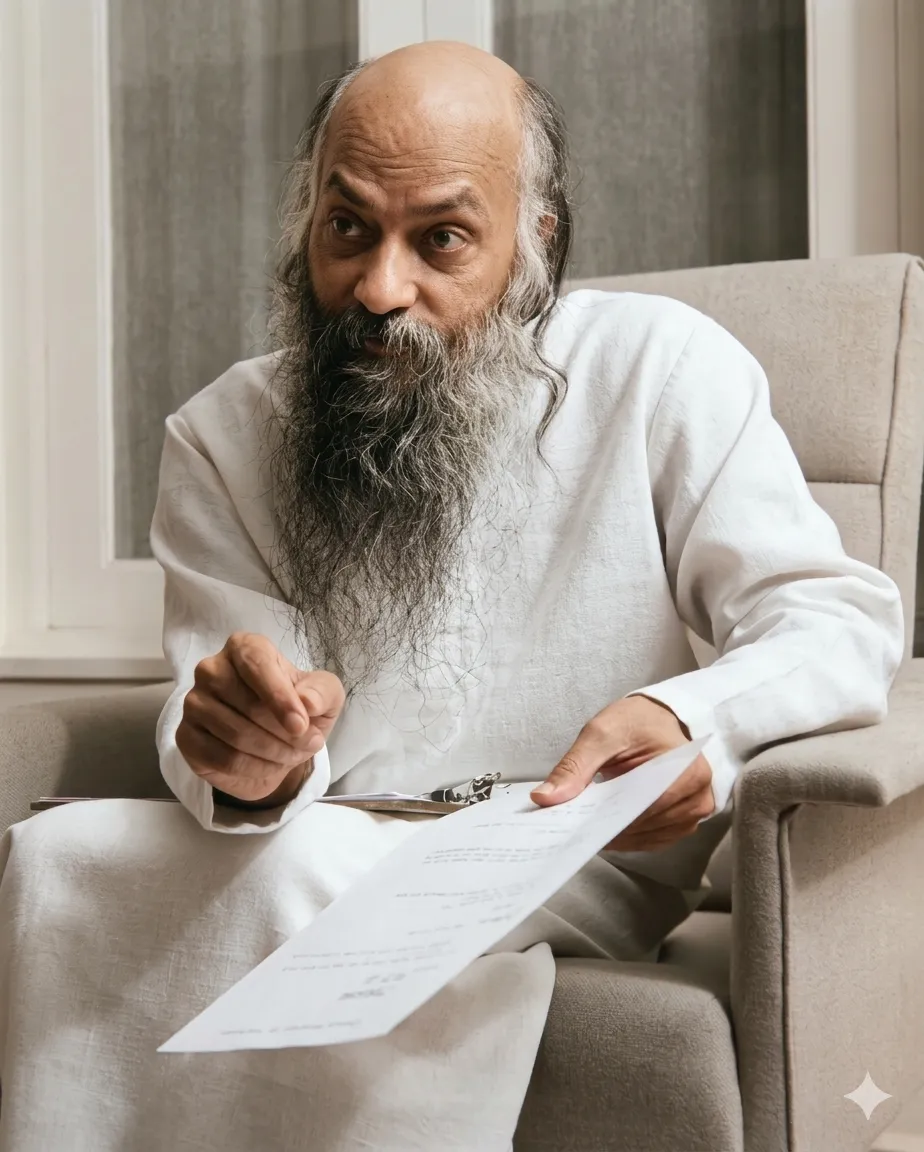
Non-doing means just sitting quietly and being here, so your busy ‘I’ rests and life’s beauty fills you, making later work feel joyful.
From the Discourses
Passages where Osho speaks to this question — each links to the complete discourse.
Beloved Osho, suddenly, sitting with you again, I tingle inside. Your beat inside the tablas -- a magic moment. Is that the quality of non-doing?
Then the work is no longer work. Doing is no longer doing; it becomes your creativity. Whatever you do now, you do with your totality. And the whole existence supports you, goes on filling you with more juice so you can pour that juice into your actions, into your doings. Suddenly you become a magician yourself. Whatever you touch becomes gold. Wherever you move, existence goes on welcoming you, and whatever you do, howsoever small, becomes part of your meditation. I don't want you to follow the old pattern, which was basically faulty: meditate for one hour and then for twenty-three hours destroy whatever you have meditated. There are even Sunday religions like Christianity: just one day, for one hour, go to the church for a good morning's sleep, that's enough. Then for six days you can do everything that goes against all divine values -- but there is no…
Question: OSHO, EXACTLY HOW DO YOU NOT DO IT? ... So there are only two types of non-doers in the world: one who by sheer understanding relaxes and finds the state of non-doing, of peace, of silence; and the other type, who will go thousands of miles, torture themselves in every possible way, do yoga exercises, stand on their head and fast, starve, renounce, repress, pray, go into the monasteries and do all kinds of stupid things. And finally, simply by being tired, exhausted, they sit down -- and suddenly it is there. Perhaps they may think it has come because of all their doing. That is not the case -- it has come in spite of all their doing. Otherwise, they are such practiced doers that it was possible they might have continued still, because the more you run, the better your running becomes.
So first: now, when we sit for meditation—our entire language is the language of doing. We even say, We will do meditation. It is wrong to say, for there is no possibility of doing in meditation. But our entire language—human language—is the language of doing; we have no language for non-doing. In Japan, about a hundred and fifty years ago, there was a great monastery, a vast ashram. Some five hundred bhikshus practiced there. The emperor became eager to see it and went. The ashram spread far and wide in the forest; cottages were scattered. The head monk began to show them: In this cottage our monks cook; in this cottage they study; in this cottage they sing—here they do this, there they do that; here they bathe. In the middle stood a large building—the monk said nothing about it.
तो पहली बात, अभी जब हम ध्यान के लिए बैठेंगे, हमारी सारी भाषा करने की भाषा है। ध्यान करने बैठेंगे, ऐसा कहेंगे, गलत है कहना, क्योंकि ध्यान में करने जैसी कोई संभावना नहीं है। लेकिन हमारी सारी भाषा, मनुष्य की सारी भाषा करने की भाषा है, न-करने की हमारे पास कोई भाषा नहीं है। जापान में कोई डेढ़ सौ वर्ष पहले एक बहुत बड़ी मोनेस्ट्री थी, एक बड़ा आश्रम था। वहां कोई पांच सौ भिक्षु साधना करते थे। सम्राट उत्सुक हो गया उस आश्रम को देखने और गया। दूर-दूर जंगल में फैला हुआ वह आश्रम था, दूर-दूर फैली हुई कुटियां थीं। एक-एक कुटी को दिखाने लगा भिक्षु, जो प्रधान था और बताने लगा, इस कुटी में हमारे भिक्षु भोजन बनाते हैं, इस कुटी में हमारे भिक्षु अध्ययन करते हैं, इस कुटी में गीत गाते हैं; यहां यह करते हैं, वहां वह करते हैं; वहां स्नान करते हैं।
People come and ask. I say to them: meditation means sit quietly for a while; do nothing. They say: at least tell us something! How can we do “not doing”? Give some mantra, give the name of Rama — give something! Some support, some handle, something to do. They miss the point. And thus there will always be teachers who say: repeat this mantra, repeat the name of Rama; this is a seed-mantra, repeat it. In the West, Maharishi Mahesh Yogi’s idea found currency. The only reason is: the West is obsessed with action; something to do is needed. Even if meditation, something to do is demanded. So the Maharishi gives a mantra — sit and chant. The Westerner understands: if there is something to do, it makes sense. Non-doing makes no sense to him. The East too is becoming Westernized; there too no one understands non-doing.
लाओत्से कहता है, कर-करके आप संसार भी पा लें तो भी अपने को न पा सकेंगे; न करके ही अपने को पाया जा सकता है। ध्यान है अक्रिया। और हम करने में इतने ज्यादा लीन हो गए हैं कि अगर हम खाली बैठें तो हम बैठ नहीं सकते; कुछ न कुछ हमें चाहिए। लोग मुझसे आकर पूछते हैं। मैं उनको कहता हूं कि ध्यान का मतलब है, तुम कुछ देर शांति से बैठो, कुछ मत करो। वे कहते हैं, कुछ तो बताएं! कुछ न करें, ऐसे कैसे हो? कोई मंत्र ही दे दें, कोई राम नाम दे दें, कुछ बता दें! कोई सहारा, आलंबन, जो हम करें। वे बात ही चूक रहे हैं। और इसलिए बताने वाले लोग मिल जाएंगे जो कहेंगे, यह मंत्र पढ़ो, यह राम का नाम लो, यह बीज-मंत्र है, इसको दोहराना। पश्चिम में महेश योगी के विचार को कीमत मिली। मिलने का कुल कारण इतना है कि पश्चिम आब्सेस्ड है कर्म से, कुछ करने को चाहिए। ध्यान भी हो तो कुछ करने को चाहिए। तो महेश योगी मंत्र दे देते हैं कि यह बैठ कर मंत्र को जपो। पश्चिम के आदमी को बात समझ में आती है। कुछ करना हो तो समझ में आता है। …
He said: I am doing nothing. You have recognized rightly—I am trying somehow to do something, because without doing, the mind gets very frightened. And how long can one sleep? If you think about yourself, you will find the same condition—something or other. If everything were arranged for you for three months and you were told: sit empty for three months, you would say: I’ll jump from the roof, hang myself. Three months, you say? Three hours are very difficult! Those imprisoned do not suffer from the jail itself. The real suffering is from becoming without work. That is why in prison people write commentaries on the Gita, compose The Secret of the Gita—God knows what all they do. Something is needed to do. People in prison read books, write books. Some work—emptiness is very hard. And one who cannot be empty cannot enter meditation.
उन्होंने कहा: कुछ भी नहीं कर रहा हूं। आप ठीक पहचान गए, मैं किसी भी तरह से कुछ करने की कोशिश कर रहा हूं, क्योंकि बिना किए मन बहुत घबड़ाता है। और सोएं भी कब तक? आप भी अपने बाबत सोचेंगे तो ऐसी ही हालत पाएंगे, कुछ न कुछ। अगर तीन महीने आपके लिए सब-कुछ व्यवस्था कर दी जाए और कहें कि खाली बैठे रहें तीन महीने। आप कहेंगे, छत से कूद पड़ेंगे, फांसी लगा लेंगे। तीन महीने कह रहे हैं आप? तीन घंटे बहुत मुश्किल हैं! कारागृहों में जो लोग बंद किए जाते हैं, उन्हें तकलीफ कारागृह की नहीं होती है। असली तकलीफ बेकाम हो जाने की होती है। इसलिए तो कारागृह में लोग गीता पर टीका लिखते हैं, गीता-रहस्य लिखते हैं, न मालूम क्या-क्या करते हैं। कोई न कोई काम चाहिए। तो कारागृह में जो लोग चले जाते हैं--किताबें पढ़ते हैं, किताबें लिखते हैं। कोई न कोई काम, खाली, खाली होना बहुत मुश्किल है।