
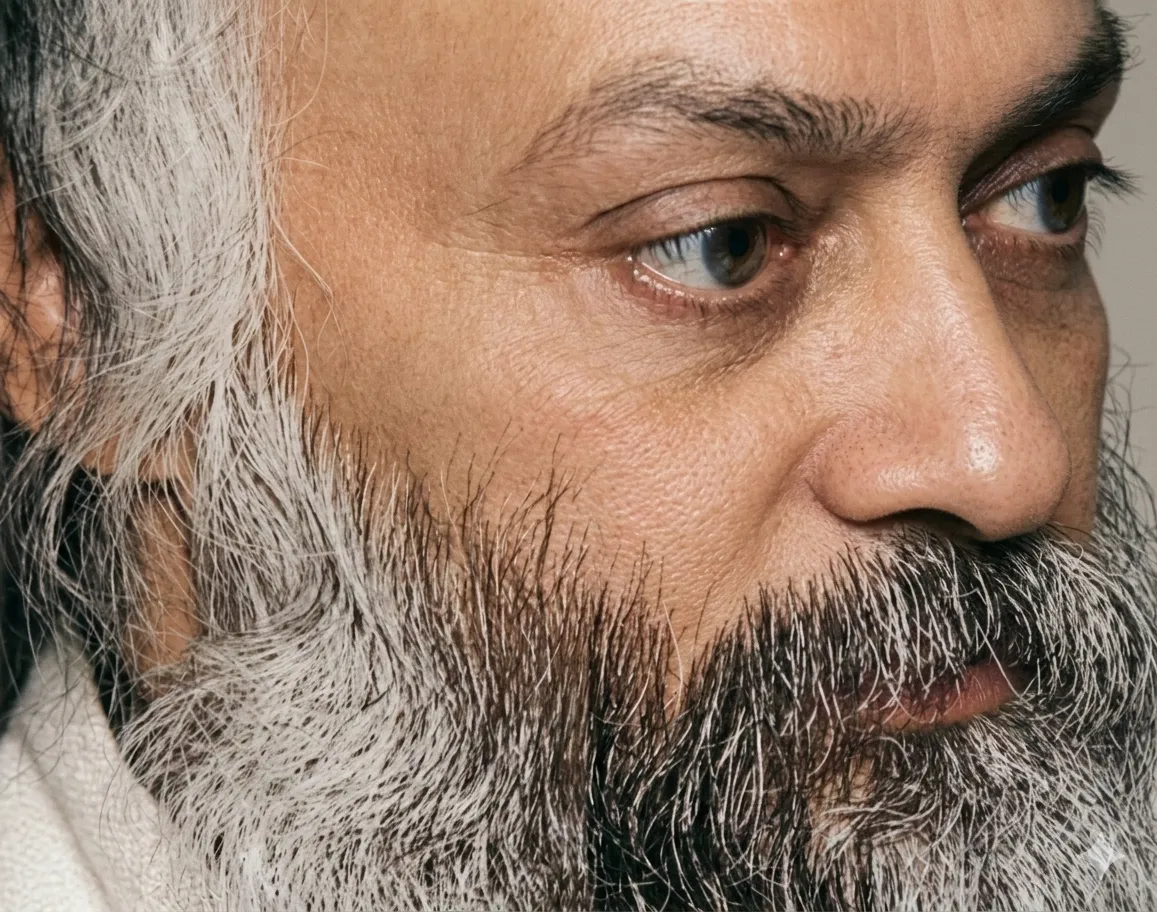
Stop trying to impress anyone; relax, be aware, and let things happen naturally instead of forcing them.
From the Discourses
Passages where Osho speaks to this question — each links to the complete discourse.
Question: OSHO, EXACTLY HOW DO YOU NOT DO IT? ... So there are only two types of non-doers in the world: one who by sheer understanding relaxes and finds the state of non-doing, of peace, of silence; and the other type, who will go thousands of miles, torture themselves in every possible way, do yoga exercises, stand on their head and fast, starve, renounce, repress, pray, go into the monasteries and do all kinds of stupid things. And finally, simply by being tired, exhausted, they sit down -- and suddenly it is there. Perhaps they may think it has come because of all their doing. That is not the case -- it has come in spite of all their doing. Otherwise, they are such practiced doers that it was possible they might have continued still, because the more you run, the better your running becomes.
You say, Osho, don’t try to be something, to become, to attempt “becoming”—just be, just being. Please explain in detail how this is to be attained.
The very moment you ask how to practice it, you miss the understanding. Because “to practice” already means the effort to become something has begun. When I say, remain as you are, just as you are, the question of practice does not arise. Practice means you have started trying to be what you are not. So you have not understood. Any practice implies discontent; there is no fulfillment in being as you are. The mind says, let something more happen. A little money—let’s gather more. A little knowledge—accumulate more. A little renunciation—become a great renunciate. A slight taste of meditation—let’s manufacture the taste of samadhi. It is all the same; there is no difference. The issue is neither money nor meditation; the issue is the demand for “more.” So whether you ask for wealth you remain worldly, and even if you ask for meditation you remain worldly. Wherever there is…
पहला प्रश्न: आप कहते हैं कि ओशो, कुछ होने, बनने या बिकमिंग की चेष्टा मत करो, बस जो हो वही हो रहो--जस्ट बीइंग। विस्तार से बताएं कि यह कैसे साधा जाए?
साधने की बात ही पूछी कि समझने से चूक गए। क्योंकि साधने का अर्थ ही यह होता है कि कुछ होने की चेष्टा शुरू हो गई। जब मैं कहता हूं, जो हैं, जैसे हैं, वैसे ही रहें, तो साधने का सवाल नहीं उठता। साधने का तो मतलब ही यह है कि जो हम नहीं हैं वह होने की कोशिश शुरू हो गई। तो समझे नहीं। कुछ भी साधने का अर्थ है कि असंतोष है; जैसे हैं वैसे होने में तृप्ति नहीं है। मन कह रहा है, कुछ और हो जाएं। थोड़ा धन है, ज्यादा धन इकट्ठा कर लें। थोड़ा ज्ञान है, ज्यादा ज्ञान इकट्ठा कर लें। थोड़ा त्याग है, और बड़े त्यागी हो जाएं। ध्यान का थोड़ा-थोड़ा रस आ रहा है, समाधि का रस बना लें। सभी एक सा है; कुछ फर्क नहीं। क्योंकि सवाल न धन का है और न ध्यान का, सवाल तो और ज्यादा की मांग का है।
Osho, yesterday you said that jealousy is included in respect. I have immense respect for you, but the jealousy inherent in it keeps poisoning it, and I feel guilt and pain. Does reverence transcend this poison-laced respect?
It needs a little explaining—it's a delicate point. Whenever you respect someone, you do so because you see in that person something you do not have. You respect because you glimpse in the other something you would also like to possess. A beggar respects an emperor because he, too, longs to be an emperor. So on the one hand he respects, and inside he also envies. Because he is not yet an emperor but wants to be. You have attained what he wants to attain. He respects you as skillful, successful: “I stand far back in the line; you have gone ahead to where I should have been.” So you are powerful, clever, intelligent, strong—he respects you. But inside a fire of jealousy also burns—if he gets the chance, he would like to be in your place and push you aside. And if the beggar gets that chance, he will…
तीसरा प्रश्न: ओशो, आपने कल कहा, आदर में ईर्ष्या सम्मिलित है। आपके प्रति मुझमें अपार आदर है, लेकिन उसमें निहित ईर्ष्या उसमें जहर घोलती रहती है और मैं ग्लानि और पीड़ा का अनुभव करता हूं। क्या श्रद्धा इस विष-भरे आदर का अतिक्रमण करती है?
भिखारी सम्राट का आदर करता है, क्योंकि उसकी भी आकांक्षा है कि सम्राट हो। तो एक तरफ आदर भी करता है, भीतर ईर्ष्या भी करता है। क्योंकि सम्राट अभी वह है नहीं, सम्राट होना चाहता है। तुम हो गए हो, तुमने वह पा लिया है जो वह पाना चाहता है। इसलिए तुम्हें आदर भी करता है कि तुम कुशल हो, सफल हो, मैं पंक्ति में बहुत पीछे खड़ा हूं, तुम आगे पहुंच गए हो, तुम उस जगह पहुंच गए हो जहां मुझे होना चाहिए था। इसलिए तुम शक्तिशाली हो, होशियार हो, बुद्धिमान हो, बलशाली हो, तुम्हारा आदर करता हूं। लेकिन एक भीतर ईर्ष्या की आग भी जलती है--अगर मुझे मौका मिले तो उस जगह मैं होना चाहूंगा, तुम्हें हटाना चाहूंगा। और जब मौका मिल जाएगा इस भिखारी को तो यह सम्राट को हटा कर धक्का दे देगा, सिंहासन पर बैठ जाएगा।
Osho, in Lao Tzu’s vision of life, what place is there for sadhana (spiritual practice)? And one who relies only on drifting, not on swimming—how can he reach his goal? Is effort not necessary to reach the goal? Lao Tzu’s “doing nothing,” being inactive, also seems like a kind of goal. To abandon oneself to unknowing, unknown currents—is that wisdom, a mark of the wise, or is it ignorance and the mark of the ignorant?
No: for those who do not understand and can only understand doing, something must be made for them to do. And they must be made to do so much that by doing and doing they become exhausted and drop it. But the event happens only when they drop. Remember this: the event will not happen before that point of letting go which Lao Tzu speaks of. They must be tired out by doing. They must be made to do so much that they come to such a pitch of tension that there remains no way to maintain it, and the tension falls away. Tension has its laws. Either you drop tension right now—through understanding. One way is to drop tension through understanding. My fist is clenched. One way is that you tell me: “Clenched is not the fist’s nature; therefore you will get tired. Clenched is not the fist’s nature;…
प्रश्न: ओशो, लाओत्से के ऐसे जीवन-दर्शन में साधना का क्या स्थान होगा? और जो केवल बहने पर निर्भर होता है, तैरने पर नहीं, वह अपने लक्ष्य तक कैसे पहुंच सकता है? क्या लक्ष्य तक पहुंचने के लिए भी यत्न की आवश्यकता नहीं है? लाओत्से का कुछ न करना, निष्क्रिय होना भी एक प्रकार का लक्ष्य जान पड़ता है। अबोध, अनजान धाराओं पर अपने आपको छोड़ देना ज्ञान है, ज्ञानी का लक्षण है? अथवा अज्ञान और अज्ञानी का?
नहीं, बाकी जो लोग नहीं समझ पाते हैं, करना ही समझ पाते हैं, उनसे कुछ करवाना पड़ता है। और उनसे इतना करवाना पड़ता है कि वे कर-करके थक जाएं और छोड़ दें। लेकिन घटना तभी घटती है, जब वे छोड़ते हैं। ध्यान रखें, घटना लाओत्से के पहले घटने वाली नहीं है। उनको कर-करके थकाना होता है। उनसे इतना करवाना होता है कि वे इतने तनाव में आ जाएं कि और तनाव का उपाय न रह जाए और तनाव छूट जाए। तनाव के नियम हैं। या तो आप तनाव को छोड़ दें इसी वक्त--समझपूर्वक। एक तो रास्ता है, समझपूर्वक तनाव का छोड़ देना। मेरी यह मुट्ठी बंधी है। एक रास्ता तो यह है कि आपने मुझसे कहा कि बंधा होना मुट्ठी का स्वभाव नहीं है, इसलिए तुम थक जाओगे। आपने मुझसे कहा, बंधा होना मुट्ठी का स्वभाव नहीं है, इसलिए तुम नाहक थक जाओगे। क्योंकि बांधने में तुम्हें शक्ति लगानी पड़ रही है और व्यर्थ तुम कष्ट पा रहे हो। तो मैं आपसे पूछूं कि मुट्ठी को कैसे खोलूं? क्या उपाय करूं? क्या साधना करूं कि मुट्ठी खोलूं? तो आप कहेंगे, फिर समझे नहीं। …
The buddha said: my doctrine is to think the thought that is unthinkable; to practise the deed that is not doing; to speak the speech that is inexpressible; and to be trained in the discipline which is beyond discipline. Those who understand this are near; those who are confused are far. The way is beyond words and expressions, is bound by nothing earthly. Lose sight of it to an inch or miss it for a moment, and we are away from it forever more.
A doctrine is arrived at through logical thinking. A doctrine comes through the process of 'about-ism'. A siddhanta is arrived at not by closing your eyes, not by thinking too much, but by dropping thinking as such, in toto; by opening your eyes with no prejudice, with no a priori conceptions, and looking direct into reality, facing reality direct. It is already there, it needs only you to be there. And when you are absolutely without any thought, your mind is still, your memory is still, your thinking has completely ceased to be, then reality erupts, explodes. Then you become a receiver. Then siddhanta arises. <q>MY SIDDHANTA IS TO THINK THE THOUGHT THAT IS UNTHINKABLE....</q> The first thing, Buddha says, is to think the thought that is unthinkable. It is a contradiction, a paradox. Now, no logician will ever utter such nonsense. It is from the very beginning nonsensical. That's…