
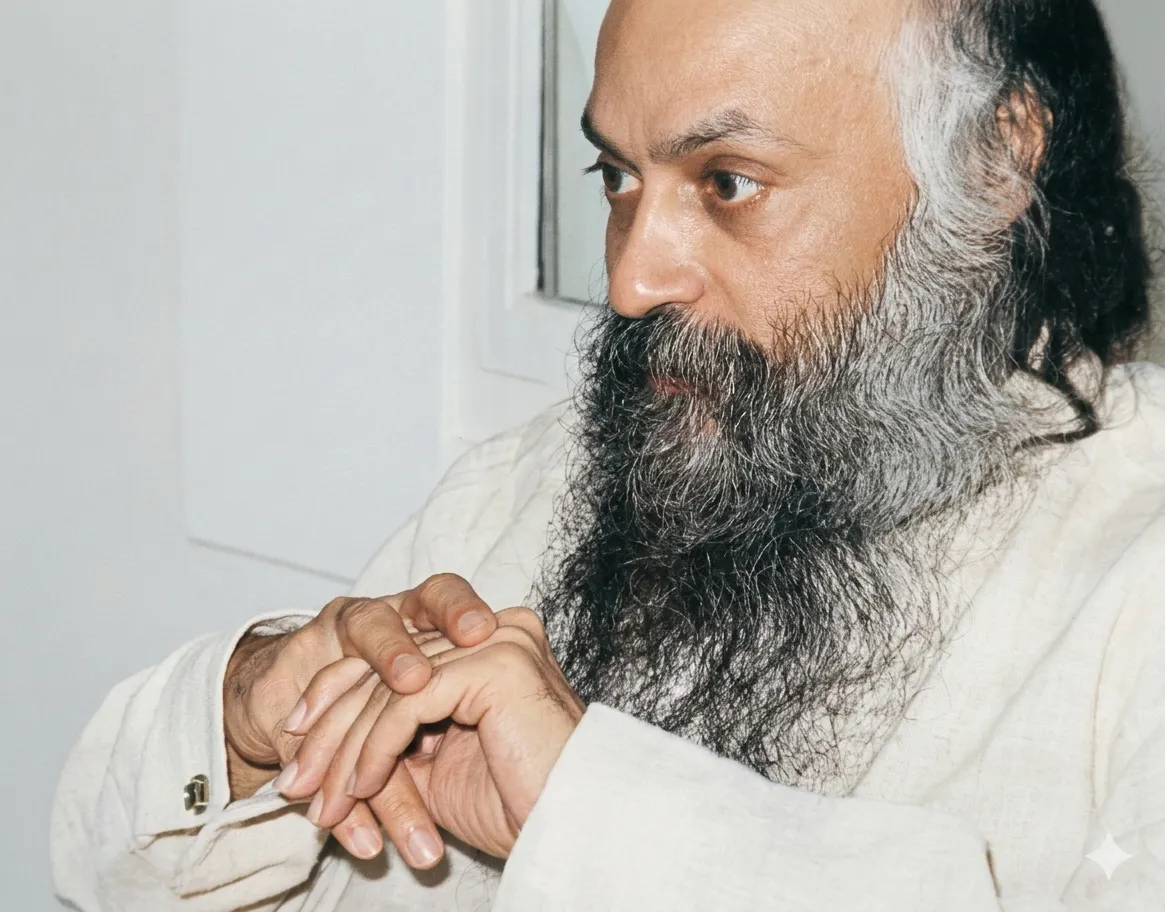
Osho's perspective on Survival
When Osho Spoke About Survival
Passages from the discourses where this theme comes alive.
Osho, what do those people mean who say that, so that there is no explosion, one should search within with a subtle, refined vision...
But the effortless awakening I speak of—once it arrives, there is no question of its departure, because you did not bring it; it came. Gradually you and awakening are not two; you are the awakening. You did not make even anger “the other,” so how would awakening be “other”? It becomes you. There is no question of its return. Whatever we have truly known cannot be unknown. You cannot undo knowing. Yes, what we have merely learned by rote can wobble. But what is known—like a child who comes to know love; once he knows, he cannot un‑know it. Knowing becomes part of you; it cannot fall away. Reading four books about love is different; that can be forgotten. Through the experiment of awakening, whatever happens in us reveals itself gradually. Awakening is not something that comes from outside; it is your inner being uncovering itself. If it were an…
ओशो, उन लोगों का कहना क्या है कि वह जो विस्फोट न हो, उसके लिए सूक्ष्म दृष्टि से भीतर जो लोग खोज करते हैं...
हां, जो मैंने यह कहा कि जो सहज-सहज जागते चले जाना है। यह जागरण जैसे ही आ जाता है, इसके लौटने का कोई सवाल ही नहीं है। क्योंकि इसको आप लाए नहीं हैं, यह आया है। और धीरे-धीरे-धीरे-धीरे जागरण और आप दो चीजें नहीं रह गए हैं, आप ही जागरण हो गए हैं। आपने क्रोध तक को दूसरा नहीं माना, तो जागरण को दूसरा मानने का क्या सवाल है! वह धीरे-धीरे आप ही हो गए हैं, आप ही हैं। उसके लौटने का कोई प्रश्न नहीं है, उसके लौटने का कोई सवाल नहीं है। जो भी हमने जान लिया है--जान लिया है--उससे पीछे लौटने का सवाल नहीं है। उसको फिर अनजाना नहीं किया जा सकता। उसे अनजाना करना मुश्किल है। हां, जो हमने न जाना हो, ऐसे ही सीख लिया हो जबरदस्ती, वह कल फिर डांवाडोल हो सकता है। लेकिन जो मैंने जान लिया है--जैसे एक बच्चे ने प्रेम जान लिया, नहीं जाना था अब तक, अब उसने प्रेम जान लिया। अब वह प्रेम को अनजाना नहीं कर सकता। उसका अनजाना होना अब असंभव है। जानना जो है, चूंकि वह हमारा हिस्सा ही हो जाता है, वह हमसे कहीं अब छूट सकता नहीं। …
Osho, “If there is awareness, the other is always beneficial.” Is this what you mean by a buddha, an awakened one?
If there is awareness, the other is neither beneficial nor harmful; if there is awareness, you draw your well-being from everywhere. Without awareness, you draw your ill-being from everywhere. If there is awakening, wherever you are, heaven begins to be created—because of your awakening. If there is no awakening, wherever you are, the stench of hell begins to rise—because of you. Understand it this way: to live in stupor builds hell; to live awake builds heaven. No one has ever suffered while awake. No one has ever known happiness while asleep. In sleep, at most you can hope for happiness; happiness never arrives. In the hope of happiness you can bear a great deal of suffering, but happiness never arrives. What comes with wakefulness—that alone is happiness. There is no relation to the other at all. If you understand rightly, there is no other; it is you. Your idea about…
पहला प्रश्न: ओशो, होश हो तो दूसरा सदा कल्याणकारी है। क्या ऐसा ही आप बुद्ध पुरुष कहते हैं?
होश हो तो दूसरा न तो कल्याणकारी है और न अकल्याणकारी; होश हो तो तुम सभी जगह से अपने कल्याण को खींच लेते हो। होश न हो तो तुम सभी जगह से अपने अकल्याण को खींच लेते हो। बोध हो तो तुम जहां होते हो, वहीं स्वर्ग निर्मित होने लगता है--तुम्हारे बोध के कारण। बोध न हो तो तुम जहां होओगे, वहां नर्क की दुर्गंध उठने लगेगी--तुम्हारे ही कारण। ऐसा समझो कि मूर्च्छित-मूर्च्छित जीना नर्क का निर्माण है; जागकर जीना स्वर्ग का। जागते हुए किसी ने कभी कोई दुख नहीं पाया। सोते हुए कभी किसी ने कोई सुख नहीं पाया। सोते हुए ज्यादा से ज्यादा सुख की आशा हो सकती है, सुख कभी मिलता नहीं। सुख की आशा में तुम बहुत दुख उठा सकते हो भला, लेकिन सुख कभी मिलता नहीं। जागकर जो मिलता है, उसी का नाम सुख है।
Osho, to remain awake even in death—or to successfully orchestrate a conscious death in meditation—what preparations should a seeker make concerning the body-system, the breath-system, the state of the breath, the state of prana, celibacy, willpower, etc.? Kindly shed detailed light on this.
But even in a cinema hall, where it is easier because it is all shadows, we do not remain witnesses. If we inspected the handkerchiefs of those exiting, we would know how many cried. We all know nothing is on the screen—only light and shadow. Yet everything “happens” there, and we become participants. Do not be mistaken that while watching a film you are merely a viewer—you become a participant. Someone pleases you, someone repels you; you identify. If we cannot be witnesses even to a film, how will we be witnesses in life? Life, too, is not much more than a film. At depth, like the play of rays on the screen, life is the play of electrical particles. If you reduce the body or a wall to its ultimate component, you find only electric particles. The difference between the screen and this is not great—two-dimensional there, three-dimensional here.…
Osho, please understand one thing: in any country, if the society happens to be spiritualist, then those who don’t get a chance in it are pulled toward materialism; and in other countries, those who are materialists—when they don’t get a chance—are pulled the other way. So it is the chance-less who have erected the opposite cult. What do you say about this?
And remember, this small path that takes us from sleep into awakening is religion in the fundamental sense—this small path! Neither temples, nor rituals, nor sacrifices have anything to do with it. All this is meaningless. These are the devices of sleeping people. Temples, prayers, fire rituals, chanting mantras, repeating “Ram, Ram”—these are the creations of the sleeping. A sleeping man also manufactures a kind of religion—and then it becomes the cause of quarrels: Hindu, Muslim, Christian. These are differences of ritual, not of religion. One sleeping man builds one kind of temple—he doesn’t know what a temple is; he is building it himself. Ten other sleeping men build a mosque; ten more build a church. Then the three fight: ours is the true temple; whoever does not come to our temple will go to hell. Sleeping men also coin doctrines, create systems. They try to explain. But the explanations…
ओशो, मेरी एक बात समझ लें कि जो कंट्री में कोई भी आदमी रहते हैं तो आज यहां का जो समाज यदि अध्यात्मवादी है, जिनको चांस नहीं मिला, उनकी प्रवृत्ति ही उनको भौतिक की तरफ ले जाती है और जो मैटीरियलिस्ट वह दूसरी कंट्रीज में हैं और उनको जब चांस नहीं मिलता है। तो न चांस वाले ही दूसरे कल्ट को खड़ा कर दिया है। इसके बारे में क्या कहते हैं?
और ध्यान रहे, ये ही छोटा सा मार्ग, जो हमें नींद से जागने में ले जाता है, मौलिक अर्थों में धर्म है—यही छोटा सा मार्ग! न तो मंदिरों से प्रयोजन है, न क्रिया-कांडों से, यज्ञ-हवनों से। इन सबसे कोई मतलब नहीं है। ये सब सोए हुए आदमी की ही तरकीबें हैं। ये सब सोए हुए आदमी के ही रिचुअल हैं। वह मंदिर में प्रार्थना कर रहा है, हवन-कीर्तन कर रहा है, मंत्र पढ़ रहा है, राम-राम जप रहा है, ये सब सोए हुए आदमी के ही उद्गम हैं। यानी सोया हुआ आदमी भी एक तरह का धर्म निर्मित करता है। सोया हुआ आदमी भी धर्म निर्मित करता है। और सोया हुआ आदमी जब धर्म निर्मित करता है तो धर्म झगड़ों का कारण बन जाता है—हिंदू, मुसलमान, ईसाई। ये सब रिचुअल के फर्क हैं, धर्म के नहीं। क्योंकि एक सोया हुआ आदमी एक तरह का मंदिर बनाता है; क्योंकि मंदिर क्या है, यह तो उसे पता ही नहीं। वह खुद ही मंदिर बना रहा है। दूसरे सोए हुए दस आदमी मिल कर एक मस्जिद बनाते हैं, तीसरे दस आदमी एक चर्च बनाते हैं, फिर वे तीनों लड़ते हैं कि हमारा मंदिर सही है। …
Profound Quotes on Survival
Explore our structured collection of meaning-mapped quotes regarding Survival.