
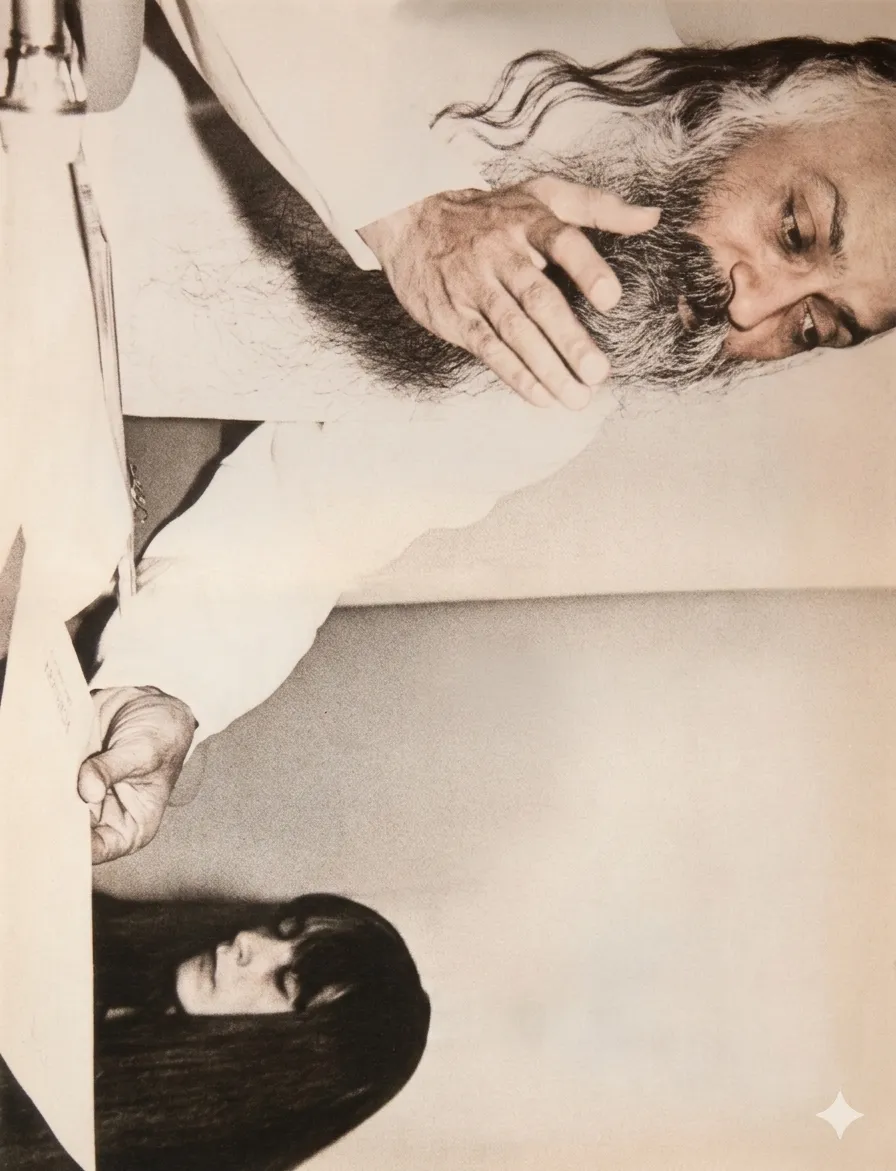
According to Osho, the ordinary mind is a dream-and-goal factory: it craves new sensations, weaves illusions, and fears truth because truth shatters its magic, desires, and fantasies. By inventing future goals, it breeds anxiety, division, ego, and the whole neurosis. Freedom begins by dropping imagined goals, turning to present awareness, and daring the adventure of truth beyond the crowd’s conditioning.
Your mind keeps chasing shiny dreams and made-up goals, but it’s scared of real truth; calm comes by stopping the chase and being aware right now.
From the Discourses
Passages where Osho speaks to this question — each links to the complete discourse.
Osho: It is not possible because mind likes enjoyment, that is right. Why does it like enjoyment? -- to forget itself. It likes enjoyment to be occupied, to be engaged, to forget oneself. A mind which is constantly trying to forget oneself is a mind which is constantly seeking some type of hypnosis, some type of unconsciousness. A mind which dreams or which is engaged in puja, in ceremony, in bhajan, in prayer, is a mind which is constantly escaping from oneself. and the mind which is escaping from oneself cannot know oneself; because to know oneself one has to cut this constant escapement. A thing may be beautiful; you may project beauty on it -- but you are projecting it. There is nothing like beauty or ugliness; that division is made by our own projections. There is nothing beautiful, there is nothing ugly. Things are, they exist in themselves.
Osho, you always praise a simple, innocent consciousness. What is this simplicity, this innocence?
The man said, “Then send me to the Indian one; I don’t want the German.” That difference was enough. The Germans refined it further—they read your scriptures and perfected them. German intellect knows how to refine things, arrange them, run everything by the clock. Even in the ashram I have given the electricity work to Haridas—a German sannyasin. However many times Pune’s electricity fails, the ashram’s does not. Let Pune fail, but not the ashram. Haridas takes great care; he has arranged everything—automatic generators: the moment the power fails, they kick in; you can’t even tell there was a failure. Where has this been learned? This much evil in the world—your saints had already arranged for it in the scriptures. Hell for others, heaven for themselves. These are not marks of simple-hearted people. A simple person—why would he think of hell and heaven? He has no such notions, no such…
Osho, what is mind?
As I see it, mind is not an object—it is only a function. This fan is running. There is the fan’s moving state and there is its still state. When the fan stops, we do not ask where the “movement” went, because movement was not an object. Movement was simply an activity of the fan. The fan that was moving has become still. The being within us—its moving state is the mind, and its still state is the soul.
[recording starts here]
OSHO: .... There is no mind. Everything will be, it will be as it is. Nothing is disturbed, because no one can disturb it. Things will be in their suchness and a little[?]. So the question is not where to seek truth, the question is not where is truth. No, truth is everywhere, that which is is known as truth. But the mind we seek [microphone disturbance] if it creates illusions, if it imposes something on that which is then the illusion is created. So how to disturb an illusion-creating mind? Now how to attain a mind which does not disturb, which sees things as they are? So how to achieve a mirror-like mind? That is the question: a mirror-like mind which has nothing to project, nothing to impose, which just reflects. So the question, the basic question is never where is truth? how to find it? No, rather ask…
Osho, Master Shuzan raised his short staff and said: If you call it a short staff, you oppose its truth. And if you do not call it a short staff, you deny the fact. Now tell me, what would you like to call it? Osho, kindly explain the intent embedded in this Zen master's riddle.
As human opinion changes, beauty and ugliness change. What is beautiful? What is ugly? There is no definitive yardstick; it depends on your intellect. The intellect lives by comparison, so the very moment you see something you start comparing. This Zen master says to his disciple: do not compare—and without comparison, tell me what this is. He says: if you call it a short staff, you oppose truth—because in truth there is no comparison; comparison is of the mind. As long as mind remains, you will not know truth. Truth is incomparable. It is neither beautiful nor ugly; neither auspicious nor inauspicious; neither good nor bad. There is no division—there is only “is-ness.” Will you call this entire existence beautiful or ugly? Good or bad? People have called it one thing or another: the theist says “absolutely good—God created it.” The atheist says, “How can it be good with so…