
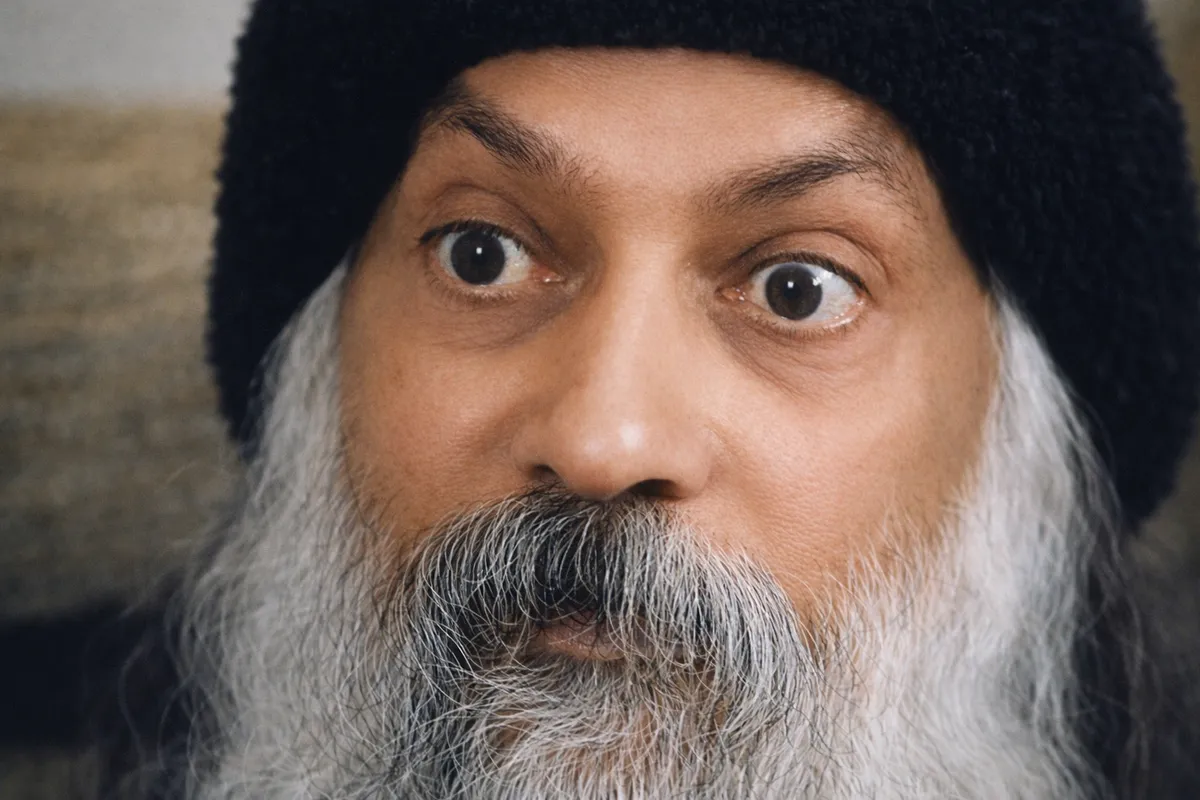
According to Osho, enlightenment is a crystal-clear awakening in which existence is seen as it is—life without a personal God—revealing not “God” but absolute godliness, a quality, the fragrance of awakened being. It flowers as total awareness and let-go, moving with nature, and brings radical responsibility: no repentance, no borrowed beliefs, only conscious, accountable action.
Enlightenment means waking up so fully that you see there’s no boss in the sky—only a living, loving quality inside—and you act naturally, alertly, and take full responsibility for what you do.
From the Discourses
Passages where Osho speaks to this question — each links to the complete discourse.
Question: BELOVED OSHO, WHAT IS ENLIGHTENMENT? IS IT DIVINE REVELATION? It is not divine revelation, it is divine realization. And the difference is big. Divine revelation means something objective, like God, is revealed to you. You see some God, but you are separate from him and he is separate from you. I don't believe in a God who is separate from us, who is separate from existence. I don't believe in a God who is a creator; I believe in a God who is creativity. To say it in other words, I don't believe in a God as a person, I believe in godliness as a quality. So I say it is not divine revelation, but divine realization. You realize that you are God, and in realizing that you are God, you realize that everything is God -- that only God exists and nothing else exists.
Beloved Osho, I am happy to be free from any god, and to be living more and more on my own authority. But now I cannot imagine what enlightenment is all about. Isn't it just another god?
It seems to be the same stupid man. How do you know that there is no God -- because I have said it? But when did I say it to you, "Believe in me"? You must be enjoying great egoism: "I am free of God." You are not free even of your ego, how can you be free of God? How do you manage to know that there is no God? One can know this only after enlightenment, because then the whole existence is crystal-clear, open; life is there, but there is no God anywhere. Because you started with a belief -- hearing me say again and again that there is no God -- you felt good, because if there is no God then you are free to do anything. When I am saying there is no God, I am not freeing you from responsibility. In fact, when there is…
Beloved Osho, what is enlightenment? Have the experience and the idea of enlightenment evolved with time?
So nirvana is just like darkness. The light is put off and your reality is all there, with all its beauty, benediction, blessing. But there is no word in English to translate nirvana. Jainas use the word moksha. Moksha means absolute freedom, ultimate freedom, freedom from all fetters. And the biggest fetter is the ego. Other fetters are just parts of the ego: greed, lust, ambition, anger. All that is thought to be sin in other religions, in Jainism is thought only to be a fetter. But the root, the main root of the whole tree of your slavery, is the ego. So cut the main root and all other roots will die of their own accord. Don't bother to cut small roots, branches, leaves, because they will come again. Cut the main root and the whole tree will die. And when all your fetters fall, what remains? The unfettered…
What is enlightenment?
He had read all the Buddhist scriptures -- there are thousands of them. It is said about this Chikanzenji that he had all these scriptures in his room and he was constantly reading day and night. And his memory was so perfect he could recite whole scriptures -- but still nothing happened. Then one day he burned his whole library. Seeing those scriptures in the fire he laughed. He left the monastery, he left his guru, and he went to live in a ruined temple. He forgot all about meditation, he forgot all about yoga, he forgot all about practising this and that, he forgot all about virtue, SHEELA, he forgot all about discipline and he never went inside the temple to worship the Buddha. But he was living in that ruined temple when it happened. He was mowing down the weeds around the temple -- not a very religious…
Osho, what is the most significant thing about enlightenment?
People want definite answers to believe in: this way or that. Either be a Catholic or be a communist, but be clear. People want clarity because they are so confused, and this man brings all these seven categories; now their confusion is worse, they are even more confounded. First you were at least aware that you were confused. Now you will not be aware to which category you belong: yes, no, yes -- no both, neither yes nor no, or indescribable. Mahavira could not create a world religion for the simple reason that perhaps he had the deepest penetration into reality. If you ask about his enlightenment, he will answer in seven sentences. You will not be able to come to any conclusion -- and I feel this is something tremendously valuable. Why this urge to come to a conclusion? If existence is a continuum, an ongoing process -- never…