
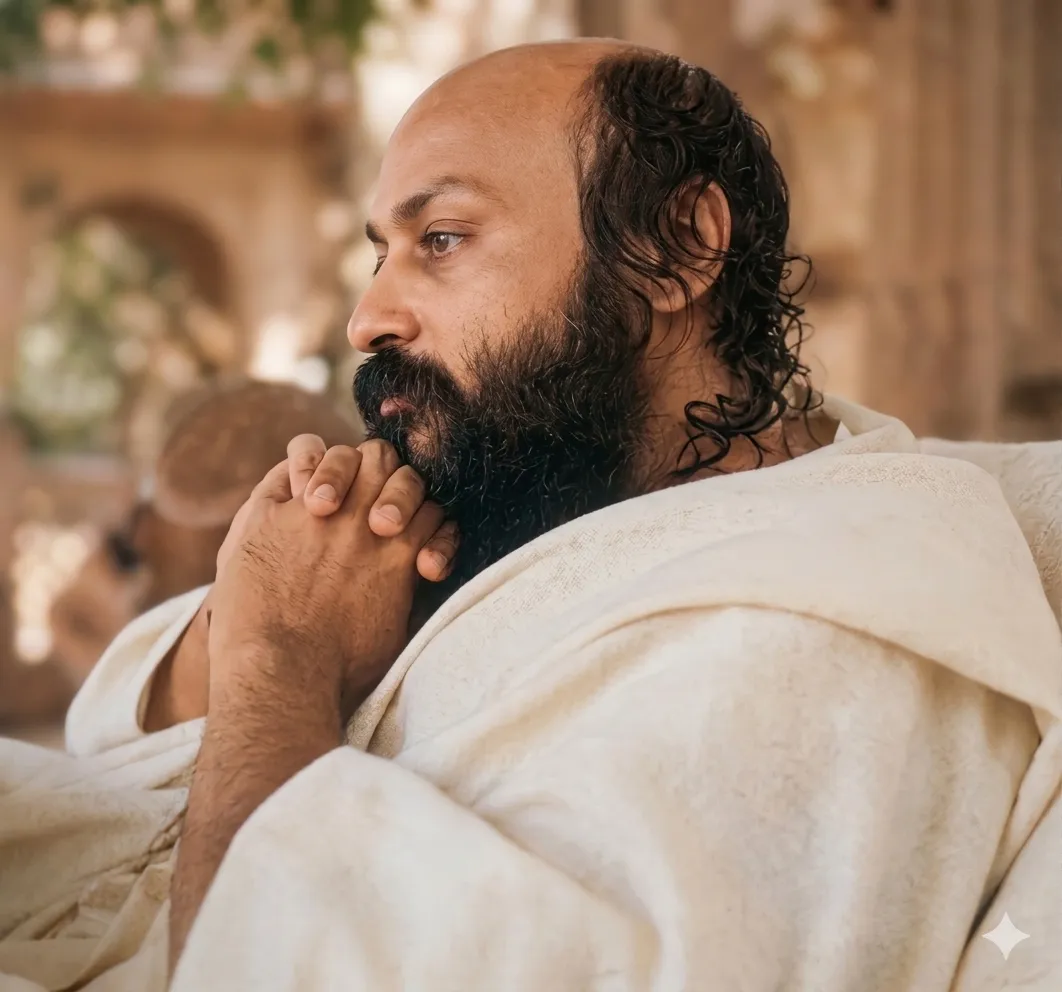
There isn’t a special talk for enlightenment; it’s a quiet, joyful silence you feel directly, not something you can say.
From the Discourses
Passages where Osho speaks to this question — each links to the complete discourse.
Question: BELOVED OSHO, WHAT IS THE LANGUAGE OF ENLIGHTENMENT? Milarepa, there is no language of enlightenment. There cannot be by the very nature of the phenomenon. Enlightenment happens beyond mind and language is part of the mind. Enlightenment is experienced in utter silence. If you want to call silence a language, then of course enlightenment has a language which consists of silence, which consists of blissfulness, which consists of ecstasy, which consists of innocence. But this is not the ordinary meaning of language. The ordinary meaning is that words have to be used as a vehicle to convey. Silence cannot be conveyed by words; neither can ecstasy or love or blissfulness. In fact, enlightenment can be seen, can be understood, can be felt, but cannot be heard and cannot be spoken.
Question: BELOVED OSHO, HOW DO YOU EXPERIENCE YOUR ENLIGHTENMENT? Milarepa, enlightenment is not an experience. Experience always divides the experiencer from itself. But enlightenment knows no duality; hence it is not an experience but simply experiencing. It may not be right language; in fact, it cannot be right language because the linguist will not understand what you mean by `experiencing'. One has to know it. But some effort can be made; some indications and hints can be given. When you are in love, is it an experience? Is it objective? Is it separate from you? Is it something that you can exhibit? Is it something for which you can give some evidence, proof, argument? No, love simply knows itself. It is self-evident. It needs no proof and no witnesses. It needs no evidence, no arguments, no philosophy. Enlightenment goes even deeper than the reaches of love.
Beloved master, the silences between your words are becoming more and more nourishing to me. Often when a word comes after a gap of silence, I am surprised and I wonder how it is that, with your being in such silence, you are able to speak so articulately -- it seems like it would require such tremendous effort. Would you please say something about the relationship between enlightenment and language?
Puja Melissa, I am just a storyteller. From my very childhood I have loved to tell stories, real, unreal. I was not at all aware that this telling of stories would give me an articulateness, and that it would be of tremendous help after enlightenment. Many people become enlightened, but not all of them become masters -- for the simple reason that they are not articulate, they cannot convey what they feel, they cannot communicate what they have experienced. Now it was just accidental with me, and I think it must have been accidental with those few people who became masters, because there is no training course for it. And I can say it with certainty only about myself. When enlightenment came, I could not speak for seven days; the silence was so profound that even the idea of saying anything about it did not arise. But after seven days,…
Question: BELOVED MASTER, WHAT DOES ENLIGHTENMENT FEEL LIKE? Prem Geetam, enlightenment is not a thought nor a feeling. In fact, enlightenment is not an experience at all. When all experiences have disappeared and the mirror of consciousness is left without any content, utterly empty; no object to see, to think about, to feel; when there is no content around you; the pure witness remains -- that is the state of enlightenment. It is difficult, almost impossible, to describe it. If you say it feels blissful, it gives a wrong meaning to it -- because bliss is something contrary to misery and enlightenment is not contrary to anything. It is not even silence, because silence has meaning only when there is sound; without the contrast of sound there is no experience of silence. And there is no sound, there is no noise.
A master got up to address a group seeking enlightenment and had only this to say: 'ha! Ha! Ha! What's all this? Go to the back of the hall and have some tea.' he then got down and departed.
That which cannot be said should not be said at all. One should keep silent. That's what this master is doing -- without saying anything he is making a gesture. First he says, 'Ha! ha! ha!' -- he laughs, a belly laughter. It must have been a shock for those who had come to seek enlightenment. You don't expect that, that you will be taken so non-seriously. Enlightenment-seekers are very serious people, long-faced people. And here comes this man, stands there on the stage and says, 'Ha! ha! ha!' What kind of sermon is this? But it is a Zen sermon. He laughs at the absurdity that you are trying to seek enlightenment. It cannot be sought -- that's what he is saying. He is ridiculing them. He is saying, 'You are ridiculous! Ha! ha! ha! You are foolish, you are stupid. Enlightenment cannot be sought; it is not something…