
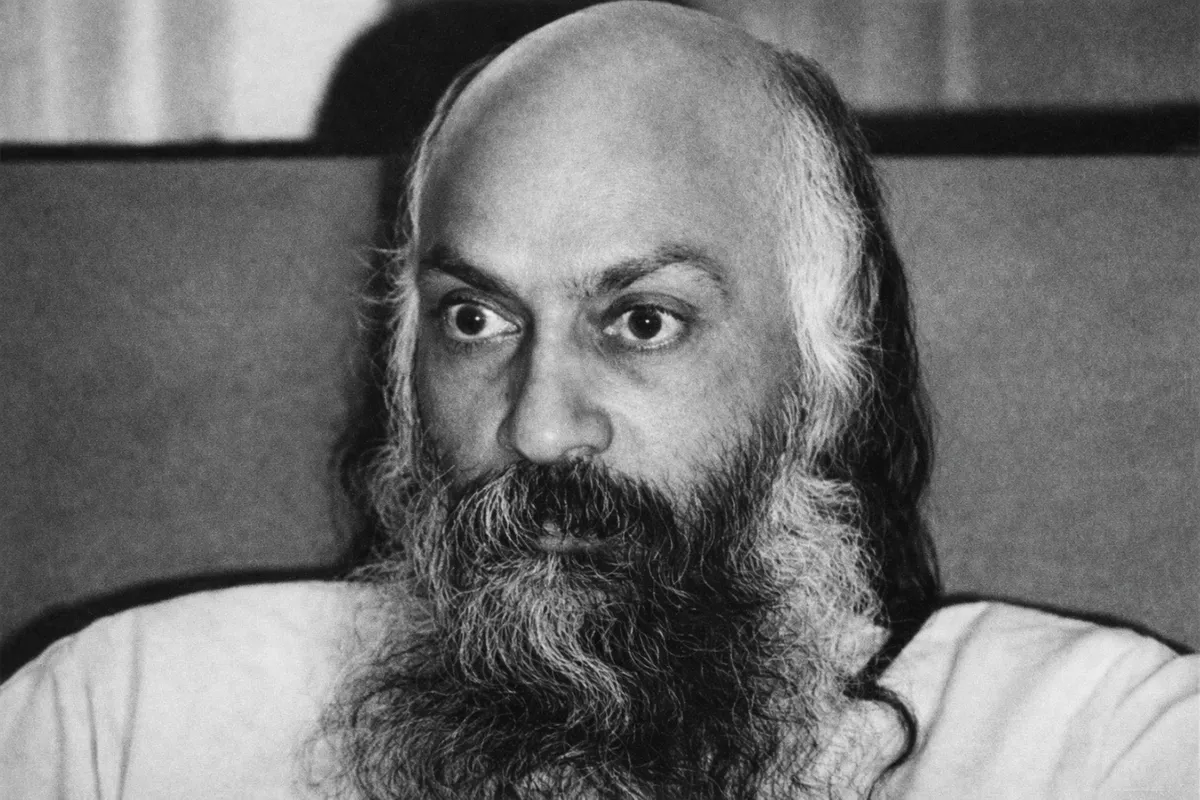
A real guru is a silent, humble light you learn from by being close and trusting, not by lessons or arguments.
From the Discourses
Passages where Osho speaks to this question — each links to the complete discourse.
What is the guru/disciple relationship?
Wittgenstein has said somewhere that what cannot be said can be shown. Saying needs no patience, but showing needs much patience. If I want to say something to you, I can say it this very moment. Your patience, your preparation is not needed. I can say it, and you will hear it. But if I want to show you something then you will have to make great preparations in order to see it. I cannot show it to you unless you have the capacity to see. The guru is basically not saying anything but trying to show something; and if the disciple is aware, then things become clear by not intervening. Things are always clear, but the mind is confused -- and a confused mind confuses things. As far as worldly things are concerned your mind cannot distort them too much because they are so objective that they do not…
Osho, in a previous talk you said you prefer shaktipat to be as close to grace as possible. Doesn’t that imply that the method of shaktipat admits gradual refinement and development? In other words, is qualitative progress also possible in the process of shaktipat?
From one who has attained the seventh body, shaktipat becomes the purest—the purest. Yet it is still not grace. The purest state of shaktipat is reached at the seventh body—no further. On that side there is no veil now; for the one in the seventh there is no veil—he is one with the void. But on your side there is a veil. You will still take him to be a person. Your veil will now provide the final obstruction. From his side there is none, but for you he remains a person. The sense of personhood toward the medium is also an obstacle Understand: if I attain the seventh state, it is my affair that I know I am the void—but you? You will know me as a person. And your notion that I am a person becomes the last veil. That veil will fall only when the happening befalls…
प्रश्न: ओशो, पिछली एक चर्चा में कहा था आपने कि आप पसंद करते हैं कि शक्तिपात जितना ग्रेस के निकट हो सके उतना ही अच्छा है। इसका क्या यह अर्थ न हुआ कि शक्तिपात की पद्धति में क्रमिक सुधार और विकास की संभावना है? अर्थात क्या शक्तिपात की प्रक्रिया में क्वालिटेटिव प्रोग्रेस भी संभव है?
सातवें शरीर को उपलब्ध व्यक्ति से शक्तिपात शुद्धतम हो जाएगा। शुद्धतम हो जाएगा। ग्रेस फिर भी नहीं होगा। शक्तिपात की शुद्धतम स्थिति सातवें शरीर पर पहुंच जाएगी--शुद्धतम। जो, शक्तिपात जहां तक पहुंच सकता है, वहां तक पहुंच जाएगी। लेकिन उस तरफ से तो कोई पर्दा नहीं है अब, सातवें शरीर को उपलब्ध व्यक्ति की तरफ से कोई पर्दा नहीं है, उसकी तरफ से तो अब वह शून्य के साथ एक हो गया, लेकिन तुम्हारी तरफ से पर्दा है। तुम तो उसको व्यक्ति ही मानकर जीओगे। अब तुम्हारा पर्दा आखिरी बाधा डालेगा। अब उसकी तरफ से कोई पर्दा नहीं है, लेकिन तुम्हारे लिए तो वह व्यक्ति है। माध्यम के प्रति व्यक्ति-भाव भी बाधा समझो कि मैं अगर सातवीं स्थिति को उपलब्ध हो जाऊं, तो यह मेरी बात है कि मैं जानूं कि मैं शून्य हूं, लेकिन तुम? तुम तो मुझे जानोगे कि एक व्यक्ति हूं। …
Beloved Osho, sitting in your presence is such a beautiful experience. We call it discourse. This word seems to me so poor next to what is happening here. Is there a word in any language that could point to, if not describe, what is happening between the master and the disciple?
I have talked about Zen: Mahakashyap was the first -- not Gautam Buddha -- to initiate the process which culminated in Zen, because it was his disciple, Bodhidharma, who took the message to China. And perhaps Gautam Buddha would not agree with everything Zen consists of, because the real master of Zen and its origin is Mahakashyap, who has a totally different personality from Gautam Buddha -- less serious, with a sense of humor, with no idea of holier-than-thou. The man who was finally the decisive factor was Bodhidharma; he comes in the fifth generation of disciples of Mahakashyap. He was very decisive in giving a certain character to Zen, which it still carries. Bodhidharma is farther away still from Mahakashyap. He has a great sense of humor, is very straightforward, knows no etiquette, no manners, is very simple and innocent, has no philosophical background, speaks in an ordinary way.…
Question: BELOVED OSHO, YOU HAVE BEEN MY FAVORITE UNCLE AND MY FATHER, MY MIDWIFE, A LAUGHING CHILD; MY BEST FRIEND, AN ANCIENT SAGE, MY FAVORITE STORYTELLER, AND MY MASTER... MY FIRST THOUGHT ON WAKING, MY LAST AT NIGHT.... YOU HAVE BEEN WARM BROWN EYES, A GENTLE HAND, FEET FOR MY HEAD; A TINGLING IN MY BODY... SOMETIMES A SILENCE, SOMETIMES A SONG.... YOU HAVE BEEN A HIT, A GLANCE, A PRESENCE, AN ABSENCE; DAY AND NIGHT, SUMMER AND WINTER -- A MAN FOR ALL SEASONS; A PROMISE OF FULFILLMENT, THE ONLY HOPE, THE ULTIMATE DESTROYER OF ALL DREAMS; THE ONLY REFUGE -- AND THE ONE I SOUGHT TO ELUDE; A MAGICIAN, AND JUST ONE ORDINARY MAN. YOU WERE AN ENIGMA, YOU WERE ME. YOU WERE THE MOON, THE STARS AND ALL THAT MOVED AROUND THEM. YOU WERE THE GREEN AND BROWN, THE BLUE AND GOLD, OF MY EARTH.
Beloved master, to many people in the west, the master/disciple relationship is outside their experience. What does it involve?
Chris Lister, Allen Jewhurst, Lesley Rogers, the East has contributed a few tremendously significant things to human consciousness. One of those beautiful things is the phenomenon of the master/disciple relationship. It is an Eastern contribution; just as science is a Western phenomenon, mysticism is Eastern. Science is extrovert, mysticism is introvert. Science is trying to know the objective reality, and mysticism is an exploration of the subjective reality, of the interiority of your own being. In the world of science the teacher/student relationship exists, because science can be taught -- hence the teacher/ student relationship. But religion, mysticism, cannot be taught, it can only be caught. Hence in mysticism there is no relationship like the teacher/student relationship. A totally different kind of relationship exists: the master/disciple. The differences are tremendous, the differences are great. Between a student and a teacher, doubt is the method. The teacher is there to help…