
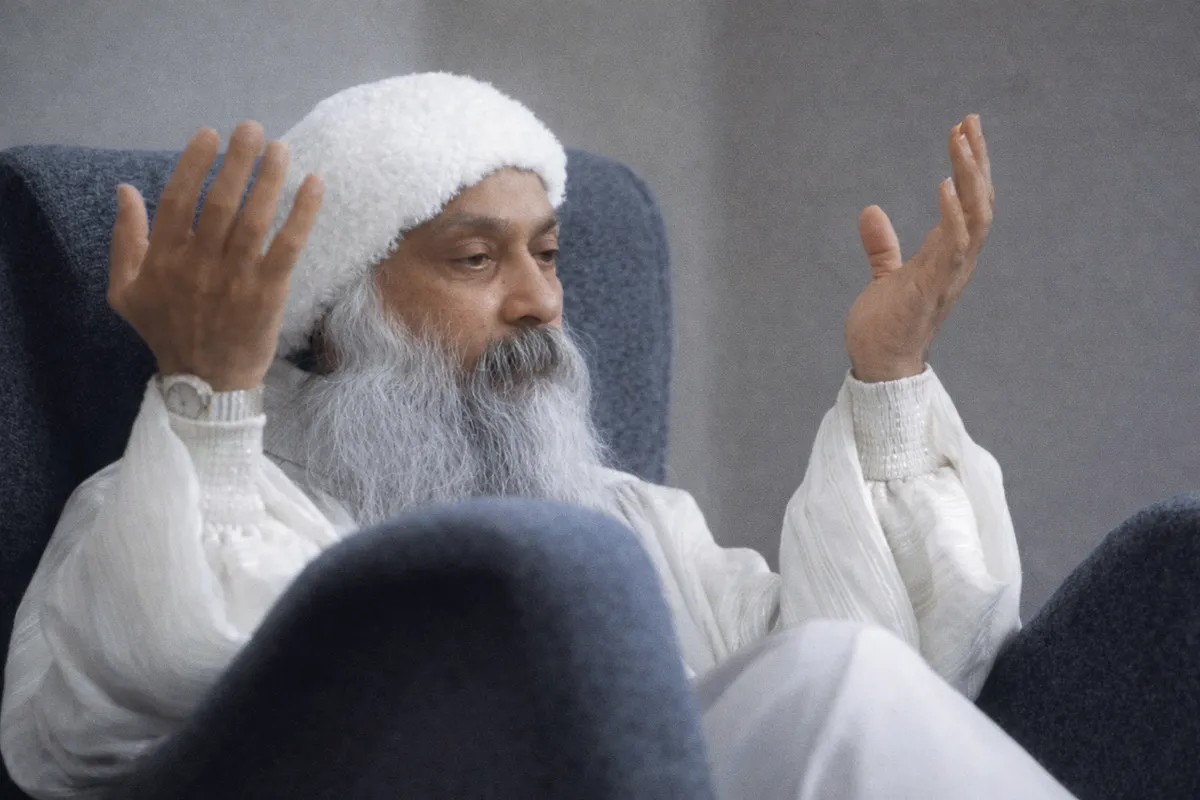
Kindness is the same; one path hugs the noisy crowd, the other blooms quietly—neither is a personal choice.
From the Discourses
Passages where Osho speaks to this question — each links to the complete discourse.
When bankei held his seclusion-weeks of meditation, pupils from many parts of japan came to attend. During one of these gatherings a pupil was caught stealing. The matter was reported to bankei with the request that the culprit be expelled. Bankei ignored the case.
LATER THE PUPIL WAS CAUGHT IN A SIMILAR ACT, AND AGAIN BANKEI DISREGARDED THE MATTER. THIS ANGERED THE OTHER PUPILS, WHO DREW UP A PETITION ASKING FOR THE DISMISSAL OF THE THIEF, STATING THAT OTHERWISE THEY WOULD LEAVE IN A BODY. WHEN BANKEI HAD READ THE PETITION HE CALLED EVERYONE BEFORE HIM. 'YOU ARE WISE BROTHERS,' HE TOLD THEM. 'YOU KNOW WHAT IS RIGHT AND WHAT IS NOT RIGHT. YOU MAY GO SOMEWHERE ELSE TO STUDY IF YOU WISH, BUT THIS POOR BROTHER DOES NOT EVEN KNOW RIGHT FROM WRONG. WHO WILL TEACH HIM IF I DO NOT? I AM GOING TO KEEP HIM HERE EVEN IF ALL THE REST OF YOU LEAVE. A TORRENT OF TEARS CLEANSED THE FACE OF THE BROTHER WHO HAD STOLEN. ALL DESIRE TO STEAL HAD VANISHED. ... I was reading in some history book that twenty persons were expelled from England; they were sea robbers.
Beloved Osho, buddha was saying again and again to his disciples that meditation and compassion should grow side by side. These days I have been feeling your compassion as never before, and I have also been feeling the urge to start learning from it, at least the abc. For now, the only thing that makes me feel close to it are those warm tears that flow down my cheeks as I look at you. Beloved, can you please talk about compassion, and how to go into it from the stage I'm at.
Chidananda, Gautam Buddha's emphasis on compassion was a very new phenomenon as far as the mystics of old were concerned. Gautam Buddha makes a historical dividing line from the past; before him meditation was enough, nobody had emphasized compassion together with meditation. And the reason was that meditation brings enlightenment, your blossoming, your ultimate expression of being. What more do you need? As far as the individual is concerned, meditation is enough. Gautam Buddha's greatness consists in introducing compassion even before you start meditating. You should be more loving, more kind, more compassionate. There is a hidden science behind it. Before a man becomes enlightened, if he has a heart full of compassion there is a possibility that after meditation he will help others to achieve the same beautitude, to the same height, to the same celebration as he has achieved. Gautam Buddha makes it possible for enlightenment to be…
Osho, what is the fundamental anguish of human life?
There is only one anguish: that a human being cannot become what he was born to be. There is only one anguish: that the seed remains a seed and does not bloom like a flower; that it cannot scatter its fragrance to the infinite winds; cannot converse with the moon and stars; cannot offer its colors to the sky; cannot be expressed. If the poem within the poet cannot be revealed—anguish. If the painter cannot paint—anguish. If the dancer cannot dance—if chains lie on his feet—anguish. Anguish means only this: that what we are meant to be—our innate nature and destiny—does not come to fruition, and we are forced to be something else. Then anguish is born. Then melancholy gathers over life. And all those countless people you see burdened with sorrow, living in a kind of hell—the reason is only this: each has come carrying the seed of becoming…
चौथा प्रश्न: ओशो, मनुष्य जीवन का मूल संताप क्या है?
एक ही संताप है कि मनुष्य वह न हो पाए जो होने को पैदा हुआ है। एक ही संताप है, कि बीज बीज रह जाए, फूल की तरह खिल न पाए। बिखेर न सके अपनी सुवास को अनंत-अनंत हवाओं में; कर न सके गुफ्तगू चांद-तारों से; निवेदन न कर पाए अपने रंगों का आकाश के प्रति; अभिव्यक्त न हो पाए--एक ही संताप है। कवि के भीतर की कविता प्रकट न हो सके--तो संताप। चित्रकार चित्र न बना सके--तो संताप। नर्तक नाच न सके, पैरों में जंजीरें पड़ी हों--तो संताप। संताप का एक ही अर्थ होता है: जो हम होने को हैं, जो हमारी सहज प्रकृति और नियति है, वह न हो पाए और हमें अन्यथा होने को मजबूर होना पड़े, तो संताप पैदा होता है। तो जीवन में विषाद घिरता है।
Osho, in a previous talk you said you prefer shaktipat to be as close to grace as possible. Doesn’t that imply that the method of shaktipat admits gradual refinement and development? In other words, is qualitative progress also possible in the process of shaktipat?
From one who has attained the seventh body, shaktipat becomes the purest—the purest. Yet it is still not grace. The purest state of shaktipat is reached at the seventh body—no further. On that side there is no veil now; for the one in the seventh there is no veil—he is one with the void. But on your side there is a veil. You will still take him to be a person. Your veil will now provide the final obstruction. From his side there is none, but for you he remains a person. The sense of personhood toward the medium is also an obstacle Understand: if I attain the seventh state, it is my affair that I know I am the void—but you? You will know me as a person. And your notion that I am a person becomes the last veil. That veil will fall only when the happening befalls…
प्रश्न: ओशो, पिछली एक चर्चा में कहा था आपने कि आप पसंद करते हैं कि शक्तिपात जितना ग्रेस के निकट हो सके उतना ही अच्छा है। इसका क्या यह अर्थ न हुआ कि शक्तिपात की पद्धति में क्रमिक सुधार और विकास की संभावना है? अर्थात क्या शक्तिपात की प्रक्रिया में क्वालिटेटिव प्रोग्रेस भी संभव है?
सातवें शरीर को उपलब्ध व्यक्ति से शक्तिपात शुद्धतम हो जाएगा। शुद्धतम हो जाएगा। ग्रेस फिर भी नहीं होगा। शक्तिपात की शुद्धतम स्थिति सातवें शरीर पर पहुंच जाएगी--शुद्धतम। जो, शक्तिपात जहां तक पहुंच सकता है, वहां तक पहुंच जाएगी। लेकिन उस तरफ से तो कोई पर्दा नहीं है अब, सातवें शरीर को उपलब्ध व्यक्ति की तरफ से कोई पर्दा नहीं है, उसकी तरफ से तो अब वह शून्य के साथ एक हो गया, लेकिन तुम्हारी तरफ से पर्दा है। तुम तो उसको व्यक्ति ही मानकर जीओगे। अब तुम्हारा पर्दा आखिरी बाधा डालेगा। अब उसकी तरफ से कोई पर्दा नहीं है, लेकिन तुम्हारे लिए तो वह व्यक्ति है। माध्यम के प्रति व्यक्ति-भाव भी बाधा समझो कि मैं अगर सातवीं स्थिति को उपलब्ध हो जाऊं, तो यह मेरी बात है कि मैं जानूं कि मैं शून्य हूं, लेकिन तुम? तुम तो मुझे जानोगे कि एक व्यक्ति हूं। …
Osho, you have said that in liberated souls compassion remains, and that compassion is the subtlest form of desire. In desire there is always conflict, always two—two mutually opposed. In that case, what is the opposing element of compassion that still remains in liberated souls?
First, not that compassion is a subtle form of desire; compassion is desire’s ultimate form. There is a difference. By “ultimate form” I mean the bridge between desire and desirelessness. If you wish, you can call compassion the final form of desire, or you can call it the first form of desirelessness. It is the link in-between where desire ends and desirelessness begins. Compassion is not a subtle form of desire. If it were, there would be duality in compassion too. Desire is always dual. No one can be free of duality within desire. Therefore there is suffering in desire, because wherever there is duality, there is suffering. So however pleasurable desire may seem, its painful counterpart will always be standing right behind it; it cannot be avoided. Thus every desire, at a certain limit, turns into its opposite. The opposite of each desire is present instantaneously; it is never…
प्रश्न: ओशो, मुक्त आत्माओं में करुणा शेष रह जाती है और करुणा भी वासना का ही एक सूक्ष्मतम रूप है--ऐसा आपने कहा। वासना में सदा द्वंद्व रहता है, सदा दो रहते हैं, परस्पर-विरोधी दो। ऐसी स्थिति में करुणा का विरोधी कौन सा तत्व है जो मुक्त आत्माओं में शेष रह जाता है?
पहली बात तो यह कि करुणा वासना का सूक्ष्म रूप है, ऐसा नहीं, करुणा वासना का अंतिम रूप है। इन दोनों में भेद है। अंतिम रूप का मतलब मेरा यह है कि वासना और निर्वासना के बीच जो सेतु है। चाहें तो हम करुणा को वासना का अंतिम रूप कह सकते हैं और चाहें तो करुणा को निर्वासना का प्रथम रूप कह सकते हैं। वह बीच की कड़ी है जहां वासना समाप्त होती है और निर्वासना शुरू होती है। करुणा सूक्ष्म रूप नहीं है वासना का। अगर सूक्ष्म रूप हो तो करुणा में भी द्वंद्व होगा। वासना में सदा द्वंद्व है। वासना में निर्द्वंद्व कभी भी कोई नहीं हो सकता। इसलिए वासना में दुख है, क्योंकि जहां द्वंद्व है, वहां दुख है। तो वासना चाहे कितनी ही सुखद हो, उसके पीछे उसका दुखद रूप खड़ा ही रहेगा, वह जा ही नहीं सकता।