
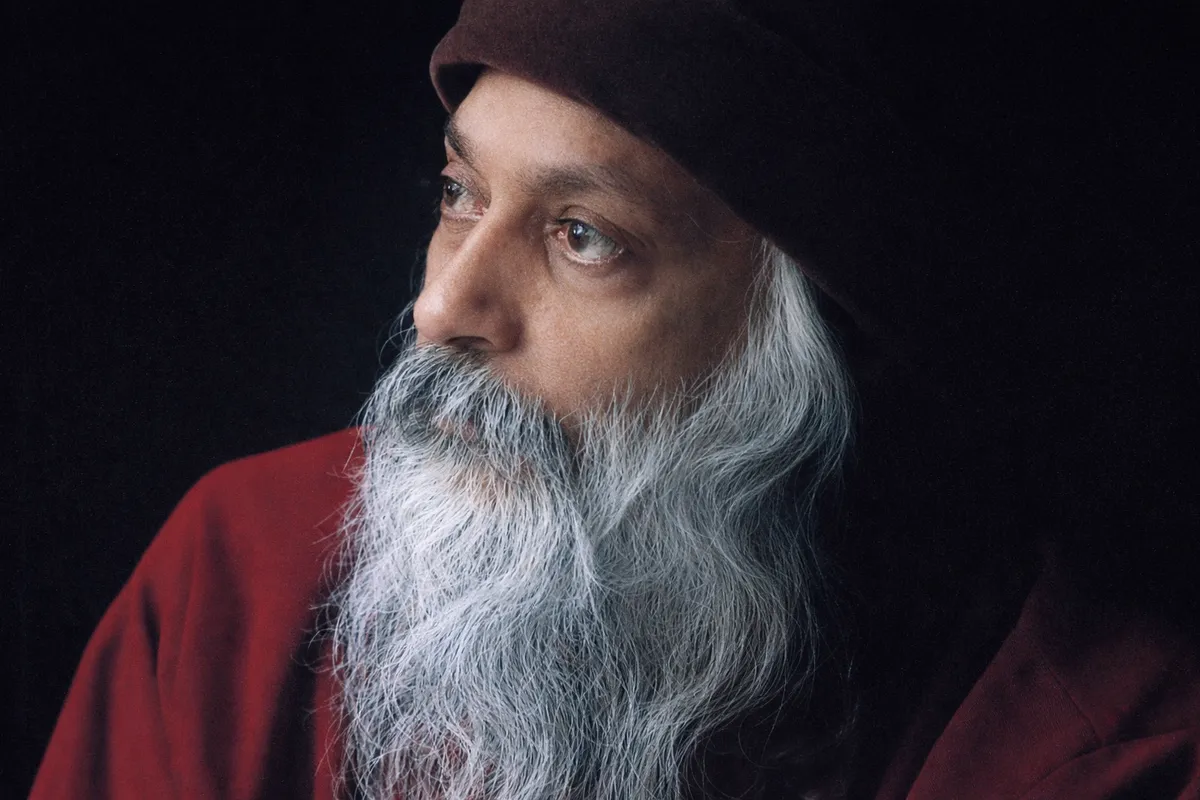
According to Osho, liking is superficial, momentary, and risk-free—an expression about yourself—whereas loving is a committed promise, an involvement that sees and honors the other's innermost, the divine core. Hence there is no 'ordinary' versus 'spiritual' love: all real love is spiritual, extraordinary, and timeless. What people call ordinary love is merely liking; love carries responsibility, risk, and a taste of eternity.
Liking is saying you enjoy something now; love is a lasting promise that sees who someone really is.
From the Discourses
Passages where Osho speaks to this question — each links to the complete discourse.
A friend has asked, Osho, in bhakti-yoga you have given love a fundamental place. I don’t know whether we ordinary people are familiar with love or only with lust! What is the difference between the two? And can lust become love?
It is worth asking, and worth understanding. Because we take lust to be love. And lust is not love; it can become love. In lust there is the possibility of love. But lust itself is not love; it is only a seed. If rightly used, it can sprout—but a seed is not a tree. So the one who becomes satisfied with lust, or concludes, “This is the end,” will never even come to know what love is. Lust can become love. Lust means attraction between two bodies—between bodies. Love means attraction between two minds. And devotion means attraction between two souls. They are all attractions, but on three planes. When one body is drawn to another body, that is kama, sex. When one mind is drawn to another mind, that is prem, love. And when one soul is drawn to another soul, that is bhakti, devotion. We live on the…
Osho, one kind of love becomes a prison and another becomes a temple. Is there a difference even between love and love?
A little girl! But every girl is born a mother, and a man remains a small child to his last breath. No man ever goes beyond being a little boy. Every man seeks the mother in a woman, and every woman seeks the child in a man. Therefore when a man loves a woman deeply, he becomes like a small child, and in the deep moments of love the woman becomes like a mother. The rishis of the Upanishads blessed newlyweds: may you have ten children, and in the end may the eleventh be your husband becoming your son. They spoke very rightly. But if a child does not learn love—unconditional love—from his mother, where will he learn it? The first school is missed. And if a girl does not receive love from her father, she will not be able to love any man; the well became poisonous at the…
Osho, what is the definition of God?
Words are very small. If you say God is light, then what of darkness? The scriptures have said that God is light. Suppose we accept this as a definition—then what about darkness? Where will darkness go? Darkness is too; in fact it is far more than light. Light sometimes is and sometimes is not; darkness is always, eternal. Where will you place darkness? If you say God is light, darkness is left out. If you say God is darkness, then light is left out. If you say God is both darkness and light, a contradiction arises: they cannot be together. Try to have both darkness and light in the same room. If you bring in light, darkness disappears; if you preserve darkness, you cannot have light. Then how can both be together? That becomes an impossibility. So you cannot say “both” either. Then the fourth device is to say: it…
[NOTE: This is an unedited tape transcript of an unpublished darshan diary, which has been copy-typed. It is for reference purposes only.] You have to become more conscious so that you can discover your lovingness, so that you can discover the lovingness of the whole existence and once you know, you start sharing. Then it is not a relationship, not that you love somebody, but a state: you love. You are love, rather. In seeking love, you will find not only love, you will find your true being too. I am talking about a love that is beyond your so-called love and I am talking about a bliss that is beyond every possible idea of bliss that you can have. I am talking about a god which is neither Christian nor Hindu nor Mohammedan, which is really incomprehensible.
Osho, you have titled this series of talks “Sahaj Yoga.” Do “sahaj” and “yoga” not seem mutually opposed?
Anand Maitreya! They don’t just seem opposed, they are opposed. But no ultimate truth of life can manifest without contradiction. Life is made of opposites—darkness and light, day and night, woman and man, negative electricity and positive electricity, birth and death. The very structure of life is woven of opposites. Hence the opposites are not only opposed; they are complementary to each other. If you have labored hard all day, you will be able to sleep deeply. Labor and rest are opposites, yet only the one who has worked can rest deeply—and the one who has not worked cannot. So the opposites are not only opposed, they complete each other. And only the one who has rested deeply at night can rise in the morning and engage in work again. One who has not rested through the night will not be able to work in the morning. Look closely at…