
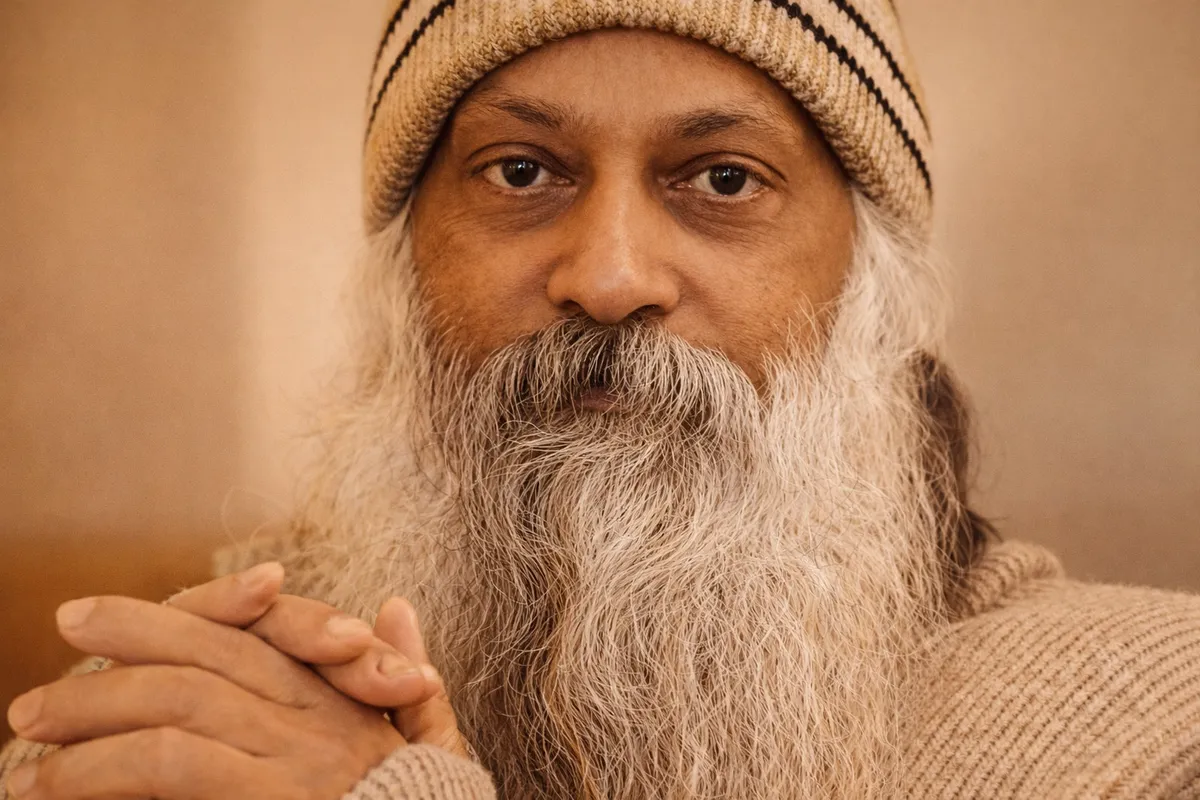
When you fully let go and love completely, you and the Beloved become one forever, and life itself answers you with joy.
From the Discourses
Passages where Osho speaks to this question — each links to the complete discourse.
That is why you asked: “I set out to seek the Beloved; how can union with the Beloved be?”
The taste has begun. A drizzle has started. But when a drizzle begins, the mind says: why only a drizzle now? Let the sky burst open! Let the heavens break! Why not let the whole ocean descend? Why just a ray or two—why not the whole sun arrive? This is natural. For those who have not received even a single drop in life, this thought does not arise. That question never comes to them. They do not ask: “I set out to seek the Beloved...!” That is not their concern. One is searching for wealth. Another for position. Who is seeking the Beloved? You have set out. Your feet have begun to tread the right path. Within you, love is growing denser day by day, silence is deepening. Your prayer is becoming more intense. Your surrender each day is gaining urgency and intensity. But as this happens, you will feel—it…
पहला प्रश्न: ओशो! पिय को खोजन मैं चली, पिया मिलन कैसे हो?
तू पूछती है: ‘पिय को खोजन मैं चली...।’ खोजने हम सब चले हैं, मगर खोजने के पहले अपने को खोने की तैयारी करनी होगी। अपने को हमने पा लिया है; अपने को बना लिया है कहना चाहिए। एक अपनी कल्पना बना ली है। हम हैं क्या--सिवाय एक कल्पना के, एक आभास के? नाम भी झूठ है; रूप भी झूठ है। प्रतिपल सब बदल रहा है, बहाव है। तुम्हारे भीतर सच क्या है?
Osho, what actually happens in union with the Divine? I fear to ask, yet curiosity will not be satisfied without asking. Forgive me if I am mistaken!
Ramdulare! There is not the slightest mistake. Curiosity is natural. When you set out to seek, what will happen when you find? When you meet the One you are searching for, what will happen? This is the spontaneous feeling that arises in the mind. When the lotus blooms, what fragrance will there be? What color? What form? When nectar showers, the lotuses blossom! When ambrosia rains and you bathe in it again and again, what will the experience be? What ecstasy will arise? This curiosity is completely natural. There is no mistake. And yet there is no way to quiet this curiosity without experience. Without it, it will not rest. However much I say, it is like a mute tasting jaggery—only the one to whom it happens knows. Yes, I can torment you sweetly. I can make you very thirsty. But I cannot tell you what the satiation is like…
अंतिम प्रश्न: ओशो, प्रभु-मिलन में वस्तुतः क्या होता है? पूछते डरता हूं, पर जिज्ञासा बिना पूछे मानती भी नहीं। भूल हो तो क्षमा करें!
रामदुलारे! भूल जरा भी नहीं है। जिज्ञासा स्वाभाविक है। जिसे खोजने चले हैं, उसे खोज कर क्या होगा? जिसकी तलाश पर निकले हैं, उसे मिलने से क्या होगा? यह सहज भाव है मन में उठने वाला। जब कमल खिलेंगे तो कैसी सुवास होगी? कैसा रंग होगा? कैसा रूप होगा? अमी झरत, बिगसत कंवल! जब अमृत बरसेगा, नहा-नहा जाएंगे, तो कैसी अनुभूति होगी? कैसी गदगद अवस्था होगी? यह जिज्ञासा बिलकुल स्वाभाविक है। नहीं कोई भूल है। फिर भी इस जिज्ञासा को शांत करने का कोई उपाय नहीं है। बिना अनुभव के यह शांत नहीं होगी। मैं कितना ही कुछ कहूं, वह तो गूंगे का गुड़ है--जिसे होता है, बस वही जानता है। हां, तुम्हें खूब तड़पा सकता हूं। तुम्हें खूब प्यासा कर सकता हूं। मगर यह नहीं कह सकता कि जब तुम सरोवर पर पहुंच जाओगे और अंजुलि भर-भर कर पीओगे, तो जो तृप्ति होगी वह कैसी होती है!
Osho, is it necessary to pass through the state of separation for union with the Divine?
I wrote and sent countless letters, still, cruel one, you did not come. The desolate garden’s days rolled by, dark monsoon clouds kept gathering; the henna beds breathed fragrance, the thresholds rang with birdsong, the neem in the courtyard flowered, the mango grove at home bloomed. Everything spoke—only you were silent; I sat alone, my heart caged. Laughter lost, joy lost, sleep was sold, peace squandered. At whose temple shall I wave the lamp? At whose door shall I surrender? To whom shall I send my silent messages, to whom my tender invitation? I wrote and sent countless letters, none ever returned to me. All came—only you did not; why this cruel spell upon me? Such intense longing took hold, such efforts did it compel. The threshold fell hush and mute, the latch kept clicking, waiting; the clouds swayed low and bowed, the rains held back, still waiting. Whenever your…
पहला प्रश्न: ओशो, क्या प्रभु-मिलन में विरह-अवस्था से गुजरना आवश्यक है?
जब-जब आई याद तुम्हारी, बढ़ी और मन की लाचारी, कसक-कसक रह गया करेजवा, बीत गई बेरहम उमरिया, सौ-सौ बार संदेश पठाए फिर भी नहीं निठुर घर आए। लिख-लिख भेजीं अनगिन पाती फिर भी नहीं निठुर तुम आए। भक्त अस्तित्व के प्रेम में है। जहां प्रेम है, वहां विरह सघन होगा। जहां प्रेम है, वहां प्यास सघन होगी। जहां प्रेम है, वहां पुकार उठेगी अहर्निश, आकांक्षा जगेगी। कब होगी सुबह? कब टूटेगी रात? कब अंधेरा मिटेगा दूरी का? कब होगा सामीप्य, सान्निध्य उपलब्ध? …
This sutra is unique. Shandilya says: The devotee does not aim merely at God’s vision; for in vision, distance remains. You stand here, God stands there, and you see! There is a gap, an obstruction, a distance. In vision there is distance. What then does the devotee want? He wants to become one with God; not vision, but oneness. The devotee is not content until the devotee becomes the Divine—until he is absorbed. The knower is content cheaply. He says, I have seen—enough. I have seen, known, recognized—satisfied. This is like seeing sweets and going away pleased. You have not tasted; sweetness has not flowed in your blood, been assimilated into flesh and bone. What will you do with the sight of sweets? Shandilya is right: the devotee is not content with that. He says: What sort of thing is that! It will only increase restlessness.
यह सूत्र अपूर्व है। शांडिल्य कहते हैं: भक्त की आकांक्षा भगवान का दर्शन कर लेने की नहीं है, क्योंकि दर्शन में तो दूरी रह जाती है। तुम इधर खड़े, भगवान उधर खड़े, दर्शन हो रहा! फासला है, व्यवधान है, दूरी है। दर्शन में दूरी है। तो भक्त क्या चाहता है? भक्त भगवान में एक होना चाहता है; दर्शन नहीं, एकात्म चाहता है। भक्त की तब तक तृप्ति नहीं है, जब तक भक्त भगवान न हो जाए, जब तक निमज्जित न हो जाए। ज्ञानी सस्ते में राजी हो जाता है। वह कहता है, दर्शन हो गए, चले। देख लिया, जान लिया, पहचान लिया, प्रसन्न हो गए। यह तो ऐसे ही हुआ कि मिठाई के दर्शन कर लिए और प्रसन्न होकर चले गए। स्वाद तो लिया नहीं, माधुर्य तुम्हारे रक्त में तो बहा नहीं, तुम्हारी मांस-मज्जा में तो सम्मिलित नहीं हुआ, मिठाई के दर्शन से क्या होगा?
Osho, when I listen to you, every word sinks to the depths of my heart and stirs me. But when I read you, it remains a mental game. Please tell me why this happens.
It’s plain. The arithmetic is simple. When you read, only you are there; I am not. What you read is nothing but you. It becomes a game of the mind. When you listen to me, then sometimes—knowingly or unknowingly—I also slip into you. You seldom give such a chance, but now and then a lapse happens on your side. Unaware, you leave the door a little open—and I come in. So when you are hearing me, it’s a different matter. That is why truth has always been spoken, not written. It cannot be written. Even speaking it is very difficult, yet it can still be said—at least a little can be said, a little news can be given. Because in speaking, many elements are involved that are lost in writing. When you read a book, the book is dead. A book cannot create an atmosphere around you. A book has…
आखिरी प्रश्न: ओशो, जब आपको सुनता हूं तो आपका प्रत्येक शब्द दिल की गहराई तक उतर जाता है और हलचल पैदा करता है। लेकिन जब आपको पढ़ता हूं तो वह दिमागी खेल बनकर रह जाता है। कृपया बताएं कि ऐसा क्यों होता है?
साफ-साफ है। गणित बिलकुल सीधा है। जब तुम पढ़ते हो तब तुम्हीं होते हो, तब मैं नहीं होता। जो तुम पढ़ते हो, वह तुम ही तुम हो। दिमागी खेल बनकर रह जाता है। जब तुम मुझे सुनते हो तो कभी-कभी तुम्हारे जाने-अनजाने मैं भी तुम में प्रवेश कर जाता हूं। कम ही तुम ऐसा मौका देते हो। लेकिन कभी-कभी चूक तुमसे हो जाती है। कभी-कभी बे-भान, तुम जरा दरवाजा खुला छोड़ देते हो, मैं भीतर आ जाता हूं। इसलिए तुम जब मुझे सुन रहे हो तो बात और है। इसलिए सत्य सदा कहा गया है, लिखा नहीं गया। लिखा जा नहीं सकता। कहना भी बहुत मुश्किल है, लेकिन फिर भी कहा जा सकता है, थोड़ा-सा कहा जा सकता है। ऐसी थोड़ी-सी खबर दी जा सकती है। क्योंकि कहने में कई बातें सम्मिलित हैं, जो लिखने में खो जाती हैं।