
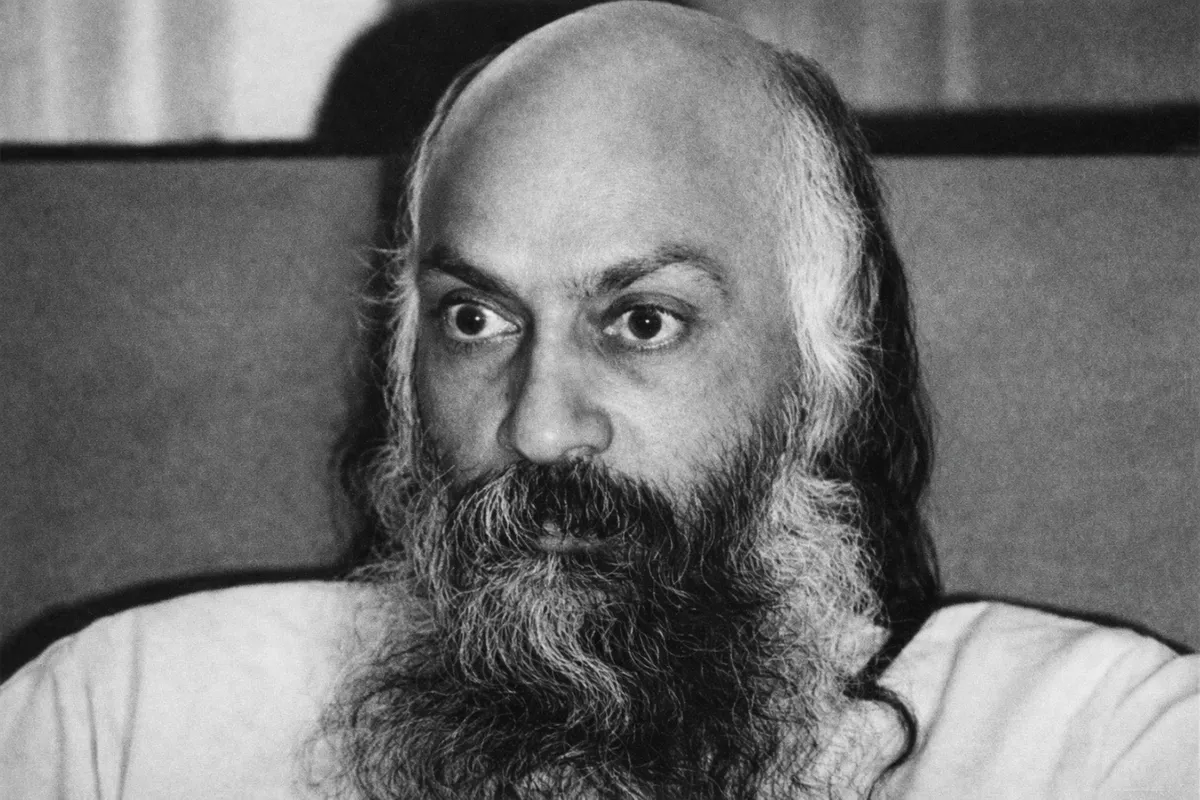
According to Osho, when love arises amid creativity and a cool, solitary space, take it as a passing glimpse rather than final enlightenment. Watch, enjoy, and don’t cling; the mind’s doubt usefully tests the unreal. With ripened maturity you transcend sex, become centered, and discover joy that is independent of others; aloneness reveals a luminous beauty and love flows without dependence.
If you feel loving, creative, and peacefully alone, enjoy it and watch it gently—it may pass, and with patience it matures into a steady happiness that doesn’t depend on anyone.
From the Discourses
Passages where Osho speaks to this question — each links to the complete discourse.
Now this looks paradoxical when I say create your God and only then vou find Him. Don't wait for Him. Create your love -- only then will you find; don't wait for it. People who are creative find millions of ways of love, prayer, gratitude. Experience is always around you, always ready to sprout flowers, but you have to be creative, receptive, open -- and remember initiative. Otherwise the world will pass you by. If you remain closed, hiding yourself somewhere and just waiting for Godot, nobody will come because they are also shy. Somebody has to break the ice. So meditate, do a few groups and remain available. And there is nothing wrong in chasing. One has to find a lover, and when it is time it is good to chase. Otherwise people start chasing in old age and then it is foolish.
Osho, you have titled this series of talks “Sahaj Yoga.” Do “sahaj” and “yoga” not seem mutually opposed?
Anand Maitreya! They don’t just seem opposed, they are opposed. But no ultimate truth of life can manifest without contradiction. Life is made of opposites—darkness and light, day and night, woman and man, negative electricity and positive electricity, birth and death. The very structure of life is woven of opposites. Hence the opposites are not only opposed; they are complementary to each other. If you have labored hard all day, you will be able to sleep deeply. Labor and rest are opposites, yet only the one who has worked can rest deeply—and the one who has not worked cannot. So the opposites are not only opposed, they complete each other. And only the one who has rested deeply at night can rise in the morning and engage in work again. One who has not rested through the night will not be able to work in the morning. Look closely at…
Osho, never before have I felt so much love and never before so alone. Thank you, Osho...
Carl Gustav Jung has made these words very famous. He divided people basically into two types: the introverts and the extroverts. That is a wrong division. People cannot be categorized that way. People cannot be pigeon-holed this way. I have never come across anyone who is just introvert -- he will die immediately, because he will have only the in-breath. I have never come across a person who is just extrovert -- he will die too. People are both. It is possible that one is more of an extrovert than an introvert, and vice versa. And that's what brings imbalance to your personality. One should be both simultaneously. One should be balanced. My sannyasins have to be extrovert introverts, introvert extroverts -- both together. This is one of the most important things to be understood, because in the past the monks have tried to be just introverts. They were called…
It is only through love -- the anguish and the ecstasy of it -- that you learn, that you see, that you visualise, that you become capable of coming to certain conclusions. And the greatest conclusion that one arrives at spontaneously one day is that if one really wants to be eternally happy, then that happiness has to be in aloneness; it cannot depend on the other. That which depends on the other certainly depends on the other -- you are not the master of it; you are a slave. And that's why there is conflict: nobody wants to be a slave. Freedom is a higher value than love, and the whole conflict is between these two values: love and freedom. But you can know only that freedom is a higher value than love if you have been in love. Going through experience beyond love, you arrive at freedom.
What is divine love? How does an enlightened person experience love?
First let us look at the question itself. You must have been waiting to ask it. It couldn't have come to you just now; you must have decided on it in advance. It was waiting to be asked; it was forcing you to ask it. Your memory has determined the asking, not your consciousness. If you were conscious right now, if you were in the moment, this question would not have come. If you had been listening to what I have been saying, this question would be impossible. If the question has been present in you, it is impossible for you to have heard anything I have been saying. A question that is constantly present in the mind creates a tension and because of the tension you cannot be here. That is why your consciousness cannot act with freedom. If you understand this, then we can take up your question.…