
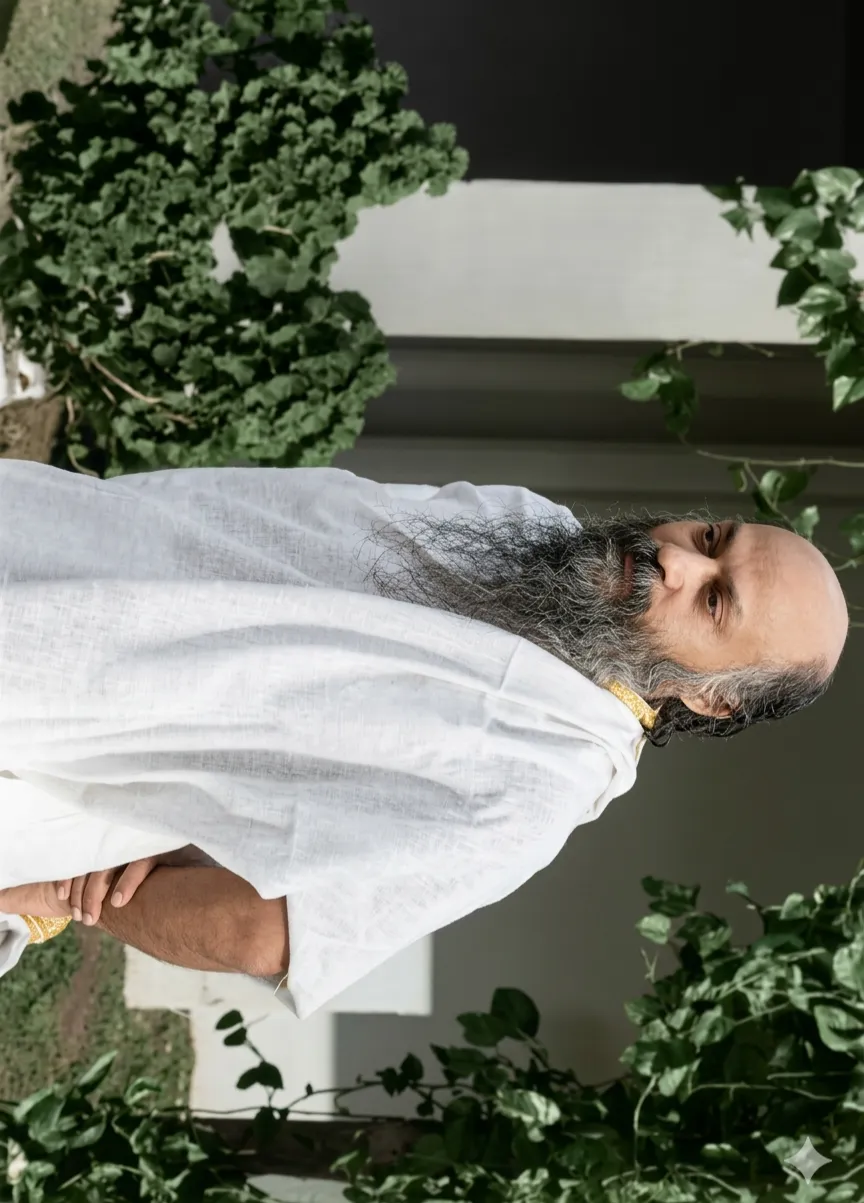
According to Osho, Zen is so utterly against politics that it won’t even oppose it; opposition still binds you. Zen is non-political because politics is ambition, ego, aggression—a blind denial of our inner nothingness. True religion drops ambition and ego, so politics simply falls away. Organized religions become political; a Zen awakening stands free of such power-games.
Zen doesn’t play or fight power games—it lets go of ego so politics has nothing to stick to.
From the Discourses
Passages where Osho speaks to this question — each links to the complete discourse.
Is zen against politics?
Zen is so much against politics that it never talks about it. It is so much against politics that it cannot even be against it. If you are against it, it will affect you. Then somehow you will remain in some way related to it. To be against is to be related. When you are very much against, you are very, very related. It is a way of relationship -- you are related to your enemy too, sometimes even more than you are related to your friend. Zen is so much against politics that it does not say anything about it, but it is against it. any religion, any religion worth calling a religion, is bound to be against politics because the very phenomenon of religion is non-political. What is politics? Politics is ambition, politics is ego, politics is aggression, politics is violence, politics is an ego-trip. How can a…
Osho, why are you so opposed to politics?
I am not against politics. Politics is only a symptom. I am against the inferiority complex in man; that inner sense of smallness. And politics is a symptom of that very disease. The more a person suffers from an inferiority complex, the more he hankers after position. The more he is filled with inferiority, the more he hankers after wealth. Understand this. An inferiority complex means: inside you feel, “I am nothing, a nobody, a two-bit fellow.” But this rankles. “I—and two-bit!” The mind cannot swallow it. “I will show the world that I am somebody. I’ll become a prime minister, a president. I’ll amass the world’s wealth and prove to the world that I am somebody.” Politics is the device to fill that inner sense of two-bit-ness, meaninglessness, emptiness. Politics means ambition—whether for money or for office, it makes no difference. Sometimes it is even the ambition for renunciation;…
Osho, what is the first experience of samadhi like?
You will know only when it happens. It cannot be said; at most a few hints can be given. It is as if, in the dark, a lamp is suddenly lit. Or as if a dying patient, right at the edge of death, suddenly finds a medicine that works; life’s wave, life’s thrill spreads again—so it is. As if a corpse becomes alive—such is the first experience of samadhi. It is the taste of nectar. The experience of the ultimate music. But it will be only when it happens; and only then will you understand. You will not understand by my saying it. It is as with love. How can anyone explain it? To someone who has never loved, never known love, no matter how many explanations you offer—he will hear it all and still ask, “I haven’t understood; please explain a little more.” It is like explaining light to…
Osho, as long as the mind is there, do we inevitably get entangled in some form of politics? Is there no way to rise above politics without going beyond the mind? Please explain.
Mind itself is politics. All the impulses of the mind are exploitative. All its arrangements are attempts to own others. The mind is filled with the poison of ambition. Mind itself is politics. That is why I say it is impossible for a truly religious person to move toward politics—because a religious person is born only when he rises beyond the mind, rises through meditation, enters the state of no-mind, becomes unman—only then does religion arise. Politics means: let me seize others; let me become bigger than others; more important than others; push others behind; let others be proved to be nothing and let me become everything; let my rights be greater, my power greater; let my ego be enthroned—on a golden throne. And remember, where so many people are busy with politics, not everyone can sit on golden thrones. Those who succeed in sitting there become egoistic; those who…
Osho, do you think that it is not possible to be honest, intelligent, religious, and yet be in politics?
IT IS impossible. It is ABSOLUTELY impossible, CATEGORICALLY impossible. If you are intelligent, why should you be in politics? It is for the stupid, for the mediocre. The intelligent person will have much more important things to do. The intelligent person will not be interested in dominating others. His whole interest will be in knowing himself To dominate the other is a way of escaping from one's own inner meaninglessness, inner emptiness, inner hollowness. It is an escape from oneself. The intelligent person iS not an escapist. Politics is an escape, a GREAT escape. It keeps you so occupied, day in, day out, that you cannot find even a few minutes for yourself. Even when you sleep you think politics; it continues in your dreams. To be a politician is a twenty-four hour job. You cannot relax because if you relax you will be left behind. It is a tooth-and-nail…