
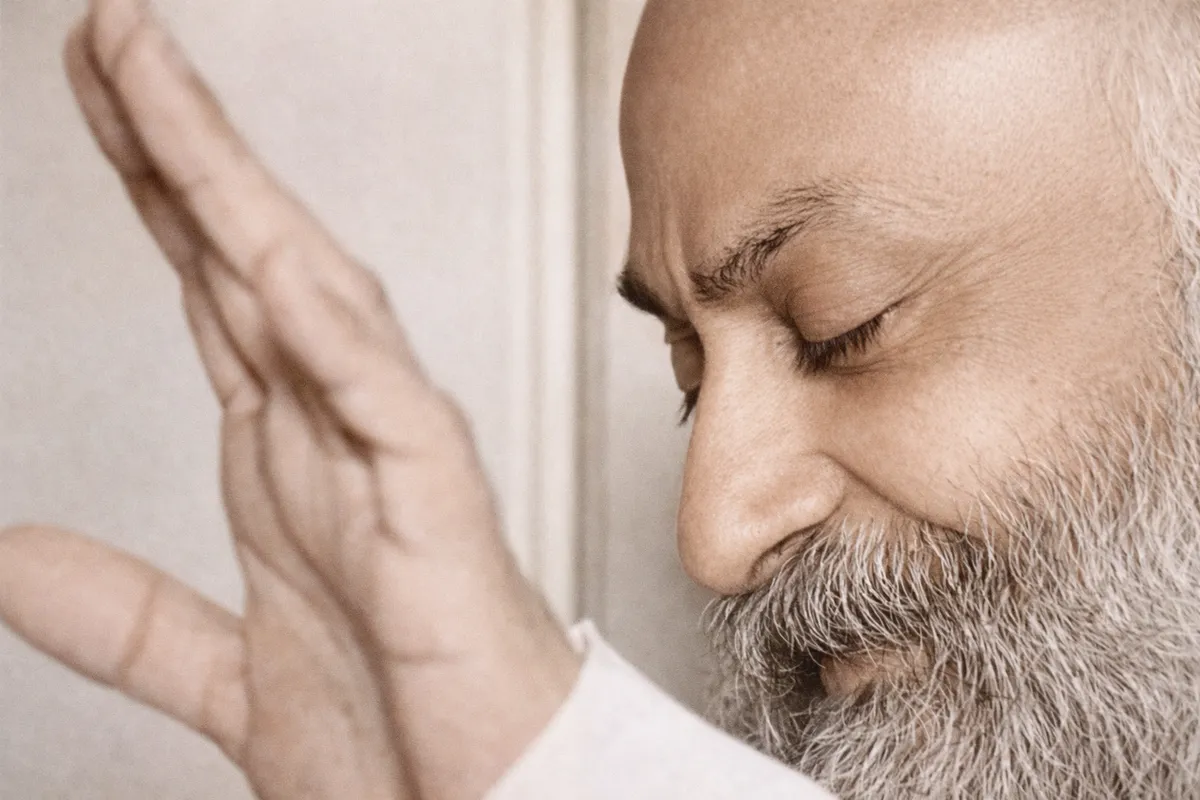
Your true self doesn’t hurt; only thoughts and emotions do—when you drop them, you feel as free and whole as the ocean.
From the Discourses
Passages where Osho speaks to this question — each links to the complete discourse.
Beloved master, experiencing headache, I discovered my male nature. Experiencing heartache, I discovered my female nature. Beloved master, is there also going to be a being-ache?
It is a hilarious world. Everything is going so unconsciously. The only thing worth remembering is not to lose the opportunity that you have to develop your consciousness to the point where you have the same vision, the same clarity, the same intuition, the same understanding as a Gautam Buddha. Unless you become that much awakened, your life is going to repeat again and again the same mistakes. An unconscious man cannot be expected to change his life's course. It is only consciousness, growing consciousness, that is going to change your lifestyle. And once you are fully awakened, enlightened, you need not come back again into another womb. The enlightened being disappears into the womb of the universe itself. Not that you are no more, but in fact you are for the first time -- as vast, as infinite as this universe is, with no boundaries, and expanding continuously. All…
Osho, you have earlier said, “Live moment to moment, live in the present.” Now you are saying, “Return to the past.” What should we do?
So it is with the mind—there are ruts. The past means endless grooves. However much you understand, your intellect agrees, you make decisions, you resolve—at the moment of resolve you feel something is going to change. But not even an hour passes before your decision breaks. Then only self-condemnation is produced, nothing else. Your saints, your fakirs, your priests and pundits—most of the time they only succeed in producing self-condemnation in you, nothing else. Their words are logically correct. You cannot even say they are wrong; you have to admit they are right. In that admission you take a decision. But against what are you deciding? Inside are grooves carved since who knows when, deep tracks. Walking in them has become a habit. It is easy to walk in them. They will pull you again and again. The meaning of returning into the past is: these grooves must be erased.…
दूसरा प्रश्न: ओशो, आपने पहले कहा है, क्षण-क्षण जीयो, वर्तमान में जीओ। अब आप कह रहे हैं, अतीत में लौटो। हम क्या करें?
ठीक मन पर लीकें हैं। अतीत का अर्थ है, अनंत लीकें। तो आप कितनी ही बातें समझ लेते हैं; बुद्धि सहमत हो जाती है; निर्णय ले लेते हैं; संकल्प कर लेते हैं। और जब संकल्प करते हैं, तब सोचते हैं कि कुछ होने-जाने वाला है। घड़ी भी नहीं बीत पाती कि जो आपने निर्णय लिया था, वह टूट जाता है। और तब सिर्फ आत्मग्लानि पैदा होती है, और कुछ भी नहीं। आपके संत, आपके फकीर, आपके पंडित-पुरोहित, आप में सिर्फ आत्मग्लानि पैदा करवा पाते हैं और कुछ भी नहीं। क्योंकि उनकी बातें तो तर्कयुक्त हैं। आप भी कह नहीं सकते कि वे गलत कह रहे हैं। स्वीकार करना पड़ता है कि ठीक कह रहे हैं। उस स्वीकृति में आप निर्णय लेते हैं। लेकिन निर्णय किसके खिलाफ ले रहे हैं! न मालूम कितनी लंबी लकीरें भीतर हैं, गहरे खांचे हैं। उनमें चलने की आदत हो गई है। उनमें चलना सुगम है। …
A friend has asked: Osho, if events happen in nature and feelings in man, then when one attains siddhi and experiences one’s separateness, do bodily pain and mental anguish stop?
This needs a little understanding. First, understand the difference between pain and suffering. If a thorn pricks your foot, two things happen. One is pain. Pain means you experience that there is hurt in the foot. I know there is hurt in the foot. You are the knower. The pain happens in the foot; you are the seer of it. You are the witness. This does not mean that if you are a witness and someone pricks your foot you will feel no pain. Do not fall into that illusion. There will be pain, because the prick of a thorn is an event. But there will be no suffering. Keep this distinction in mind. Suffering happens when I become one with the pain. When I say, “A thorn is pricking me,” then suffering happens. When I say, “A thorn is pricking the foot—and I am seeing it,” then there is…
एक मित्र ने पूछा है कि ओशो, यदि प्रकृति में घटनाएं होती हैं और पुरुष में भाव, तो क्या जब कोई सिद्धि को प्राप्त हो जाता है और अनुभव कर लेता है अपनी पृथकता को, तो उसके शरीर में दुख और मन में पीड़ा बंद हो जाती है?
पहली तो बात यह समझनी पड़े कि दुख और कष्ट का फर्क। अगर आपके पैर में कोई कांटा चुभाए, तो दो घटनाएं घटती हैं। एक घटना है, कष्ट। कष्ट का अर्थ है कि आप अनुभव करते हैं कि पैर में पीड़ा हो रही है। मैं जान रहा हूं कि पैर में पीड़ा हो रही है। आप जानने वाले होते हैं। पीड़ा पैर में घटित होती है, आप देखने वाले होते हैं। आप साक्षी होते हैं। इसका यह मतलब नहीं कि आप साक्षी होंगे, तो कोई आपके पैर में कांटा चुभाए तो आपको पीड़ा नहीं होगी। इस भ्रांति में आप मत पड़ना। पीड़ा होगी। कष्ट होगा। क्योंकि कांटे का चुभना एक घटना है। लेकिन दुख नहीं होगा। इस फर्क को खयाल में ले लें। …
Osho, why is growth painful?
Man is unique among creatures in his knowledge of death and in his laughter. Wonderfully then, he can even make of death a new thing: he can die laughing. It is only man who knows laughter; no other animal laughs. It is only man who knows death; no other animal knows death -- animals simply die, they are not conscious of the phenomenon of death. Man is aware of two things which no animal is: one is laughter, another is death. Then a new synthesis is possible. It is only man who can die laughing -- he can join the consciousness of death and the capacity to laugh. And if you can die laughing, only then will you give a valid proof that you must have lived laughing. Death is the final statement of your whole life -- the conclusion, the concluding remark. How you have lived will be shown…
The body is quickly affected. If the body has some disease, some affliction—if someone is gravely ill, a lifelong patient—can he still experience self-bliss or not?
Yes. About what you ask—“one who can experience self-bliss”—such a person has no awareness at all that “the body is mine.” Whether your body is healthy or ill, whether the pain is noticed by you or not, it has nothing to do with self-bliss. If even a little taste of self-bliss happens, that very little taste will make it clear to you that you are not the body. Then your notions about this body will become like the notions you have about someone else’s body. Your relation to this body will be almost like an actor’s relation to his role in a play. Just as when Sita of Rama was abducted—that was one thing. Valmiki writes that he went from tree to tree, weeping, asking, “Where is my Sita?” Even today in the theater, Sita of Rama is carried off, and this stage-Rama too goes from tree to tree asking,…
प्रश्न: जल्दी असर करता शरीर के ऊपर। शरीर का कोई रोग होता है, शरीर में कोई तकलीफ होती है, और कोई बड़ा रोगी, जिंदगी भर का रोगी होता है, तो वह आत्मानंद ले सकता है कि नहीं?
हां, आप जो पूछते हैं न: ‘आत्मानंद जो ले सके।’ तो शरीर मेरा है, यह उसे बोध ही नहीं होता है। आपका शरीर स्वस्थ हो और चाहे बीमार हो, चाहे तकलीफ आपको पता चलती हो और चाहे तकलीफ पता न चलती हो, उसका आत्मानंद से कोई संबंध नहीं है। आत्मानंद अगर आदमी को हो सके, अनुभव हो सके उसका थोड़ा सा भी, तो वह थोड़ा सा भी अनुभव आपके सामने यह स्पष्ट कर जाएगा कि आप शरीर नहीं हो। तब इस शरीर के बाबत आपकी धारणाएं वैसी हो जाएंगी, जैसे किसी और के शरीर के बाबत हैं। इस शरीर के बाबत आपकी धारणा करीब-करीब वैसी हो जाएगी, जैसे नाटक में अभिनेता की अपने अभिनय के प्रति होती है। जैसे कि राम की सीता चोरी गई होगी, वह एक बात रही होगी। वाल्मीक ने लिखा कि वे वृक्ष-वृक्ष से पूछते हैं, रोते हैं कि मेरी सीता कहां है? अब भी नाटक होता है, उसमें भी राम की सीता चोरी चली जाती है और वह भी वृक्ष-वृक्ष से पूछता है कि मेरी सीता कहां है? लेकिन इसके पूछने में और राम के पूछने में कुछ फर्क है! यह पूछ रहा है कि मेरी सीता कहां है? …