
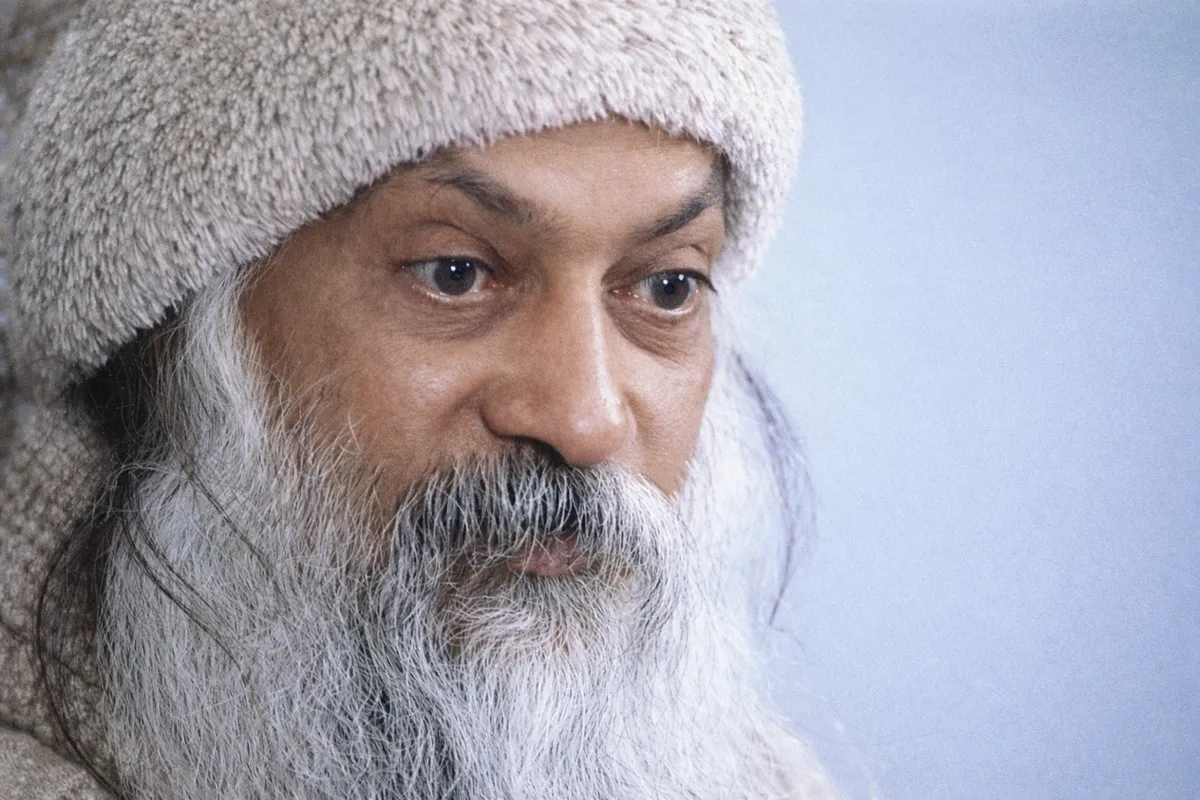
Stop trying to know everything with your head; become empty like a child, and true self-knowing naturally appears.
From the Discourses
Passages where Osho speaks to this question — each links to the complete discourse.
Question: BELOVED OSHO, IS IT POSSIBLE THAT I KNOW MYSELF LESS AND LESS? Prem Pradeepa, it is not only possible that you know yourself less and less: the more you are here, the closer you come to me, the more your knowledge will evaporate; the more you will become innocent, not knowing, but full of wonder -- just like a small child wondering about each and everything. This is absolute freedom and liberation from mind. Socrates is reported to have said, "When I was young I thought I knew everything; when I became a little more mature I also became aware that there is much that I don't know. When I became still older I was puzzled because I used to know more when I was young -- and now I know less and less every day. And finally, before he died, he said, `I know nothing.
Osho, you said that you don't know who you are. Don't you really? Do we never know who we are?
But it has been a great problem for the scholars: "Why did Eknath treat his own god in this way?" They don't have any answer. At least he could have looked at him, at least he could have said, "Please sit down on the brick." I have talked with many Maharashtrian scholars who are followers of Eknath; they don't have any answer. I said, "It is so simple. The story may be bogus, and I know that it is bogus. There is no Vithoba; nobody ever comes, whether you keep your door open or locked. But one thing is certain: Eknath was really an authentic man. When he was doing one thing, he was doing it totally. When God comes he says, "Stand there, don't bother me till I am finished with my work." To me this is the implication in my saying that if death comes to my sannyasins…
Beloved Osho, the more years I am with you, the less I know who I am. Am I missing you?
Turiya, this is the way of getting me, and this is the way of getting yourself too. You are not missing anything, but the mind will again and again raise the question, because mind needs information -- more information means you are getting it, you are becoming more knowledgeable. Here, we are not concerned with information at all. My work is transformation. The less information you have the better, because the more innocent you are. The moment you can say, "I know nothing" you have come very close. Remember, I am saying you have come very close; you have not got it yet- because to say "I know nothing" means at least you know this much, that you know nothing; there is still some information. Let me tell you one beautiful story. I have loved many stories, but this is something that beats them all. One of the greatest mystics…
Not through my doing, not through my becoming, but through my disappearing. Religion is not the path of becoming, it is the path of dissolving. And the great wonder is that the world—which is the path of becoming—finally takes you to death, where all is dissolved. And religion—which is the path of dissolving—finally takes you to That which can never be dissolved. Those who dissolve attain the indestructible. The drop loses itself in the ocean—and becomes the ocean; man loses himself—and becomes the divine. Therefore nothing that man “does” can take him there. If man un-does himself—becomes un-done—he arrives. To say “arrives” is not accurate, for there he already is; he finds that he is there. How then can a person un-do himself, efface himself, become a zero? How can one become empty? The first step leading toward emptiness is: not-knowing.
लेकिन मेरे करने से नहीं, मेरे कुछ बनने से नहीं, बल्कि मेरे मिटने से। धर्म बनने का रास्ता नहीं, मिटने का रास्ता है। और बड़े आश्र्चर्य की बात यह है कि संसार जो कि बनने का रास्ता है, आखिर में मौत में ले जाता है, जहां सब मिट जाता है। और धर्म जो कि मिटने का रास्ता है, आखिर में वहां ले जाता है जिसके मिटने की कोई संभावना नहीं है। जो मिटते हैं, वे उसे पा लेते हैं जो अमिट है। बूंद अपने को सागर में खो देती है, तो सागर हो जाती है; और आदमी अपने को खो देता है, तो परमात्मा हो जाता है। इसलिए आदमी का किया हुआ कुछ भी ले जाने में समर्थ नहीं है। आदमी अपने को अनकिया कर दे, अनडन कर दे, तो पहुंच जाएगा। पहुंच जाएगा कहना गलत है, क्योंकि वहां वह है, वह पाएगा कि वहां तो मैं हूं।
Question: AND THE MIND GOES BANANAS... "SURRENDER, DO YOUR OWN THING. "TRUST, LIVE YOUR LIFE... SLOWLY IT SEEMS TO ME THAT I DON'T KNOW ANYTHING AND SOMETIMES IT FEELS VERY GOOD. BUT STILL I WANT TO KNOW. ... And Ouspensky said, "I wanted to ask you a few questions. Gurdjieff gave him a blank sheet of paper and told him, "Go into the other room and on the one side write whatsoever you know, and on the other side whatsoever you don't know. And then come back -- because I will answer only that which you don't know. If you already know it, why bother about it? It was a cold Moscow night, the snow was falling, and Ouspensky remembers, "Going into the other room, I started perspiring. For the first time, with such emphasis, I was made aware that I know nothing.