
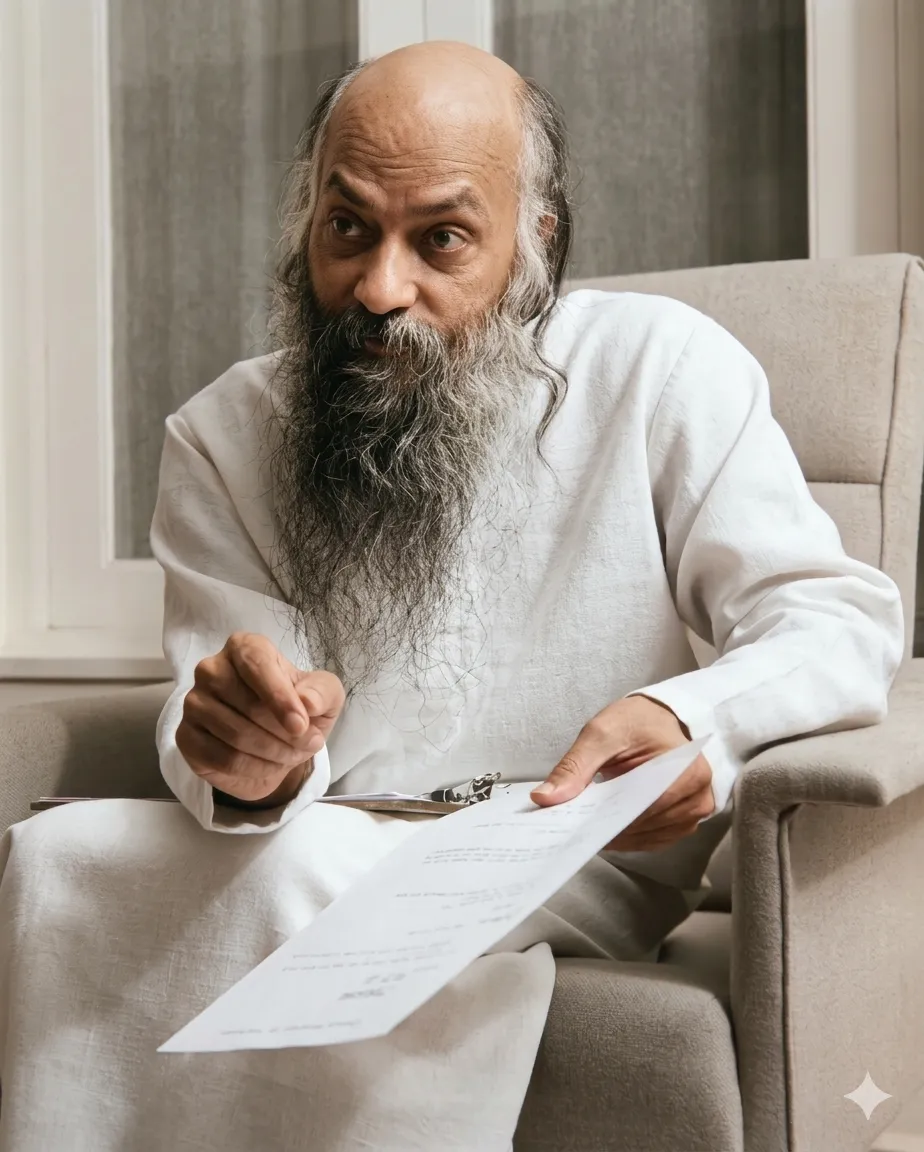
Different hearts need different doors to God—silent sitting or loving an idol—so stop forcing others and let what brings them joy be their way.
From the Discourses
Passages where Osho speaks to this question — each links to the complete discourse.
Osho, my wife practices idol worship, but I tell her to meditate and say that idol worship is futile. My wife replies that Meera too worshiped idols. I have no answer to that. Please tell me how true this is, and how I should explain it to my wife?
A kind of madness always rides on man: what I believe, the other should also believe; what I believe alone is right; what the other believes is wrong. This is nothing but the proclamation of the ego. Mahavira has said: the other is also right. To think “only I am right” is unintelligent. If your wife finds joy in idol worship, who are you to interfere? What’s your purpose—simply because you are the husband? The uneasiness you feel is that you don’t have total possession over your wife. “I meditate, my wife worships idols!” If you have a taste for meditation, meditate. If your wife has a taste for idol worship, let her worship. Rasa is the essential thing. Raso vai sah—That Supreme is rasa itself. How the rasa comes is secondary. Are we to eat mangoes or count their pits? But people sit with piles of pits and call…
दूसरा प्रश्न: ओशो, मेरी पत्नी मूर्तिपूजा करती है, लेकिन मैं उसे ध्यान करने को कहता हूं और कहता हूं कि मूर्तिपूजा व्यर्थ है। पत्नी उत्तर देती है कि मीरा भी तो मूर्तिपूजा करती थी। मेरे पास इसका जवाब नहीं है। कृपया बतायें कि यह बात कहां तक ठीक है, और यह कि पत्नी को कैसे समझाऊं?
मनुष्य को सदा एक पागलपन सवार रहता है। जो मैं मानता हूं, वह दूसरा भी माने। जो मैं मानता हूं, वही ठीक है। जो दूसरा मानता है, वह गलत है। यह अहंकार की ही घोषणा है। महावीर ने कहा है, दूसरा भी ठीक है। मैं ही ठीक हूं, ऐसी धारणा निर्बुद्धिपूर्ण है। फिर अगर तुम्हारी पत्नी को मूर्तिपूजा में आनंद मिल रहा है, तो तुम बाधा डालने वाले कौन? तुम्हें प्रयोजन क्या? सिर्फ पति होने के कारण? तुम्हें अड़चन मालूम हो रही है कि पत्नी पर पूरा कब्जा नहीं है। मैं ध्यान करता हूं, पत्नी मूर्तिपूजा करती है! तुम्हें ध्यान में रस आ रहा है, ध्यान करो। पत्नी को मूर्तिपूजा में रस आ रहा है, मूर्तिपूजा करने दो।
Today I would request Osho to guide us on idol worship.
A Japanese seeker from Soto Zen told me of a practice: twenty-four hours a day the disciple intones “Muuuu… muuu…” After days, the sound storms inside; thoughts drop. By three weeks, the roaring “Muuuu!” possesses him. Food, sleep fall away; guards must watch him. At the final climax, a last thunderous roar—and suddenly all is still. For days he lies in deep quiet. When he returns, the old man is dead; a new man stands—continuity with the past broken. Om is such a sound; every religion has its own. As worship deepens, sound transforms consciousness. Repetition is crucial. If you sing one hymn one day, another the next, there will be no results. Continuous blows on one point drive the nail. But beware of mechanical repetition—then it is wasted labor. If the sound becomes your very life, every cell, bone, blood crying it—then sound can open the door. And all…
Osho, you have said that meditation is an inner journey. Is devotion also an inner journey? What is the fundamental difference between the inner journey of meditation and that of devotion? Please explain with compassion.
This is the path of love; here the Other is essential. From the union of two arises variety; the stream of rasa flows. A man alone cannot give birth to a child; a woman alone cannot give birth either. For a child to be born, the meeting of these opposites is necessary. Yes, a man can paint alone, a woman can sculpt alone—but they cannot give birth. For devotion, two are needed. Devotion is the unity that happens between two. Knowledge is the experience of the One. In the end, only One remains; thus both, ultimately, lead to the same place. But knowledge assumes the One from the very beginning; knowledge is nondual. Bhakti fundamentally accepts duality. The heart of bhakti is large: it says, let us accept the two; then we will unite them. Bhakti has trust in union. The faith that a bridge can be built between two—that…
तीसरा प्रश्न: ओशो, आपने कहा है कि ध्यान अंतर्यात्रा है। क्या भक्ति भी अंतर्यात्रा है? ध्यान की अंतर्यात्रा और भक्ति की अंतर्यात्रा में क्या आधारभूत भिन्नता है, समझाने की अनुकंपा करें।
यह प्रेम का मार्ग है। इसमें दूसरा जरूरी है। दो के मिलन से वैविध्य पैदा होता है, रस धार बहती है। पुरुष अकेला बच्चे को जन्म नहीं दे सकता है। स्त्री अकेली बच्चे को जन्म नहीं दे सकती है। बच्चे को जन्म देने के लिए इन दोनों विपरीत का मिलना जरूरी है। हां, पुरुष चाहे तो चित्र बना सकता है, पेंटिंग कर सकता है अकेला, स्त्री चाहे तो मूर्ति बना सकती है अकेली, लेकिन बच्चे को जन्म नहीं दे सकती। भक्ति के लिए दो का होना जरूरी है। भक्ति दो के बीच घटी एकता है। और ज्ञान एक का अनुभव है। दोनों में अंततः एक बचता है इसलिए दोनों अंततः एक ही जगह ले जाते हैं। मगर ज्ञान शुरू से ही एक को मान कर चलता है। …
Howsoever much one may talk about the formless and the unmanifest, it is mere talk and doesn't convey anything to you. Whatever experiences your mind has are all experiences of some form and shape; you have no experience of the formless, and words cannot convey anything about that which hasn't been experienced. You will go on talking about the formless and continue to live with the form. So if you want to establish a relationship with the formless, you have to make something which on one side has a form and on the other is formless. That is the secret of the idol. Let me explain this another way. From our side we need a bridge which has a tangible form, but which also has a formless part: at our end it is manifest, and at the farther end, as it approaches the divine, it becomes unmanifest.
Question: Second question: Osho, Shall I love the idols, or shall I remember God? ... A U.S. Supreme Court justice died at ninety. When he was ninety, he was strolling in a garden with his son, who was sixty-five. A beautiful woman passed by. Naturally the son looked; the father looked too—she was so beautiful it was hard not to. The son said: Father, you must wish you were young! The father said: It’s not that I wish I were young—but at least I wish I were sixty-five! At least your age! Sixty-five is “old,” but for a ninety-year-old, sixty-five is youth. Look back, and the shape of time changes. In suffering, time feels long; in memory, it contracts. In joy, time feels short; in memory, it expands.
अमरीका का एक सुप्रीम कोर्ट का न्यायाधीश नब्बे साल का होकर मरा। जब वह नब्बे साल का था, तो अपने बेटे के साथ बगीचे घूमने गया था। बेटे की उम्र थी पैंसठ साल। यूं बात चल रही थी दोनों में। एक सुंदर स्त्री पास से गुजरी। स्वभावतः बेटे की नजर उस पर पड़ी, बाप की भी नजर पड़ी। स्त्री बहुत सुंदर थी, नजर बचाना मुश्किल था। तो बेटे ने अपने बाप से कहा कि पिताजी, आपका मन होता होगा कि आप भी जवान होते...! तो बाप ने कहा कि यह तो मन नहीं होता कि जवान होता। लेकिन इतना कम से कम मन होता है कि कम से कम पैंसठ साल का होता ही! कम से कम तेरी उम्र का तो होता ही! अब पैंसठ साल भी यूं बुढ़ापा है। मगर जो नब्बे साल का है, उसके लिए तो पैंसठ साल का होना भी जवानी है।