
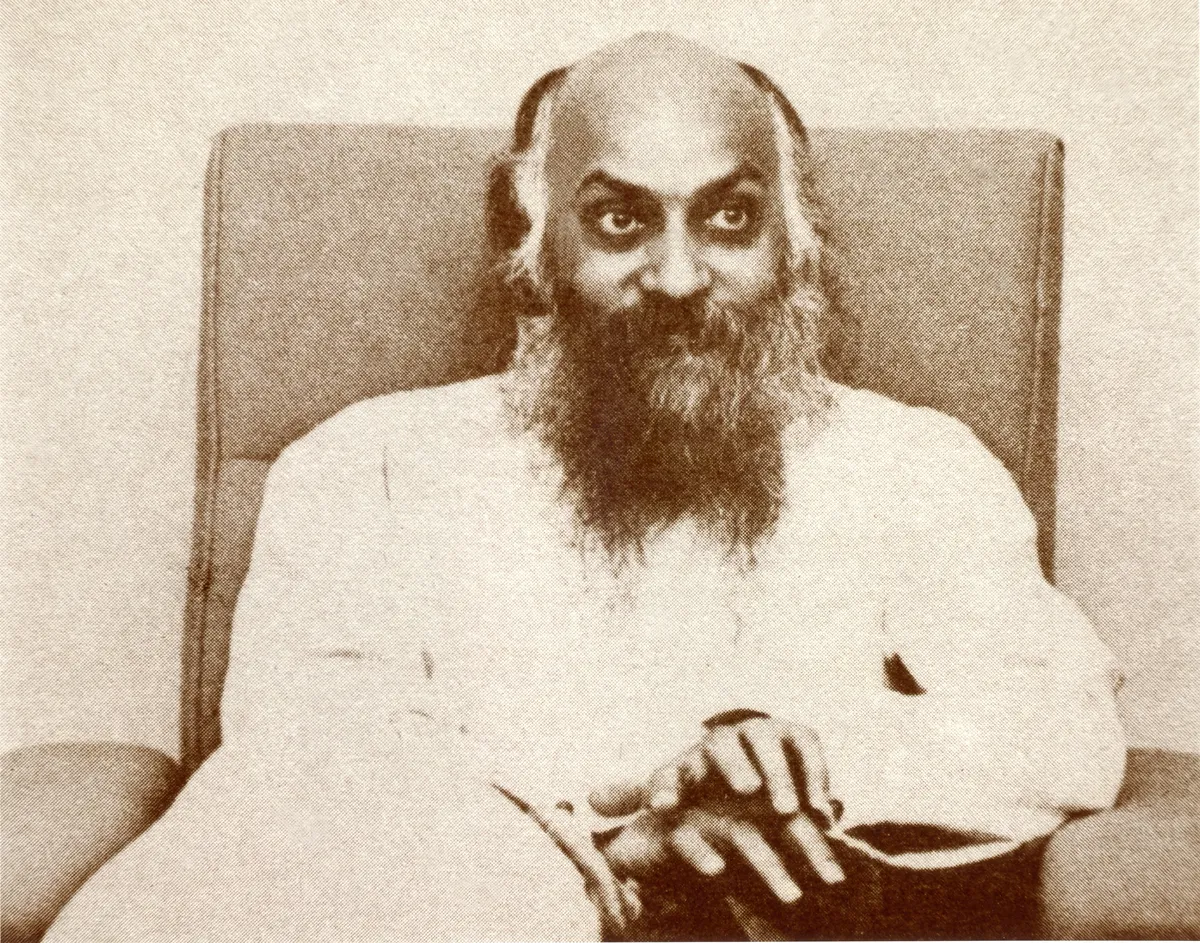
Idol worship keeps the empty shell; real devotion seeks the living light inside you, now.
From the Discourses
Passages where Osho speaks to this question — each links to the complete discourse.
Osho, Baba Malukdas is a devotee and he mocks idol worship. But isn’t it true that it is the devotional tradition that has given idol worship its greatest prestige?
Tradition has, not the devotees. And tradition is not religion. Tradition is the name for the footprints left in the dust where religion once passed. Where religion once moved, it left lines behind—those lines are called tradition. You walk along a path; your footprints are left behind. Those footprints are not you. Far from it—your shoes, which made the prints, aren’t there either; they too moved on. Only empty marks remain in the dust; from those marks tradition is made. Tradition is made of footprints. Religion is a living event, ever fresh. It is always in the present. Religion has no past and no future. Religion is now, here. While Malukdas is alive, there is religion. When Malukdas is gone and people begin to worship his footprints, that is tradition. Tradition is anti-religion. Religion can have no tradition, because religion and tradition are opposite phenomena. Tradition belongs to the dead;…
दूसरा प्रश्न: ओशो, बाबा मलूकदास भक्त हैं और मूर्तिपूजा का मजाक उड़ाते हैं। लेकिन क्या यह सच नहीं है कि भक्ति-परंपरा ने ही मूर्तिपूजा को सर्वाधिक प्रतिष्ठा दी है?
परंपरा ने दी है, भक्तों ने नहीं। और परंपरा धर्म नहीं है। परंपरा तो जहां से धर्म गुजर गया, वहां धूल पर पड़े चरण-चिह्नों का नाम है। जहां से धर्म कभी गुजरा था, वहां लकीरें छूट गई हैं, उन लकीरों का नाम परंपरा है। तुम चल कर आए, रास्ते पर तुम्हारे चरण-चिह्न छूट गए। वे चरण-चिह्न तुम नहीं हो। तुम तो दूर, तुम्हारे चरण-चिह्नों में तुम्हारा जूता भी नहीं है--जिसके कि चिह्न बने हैं; वह भी चला आया है। खाली धूल पर पड़े निशान रह गए हैं, उन निशानों से परंपरा बनती है। चरण-चिह्नों से परंपरा बनती है। धर्म तो जीवंत घटना है। धर्म तो सदा वर्तमान में है। धर्म का कोई अतीत नहीं है और धर्म का कोई भविष्य नहीं है। धर्म तो अभी है, यहां है। मलूकदास जब जीवित हैं, तब धर्म है। जब मलूकदास जा चुके और उनके चरण-चिह्नों की लोग पूजा करने लगे, तब परंपरा है। परंपरा धर्म-विरोधी होती है। …
Today I would request Osho to guide us on idol worship.
A Japanese seeker from Soto Zen told me of a practice: twenty-four hours a day the disciple intones “Muuuu… muuu…” After days, the sound storms inside; thoughts drop. By three weeks, the roaring “Muuuu!” possesses him. Food, sleep fall away; guards must watch him. At the final climax, a last thunderous roar—and suddenly all is still. For days he lies in deep quiet. When he returns, the old man is dead; a new man stands—continuity with the past broken. Om is such a sound; every religion has its own. As worship deepens, sound transforms consciousness. Repetition is crucial. If you sing one hymn one day, another the next, there will be no results. Continuous blows on one point drive the nail. But beware of mechanical repetition—then it is wasted labor. If the sound becomes your very life, every cell, bone, blood crying it—then sound can open the door. And all…
What is worship? Once you are able to invoke life into the idol, you are worshiping a real, alive deity. Try to understand this deeply: as soon as something becomes alive, the form and the formless become one... because the body is the form, and the life that is in it is the formless. Life has no form. If my someone cuts my hand, my life is not cut. If I am hypnotized or anesthetized and my hand is cut off, I will not feel any pain. My whole brain can be removed without my becoming aware of the operation... because life as such has no shape or form. Wherever there is life, there is a meeting of form and formlessness. Matter has a shape, consciousness has none.
It is asked: “Devotion must be with form.”
All forms are dreamlike. The formless is truth; form is the dream. But where we are standing is the world of forms. We are still within the dream. Even to awaken, we must travel a little within the dream. Devotion must be with form—it simply is. There cannot be formless devotion, because in the formless what remains to be done, when the doer is no more! Devotion will be with form, but God is formless. Therefore, one day devotion too must go. At the completion of devotion, devotion itself disappears. When prayer is fulfilled, prayer too goes. When meditation is complete, meditation becomes useless—it should. Whatever becomes complete becomes useless. So long as it is incomplete, it is fine—go to the temple, perform the worship. Do it, but remember: do not forget that this is only the beginning. It is the beginning of the school of life, not the end.…
पूछा है: ‘भक्ति साकार ही होनी चाहिए।’
भक्ति तो साकार ही होगी, लेकिन भगवान निराकार है। इसलिए एक न एक दिन भक्ति भी जानी चाहिए। भक्ति की पूर्णता पर भक्ति भी चली जाती है। प्रार्थना जब पूर्ण होती है तो प्रार्थना भी चली जाती है। ध्यान जब पूर्ण होता है तो ध्यान भी व्यर्थ हो जाता है--हो ही जाना चाहिए। जो चीज भी पूर्ण हो जाती है वह व्यर्थ हो जाती है। जब तक अधूरी है तब तक ठीक है--मंदिर जाना होगा, पूजा करनी होगी। करना, लेकिन याद रखना, कहीं यह न भूल जाए कि यह सिर्फ शुरुआत है। यह जीवन की पाठशाला की शुरुआत है, अंत नहीं है। यह बारहखड़ी है, क ख ग है।