
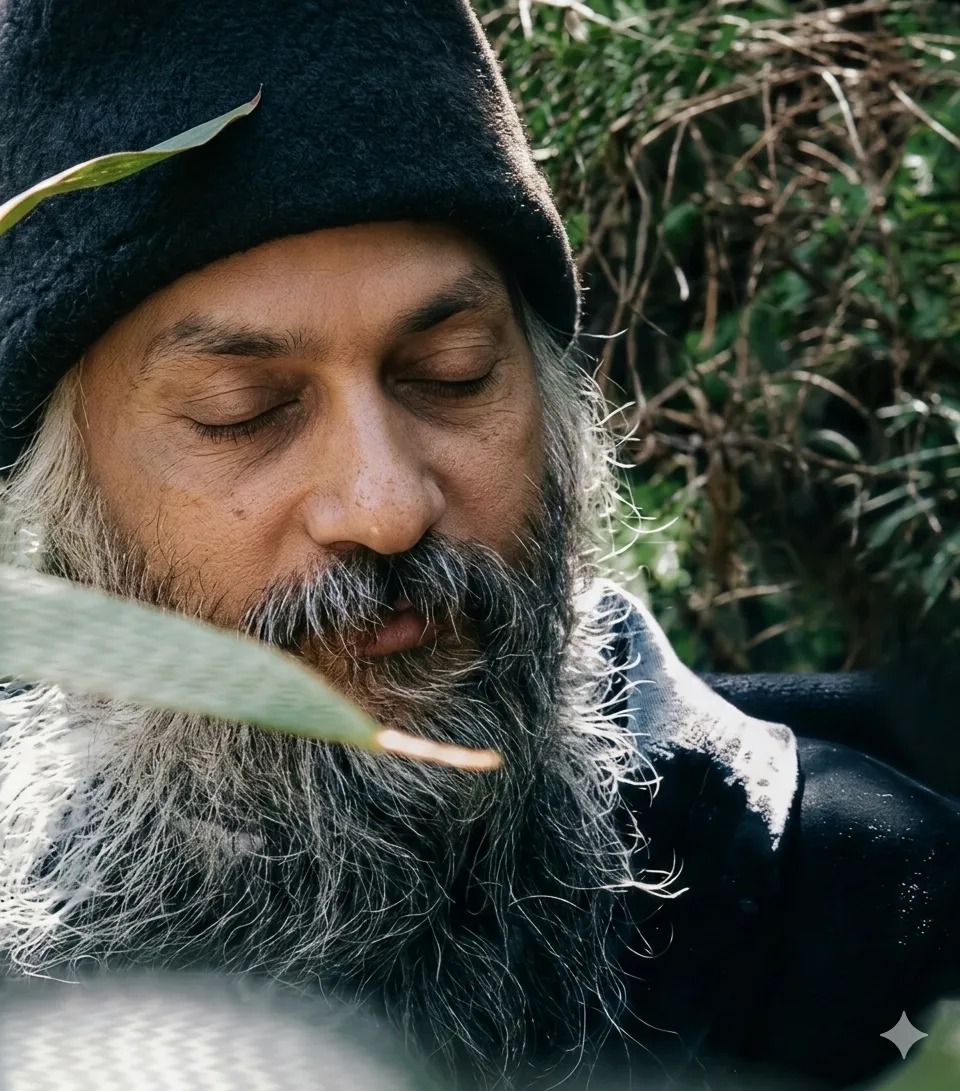
Yes—when you create from a quiet, empty mind and just watch it happen, it’s meditation; from a busy mind, it’s just dumping noise.
From the Discourses
Passages where Osho speaks to this question — each links to the complete discourse.
Beloved Osho, since you first spoke about subjective and objective art, the artist and the mystic, a deep reflection has been triggered in me. I'm confused concerning meditation and doing. I have always felt my art to be my meditation, but is it still not a doing? I notice the difference when sitting in vipassana. Must art and sculpture even, fade away into non-doing? Can creativity on the material plane be truly meditative? Will my art remain solely subjective until the ego agrees to commit suicide?
Deva Darpana, the distinction between the subjective and the objective art is basically based on meditation. Anything that comes out of the mind will remain subjective art, and anything that comes out of no-mind, out of silence, out of meditation, will be objective art. This definition is simple and will destroy your confusion. Whether you are creating something -- you may be a sculptor, you may be a carpenter, you may be a painter, a poet, a singer, a musician -- all that has to be remembered is that it is coming out of a silence within you, that it has a spontaneity. It is not prearranged, preprogrammed, pre-thought. As you are creating something you go on being surprised yourself -- you have left yourself in the hands of existence. Now your hands are not your own hands. They are simply following what the existence longs for. You are not…
Art is meditation. Any activity becomes meditation if you are lost in it. So don't just remain a technician. If you are just a technician then painting will never become meditation. You have to be crazily into it, madly into it, completely lost, not knowing where you are going, not knowing what you are doing, not knowing who you are. This state of not-knowing will bring meditation. Let it happen. The painting should not be painted but only allowed to happen. And I don't mean that you just remain lazy -- no; then it will never happen. It has to ride on you. You have to be very very active and yet not doing it. That is the whole knack, that is the whole crux of it: you have to be active and yet not a doer. You allow your activity to be possessed by something that is beyond you.
What about art and enlightenment? When you are creating a poem, a painting sculpture, music, you can feel very close to the meditative state. Yet, it is not pure nothing-ness -- because it has an end, a goal. It also enhances the ego. Won't you ultimately have to transcend this kind of creativity?
ART DEPENDS ON YOU. If you are pathological, your art will be pathological. If you are enlightened, your art will be enlightened. The art carries your quality. If you go to Ajanta, Ellora or Khajuraho, you will find a totally different kind of art. If you listen to classical music, you will find a different quality of art. If you listen to modern music, a different kind of art will be found there. If you see Picasso's paintings, they ARE pathological. Something is ill -- something is ill in Picasso and something is ill in the world that Picasso is going to represent in those works of art. Never keep a Picasso painting in your bedroom, otherwise you will have nightmares. It is very representative of this society. The society is ill, neurotic, but the art depends on you. The art does not descend out of the blue, it comes…
Beloved master, please share with us your vision of the benefits of the arts for our process of growing towards ourselves, in therapy, meditation, worship.
The arts can be immensely helpful in therapy, in spiritual growth, in your meditations. But it is taking a hard and long way unnecessarily. The shortcut is: first, meditation, and then out of meditation comes creativity of its own accord. Otherwise, it is a long journey; even one life may not be enough. For example, the paintings of Picasso are nothing but his nightmares, as if somebody is not painting but vomiting. It has helped him to relieve himself of his tensions, schizophrenia, paranoia and all kinds of mental repressions. But it is not of much use to you. In fact, if you go on looking at a Picasso painting for a long time, you will feel sick, because it is vomiting. You will start feeling nauseous. This is not real art. The people who created the Taj Mahal -- that is real art. They were Sufi mystics who knew…
Q:* THANK YOU VERY MUCH. TO BE CONTINUED. IT REMINDS ME OF GURDJIEFF'S TITLE MEETINGS WITH REMARKABLE MEN. SOMEWHERE DOWN THE ROAD I'M SURE WE'LL MEET AGAIN. A:* Come on again. Q:* THANK YOU. PRATIMA:* BHAGWAN, WHAT IS OBJECTIVE ART? IS CREATIVITY SOMEHOW RELATED WITH MEDITATION? BHAGWAN:* Art can be divided into two parts. Ninety-nine percent of art is subjective art. Only one percent is objective art. The ninety-nine percent subjective art has no relationship with meditation. Only one percent objective art is based on meditation. The subjective art means you are pouring down your subjectivity on the canvas, your dreams, your imaginations, your fantasies, your dreams. It is a projection of your psychology in the same way it will be in poetry, in music, in all dimensions of creativity. You are not concerned with the person who is going to see your painting.