
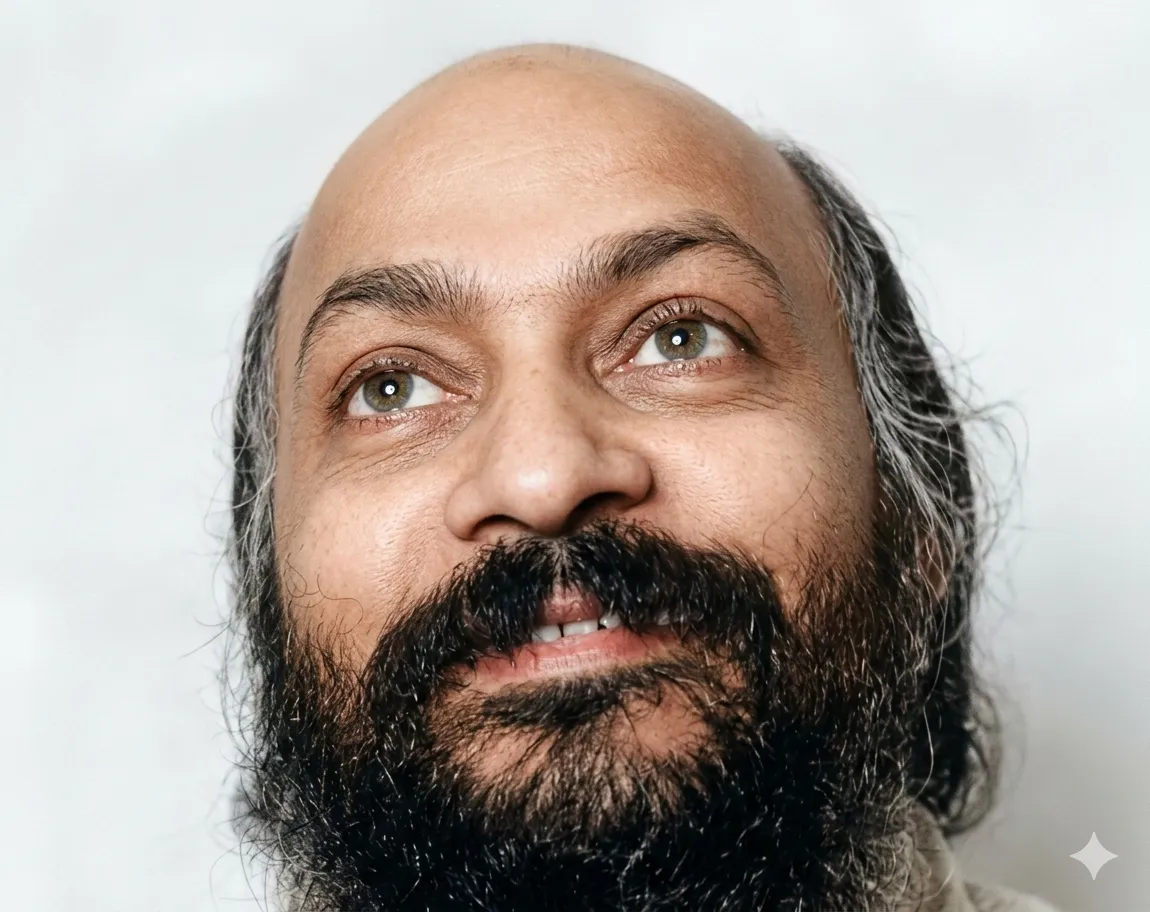
If a voice inside says you’ve become a Buddha, don’t buy it; true awakening feels like quiet nobody-ness, so keep watching and stay humble.
From the Discourses
Passages where Osho speaks to this question — each links to the complete discourse.
Is it possible to believe that one has just attained buddhahood? And is it possible just to believe like that only because of the ego? And if it is possible, then how to avoid it?
IT IS VERY MUCH POSSIBLE. Many times your ego will I deceive you. It will say, "You have arrived, you have attained." By saying that it will prevent you from attaining, because when you have attained there is no need to make any more effort. When you have already attained, then what is the point of going on troubling yourself? That is the last trap ego throws at you. First it says, "It is foolish to try to attain Buddhahood. It does not happen in the very nature of things. It is all nonsense, fiction. Don't be mystified by these words!" First the ego will say, "It is impossible. It has never happened and it is not going to happen." But if you don't listen and you go on and on, the ego will try many other ways to distract you. The last will be: one day, seeing that now…
The prime minister, kuo tzu I, of the tang dynasty, was an outstanding statesman, a distinguished general, and the most admired national hero of his day. But fame, power, wealth and success could not distract him from his keen interest and devotion to buddhism. Regarding himself as a plain and humble devoted buddhist, he often visited his favorite zen master to study under him.
HE AND THE ZEN MASTER SEEMED TO GET ALONG VERY WELL. THE FACT THAT HE WAS THE PRIME MINISTER SEEMED TO HAVE NO INFLUENCE ON THEIR ASSOCIATION. THERE WAS NO NOTICEABLE TRACE OF POLITENESS ON THE ZEN MASTER'S PART, OR OF VAIN LOFTINESS ON THE PART OF THE MINISTER; THE ASSOCIATION SEEMED TO BE THE PURELY RELIGIOUS ONE OF A REVERED MASTER AND AN OBEDIENT DISCIPLE. ONE DAY, HOWEVER, WHEN HE WAS PAYING HIS USUAL VISIT TO THE ZEN MASTER, HE ASKED THE FOLLOWING QUESTION: YOUR REVERENCE, HOW DOES BUDDHISM EXPLAIN EGOTISM? THE ZEN MASTER'S FACE SUDDENLY TURNED BLUE, AND IN AN EXTREMELY HAUGHTY AND CONTEMPTUOUS MANNER HE SAID TO THE PREMIER: WHAT ARE YOU SAYING YOU NUMSKULL? THIS UNREASONABLE AND UNEXPECTED DEFIANCE SO HURT THE FEELINGS OF THE PRIME MINISTER THAT A SLIGHT SULLEN EXPRESSION OF ANGER BEGAN TO SHOW ON HIS FACE. THE ZEN MASTER THEN SMILED AND…
When I become more and more aware, my attention develops and there remains a feeling that I exist, I am present, I am aware. Please explain how this feeling can be dissolved into an egoless state of just awareness.
The light is there, and the darkness is immediately not there. There is not a single moment's gap, because if there is a gap then you can see darkness moving out. And if there is a single moment's gap, then there is no reason why there can't be a gap of one hour. There is no gap. The act is simultaneous. Really, the coming of the light and the going out of the darkness are two aspects of one phenomenon. The same happens with awareness: when you are aware, the ego is not. But the ego can go on playing tricks, and the ego can say, `I am aware.' The ego can say, `I am aware,' and can n you. Then the question will arise. And the ego wants to accumulate everything, even awareness. The ego not only wants wealth, power, and prestige; it wants meditation also, it wants samadhi…
You should find freedom by means of both examination and investigation. Don't brag. Don't be consumed by jealousy. Don't act capriciously. Don't expect thanks. This quintessential elixir of advice by which the advancement of the five decay is changed into the bodhi path is transmitted through dharmakirti.
BY AWAKENING THE KARMIC ENERGY OF PREVIOUS TRAINING, AND BY VIRTUE OF MY INTENSE INTEREST, I IGNORED MISERY AND BAD REPUTATION AND SOUGHT INSTRUCTION TO CONTROL EGO-CLINGING. NOW, EVEN WHEN I DIE, I'LL HAVE NO REGRET. Man's greatest longing is for freedom. Man IS a longing for freedom. Freedom is the very essential core of human consciousness: love is its circumference and freedom is its center. These two fulfilled, life has no regret. And they both are fulfilled together, never separately. People have tried to fulfill love without freedom. Then love brings more and more misery, more and more bondage. Then love is not what one has expected it to be, it turns out just the opposite. It shatters all hopes, it destroys all expectations and life becomes a wasteland -- a groping in darkness and never finding the door. Love without freedom naturally tends to be possessive. And the…
Osho, whenever someone tells you that such-and-such is happening in meditation and you say, “Good, that is auspicious,” the ego grows even more. And at all other times the ego keeps raising its head. Even while writing this question the ego thought a lot about it, and still...?
And I tell you: only the shadow remains with you; you have lost the soul. Imagine what your plight must be! Losing a shadow caused such trouble; you have lost the soul and kept only the shadow. But perhaps you don’t notice much trouble because those among whom you live have also lost their souls. The truth is, if you gain your soul, the trouble begins—those without souls become your enemies. Otherwise, why would people stone Mahavira, insult Buddha, crucify Mansoor, poison Socrates, kill Jesus? The crowd is without soul. Whenever a soul-full person stands among them, they become very uneasy. What foolishness! They should learn from the soulful how to become soulful. But seeing a soulful person, they get anxious. They say, “His presence proves we failed to become what we should have become. We lost.” Anxiety arises: “Our life is wasted. Remove this man; his presence is a…
दूसरा प्रश्न: ओशो, जब कभी कोई आपसे पूछता है कि ध्यान में ऐसा-ऐसा अनुभव हो रहा है और आप कह देते हैं ऐसा होना शुभ है, तब तो अहंकार और बड़ा होने लगता है। और सब समय तो अहंकार ही सिर उठाता रहता है। यह प्रश्न लिखते समय भी अहंकार ने बहुत सोच-विचार किया, फिर भी।...?
और मैं तुमसे कहता हूं: तुम सिर्फ छाया ही बचे हो, आत्मा खो दी है। तो तुम्हारी दुर्गति कैसी होती होगी! छाया खोने से इतनी मुसीबत हो गई; तुमने आत्मा खो दी है और छाया ही बचा ली है। लेकिन मुसीबत ज्यादा नहीं होती मालूम पड़ती, क्योंकि जिनके बीच तुम रहते हो उन सबने भी अपनी आत्मा खो दी है। सच तो यह है, अगर तुम आत्मा पा लो तो अड़चन शुरू होगी। क्योंकि वे, जिनके पास आत्मा नहीं है, वे तत्क्षण तुम्हारे दुश्मन हो जायेंगे। अन्यथा लोग क्यों महावीर को पत्थर मारें, क्यों बुद्ध का तिरस्कार करें, क्यों मंसूर को सूली लगायें, क्यों सुकरात को जहर पिलायें, क्यों जीसस की हत्या करें! ये जिनकी आत्मायें खो गई हैं इनकी भीड़ है। जब भी कोई आत्मवान आदमी इनके बीच खड़ा होता है, इनको बड़ी बेचैनी होती है। कैसी मूढ़ता है! आत्मवान आदमी से सीखनी थी कला कि हम भी कैसे आत्मवान हो जायें। लेकिन आत्मवान आदमी को देख कर इन्हें बेचैनी होती है। इनको घबड़ाहट होती है। …