
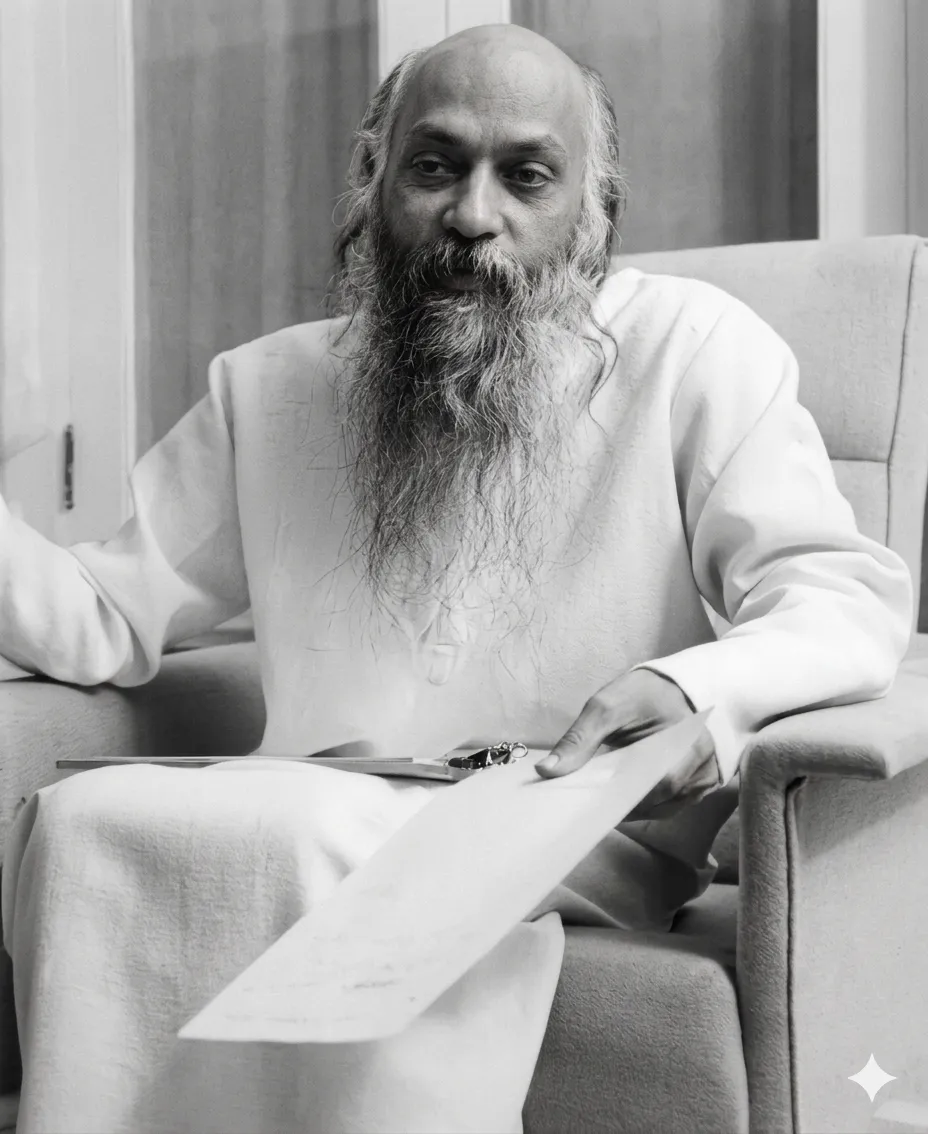
He woke up through meditating; the singing and devotion came after, to share his joy with others.
From the Discourses
Passages where Osho speaks to this question — each links to the complete discourse.
Other friends have asked: by which path did he attain Buddhahood—through meditation or through devotion? For he practiced meditation, but his heart’s delight was in kirtan. So, through meditation or through kirtan?
For him, kirtan was not a path—only an expression. What he received in meditation, he would lavish in kirtan. He did not attain Buddhahood through kirtan. He attained Buddhahood through meditation alone. But how to share what is found in meditation? Meditation is mute; it cannot speak. Devotion can speak, can sway. Therefore, even for the knower, even for the meditator, when the time comes to express, there remains no other means than devotion. Such is the dignity of bhakti. Meditation is like a desert. Bhakti is a garden. There, flowers bloom profusely, the cuckoo coos, and the pied cuckoo calls, “Pi-kahan, pi-kahan.” His path was meditation; he attained only through meditation. But as the depth of meditation grew, so did his dilemma: all that was gathering within—what to do with it, what not to do? He asked me, “What should I do? So much is accumulating inside; how do…
और भी मित्रों ने पूछा है कि वे किस मार्ग से बुद्धत्व को उपलब्ध हुए--ध्यान से या भक्ति से? क्योंकि करते तो वे ध्यान थे लेकिन रस उन्हें कीर्तन में था। तो ध्यान से या कीर्तन से?
उनके लिए कीर्तन मार्ग नहीं था, सिर्फ अभिव्यक्ति थी। वह जो उन्हें ध्यान में मिलता था उसे कीर्तन में लुटाते थे। कीर्तन से वे बुद्धत्व को उपलब्ध नहीं हुए। बुद्धत्व को उपलब्ध तो वे ध्यान से ही हुए। लेकिन ध्यान में जो मिले, उसे बांटो कैसे? ध्यान गूंगा है, बोल नहीं सकता; भक्ति बोल सकती है, डोल सकती है। इसलिए ज्ञानी को भी, ध्यानी को भी एक दिन अगर प्रकट करना हो तो भक्ति के सिवाय और कोई उपाय नहीं रह जाता। भक्ति की वह गरिमा है। ध्यान तो रेगिस्तान जैसा है। भक्ति उपवन है। उसमें खूब फूल खिलते हैं और कोयल कूक देती है और पपीहा पी-कहां, पी-कहां पुकारता है। मार्ग तो उनका ध्यान था, उपलब्ध तो वे ध्यान से ही हुए। लेकिन जैसे-जैसे ध्यान की गहराई बढ़ी, उनकी अड़चन बढ़ी कि वह जो भीतर इकट्ठा होने लगा, अब उसे क्या करें क्या न करें? मुझसे उन्होंने पूछा: क्या करूं? अब भीतर इतना इकट्ठा होता है, इसे कैसे बांटूं?
Osho, you have said that meditation is an inner journey. Is devotion also an inner journey? What is the fundamental difference between the inner journey of meditation and that of devotion? Please explain with compassion.
This is the path of love; here the Other is essential. From the union of two arises variety; the stream of rasa flows. A man alone cannot give birth to a child; a woman alone cannot give birth either. For a child to be born, the meeting of these opposites is necessary. Yes, a man can paint alone, a woman can sculpt alone—but they cannot give birth. For devotion, two are needed. Devotion is the unity that happens between two. Knowledge is the experience of the One. In the end, only One remains; thus both, ultimately, lead to the same place. But knowledge assumes the One from the very beginning; knowledge is nondual. Bhakti fundamentally accepts duality. The heart of bhakti is large: it says, let us accept the two; then we will unite them. Bhakti has trust in union. The faith that a bridge can be built between two—that…
तीसरा प्रश्न: ओशो, आपने कहा है कि ध्यान अंतर्यात्रा है। क्या भक्ति भी अंतर्यात्रा है? ध्यान की अंतर्यात्रा और भक्ति की अंतर्यात्रा में क्या आधारभूत भिन्नता है, समझाने की अनुकंपा करें।
यह प्रेम का मार्ग है। इसमें दूसरा जरूरी है। दो के मिलन से वैविध्य पैदा होता है, रस धार बहती है। पुरुष अकेला बच्चे को जन्म नहीं दे सकता है। स्त्री अकेली बच्चे को जन्म नहीं दे सकती है। बच्चे को जन्म देने के लिए इन दोनों विपरीत का मिलना जरूरी है। हां, पुरुष चाहे तो चित्र बना सकता है, पेंटिंग कर सकता है अकेला, स्त्री चाहे तो मूर्ति बना सकती है अकेली, लेकिन बच्चे को जन्म नहीं दे सकती। भक्ति के लिए दो का होना जरूरी है। भक्ति दो के बीच घटी एकता है। और ज्ञान एक का अनुभव है। दोनों में अंततः एक बचता है इसलिए दोनों अंततः एक ही जगह ले जाते हैं। मगर ज्ञान शुरू से ही एक को मान कर चलता है। …
Osho, to cross the ocean of becoming and dissolve into the Supreme Self, which should one rely on—insensate devotion, foolish devotion, or blind devotion?
So drop this worry—whether insensate devotion, foolish devotion, blind devotion, or deranged devotion. Drop it; devotion is enough. And in devotion all these labels will take care of themselves. Become a devotee once, and “blind” you will automatically be—meaning: the whole world will call you blind. You will not become blind; rather, you will gain eyes. You will begin to see what ordinary eyes cannot see. The invisible will become visible; the imperceptible will come within perception. That which no one has ever touched will be felt as touch. But the world will call you blind. The world will not be able to accept it—because the world is blind, and the blind call you blind. H. G. Wells has a story: somewhere in Mexico there is a valley where children go blind within three months of birth. The story is based on fact. The climate, the food—something there ruins the…
दूसरा प्रश्न: ओशो, भवसागर से पार उतरकर परम आत्मा में लीन होने के लिए जड़भक्ति, मूढ़भक्ति एवं अंधभक्ति में से किसका सहारा लिया जाये?
तो तुम यह फिक्र छोड़ो कि जड़भक्ति कि मूढ़भक्ति कि अंधभक्ति कि विक्षिप्त भक्ति, यह छोड़ो तुम फिक्र; भक्ति काफी है। और उस भक्ति में ये सब चीजें अपने आप आ जायेंगी। तुम एक दफा भक्त तो हो जाओ, अंधे अपने आप हो जाओगे। सारी दुनिया तुमको अंधा कहेगी, तुम नहीं अंधे हो जाओगे। तुम्हें तो आंखें मिल जायेंगी। तुम्हें तो वह दिखाई पड़ने लगेगा जो साधारण आंखों से दिखाई ही नहीं पड़ता। अदृश्य तुम्हारे लिए दृश्य बनने लगेगा। अगोचर गोचर हो जायेगा। जिसे कभी किसी ने नहीं छुआ उसका स्पर्श अनुभव होने लगेगा। लेकिन दुनिया तुम्हें अंधा कहेगी। दुनिया न मान सकेगी। क्योंकि दुनिया अंधी है। और दुनिया तुम्हें अंधा कहेगी।
Osho, you say there are only two paths—devotion and knowledge. But you teach neither devotion nor knowledge; you teach meditation. So is meditation beyond both devotion and knowledge?
Meditation is the essence of knowledge and devotion. Meditation is the distillation of both. What the devotee calls love, what the knower calls awareness—meditation is the distilled essence of awareness and love. Think of it this way: some flowers are of devotion and some of knowledge; pressing both, you make a perfume—that perfume is meditation. Meditation is the devotee’s devotion, the knower’s awakening. One wing of meditation is devotion, the other wing is knowledge. Meditation is the quintessence. Come through devotion and you will arrive at meditation; come through knowledge and you will arrive at meditation. In the ultimate sense, the treasure that falls into your hands is called meditation. Understand. Devotion means: the devotee disappears, God remains. Knowledge means: God disappears, the knower remains, the self remains. That is why Mahavira and Buddha, the highest peaks of knowledge, did not accept a God; they declared there is no God.…
पांचवां प्रश्न: ओशो, आप कहते हैं कि दो ही मार्ग हैं--भक्ति और ज्ञान। लेकिन आप न तो भक्ति सिखाते हैं और न ज्ञान, आप तो ध्यान सिखाते हैं। तो क्या ध्यान भक्ति और ज्ञान से भी परे है?
ध्यान ज्ञान और भक्ति का सार है। ध्यान निचोड़ है दोनों का। जिसको भक्त प्रीति कहता है, जिसको ज्ञानी बोध कहता है, ध्यान बोध और प्रीति का निचोड़ है। ऐसा समझो कि कुछ फूल भक्ति के और कुछ फूल ज्ञान के और दोनों को निचोड़ कर तुमने एक इत्र बनाया, वही है ध्यान। ध्यान भक्त की भक्ति है, ज्ञानी का बोध है। ध्यान का एक पंख भक्ति है और एक पंख ज्ञान है। ध्यान सार है। भक्ति से पाओ तो भी ध्यान मिलेगा और ज्ञान से पाओ तो भी ध्यान मिलेगा। अंतिम अर्थों में जो संपदा तुम्हारे हाथ में लगेगी, उसका नाम ध्यान है।
Osho, you appear to be an ocean of knowledge. Yet in your doctrine or teaching there seems to be a complete absence of devotion. In spirituality, knowledge without devotion only displays a man’s ego. An egotist cannot be a great guru.
Prem Narayan! Me, an ocean of knowledge! You’ve made a mistake. You are the ocean of knowledge! You haven’t asked a question; you’ve delivered a verdict. I am ignorant, supremely ignorant—one who knows nothing. How did a knower like you land up here? It’s our great fortune you came, bestowed enlightenment, and woke up a sleeper; otherwise I would have slept on! You’ve written a whopper. You wrote: “You look like an ocean of knowledge.” I may look like it; I am not. Not even a drop—yet you’re talking oceans! Here, not even a drop remains, and you’re talking oceans! You know everything! Why ask this at all? Wise ones like you don’t go around asking questions. You must have come out of sheer compassion. You say, “In your doctrine or teaching…” Who ever said I have a doctrine? Have I ever said so? I don’t talk metaphysics. How would…
दूसरा प्रश्न: ओशो, आप ज्ञान के सागर दिखते हैं। किंतु आपके तत्वज्ञान या शिक्षा में भक्ति का संपूर्ण अभाव दिखाई देता है। अध्यात्म में भक्ति बिना ज्ञान मनुष्य का अहंभाव ही प्रदर्शित करता है। अहंभावी व्यक्ति महान गुरु हो, यह असंभव है।
प्रेम नारायण! मैं और ज्ञान का सागर! तुमसे कुछ गलती हो गई। ज्ञान के सागर तो आप हैं! आपने प्रश्न थोड़े ही पूछा है, उत्तर दिया है। मैं तो अज्ञानी हूं, महा अज्ञानी, जिसको कुछ भी पता नहीं। आप जैसा ज्ञानी यहां कैसे आ गया? बड़े भाग्य जो आप पधारे, और बोध दिया और सोते को जगाया, नहीं तो हम तो सोते ही रह जाते!