
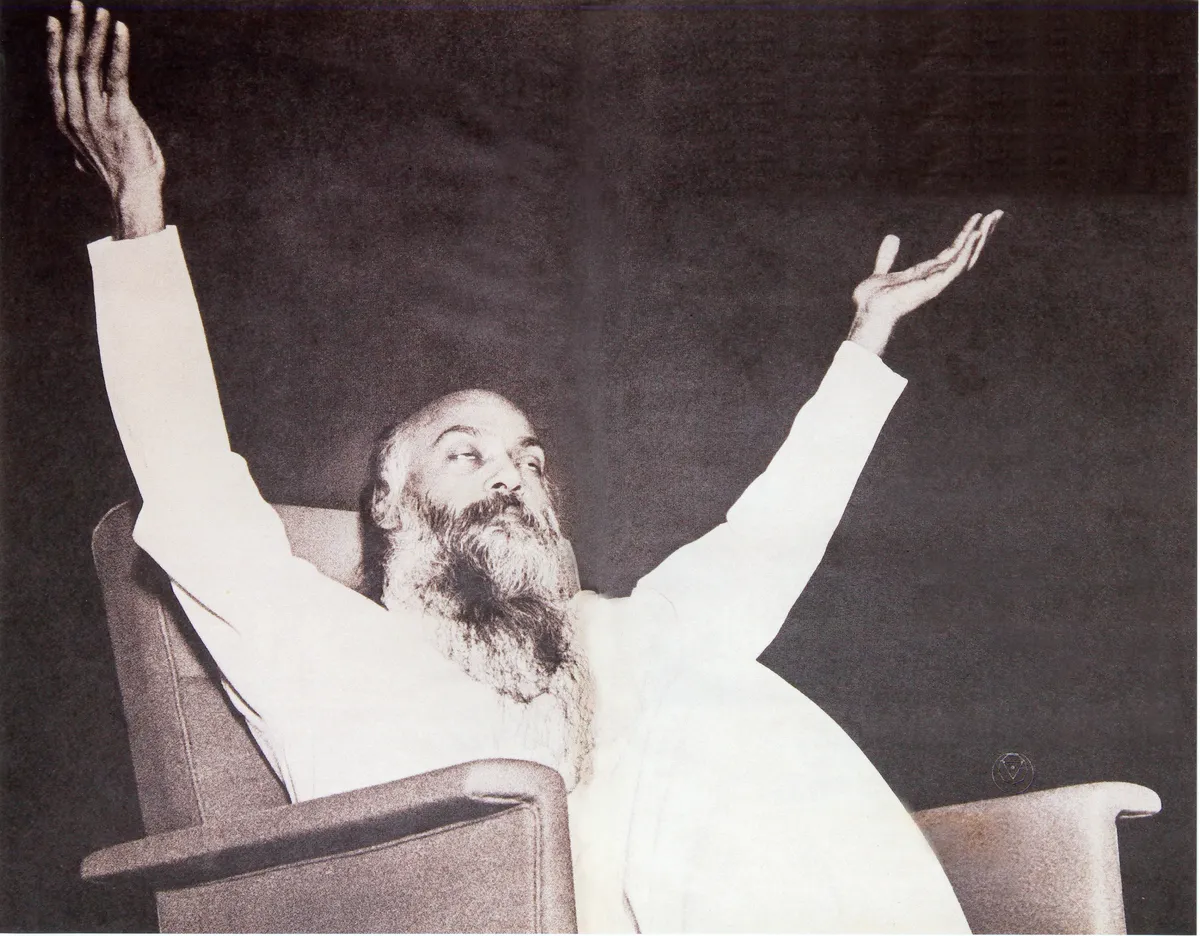
Osho's perspective on Humility
When Osho Spoke About Humility
Passages from the discourses where this theme comes alive.
Beloved Osho, what is the difference between the emptiness of the child before the formation of the ego and the awakened childlikeness of a buddha?
Whether you are for it or against it doesn't matter -- your concern shows where your ego is hanging. And I will include the capitalist in it also: his whole concern is how to gather money, hoard money -- because money has power over matter. You can purchase any material thing through money. You cannot purchase anything spiritual, you cannot purchase anything that has any intrinsic value; you can purchase only things. If you want to purchase love, you cannot purchase; but you can purchase sex. Sex is the material part of love. Through money, matter can be purchased, possessed. Now you will be surprised: I include the communist and the capitalist both in the same category, and they are enemies, just as I include Charvaka and Mahatma Gandhi in the same category, and they are enemies. They are enemies, but their concern is the same. The capitalist is trying…
Beloved Osho, the dictionary definition of humble is: "having or showing a consciousness of one's defects or shortcomings. Not proud, not self-assertive, modest." is a rebel humble? Is there more to the definition of humble?
It may appear to egoistic people as assertiveness, that the roseflower is asserting its redness, its fragrance; it is doing a kind of PR job, inviting people to see, inviting people to smell, declaring to the world, "Look, is there any other rose better than me?" But this is your own projection. You are not being kind to the poor roseflower. He is not doing any PR job, it is just his nature. And finally, the dictionary says, "the humble man is modest." But a man without ego -- how can he be modest? Modesty means you have an ego but you have controlled it. You have made boundaries, limits; you have cultured it, you have made it civilized. But it is very thin ... skin-deep. All your so-called modest people, just scratch them a little bit and immediately their barbarous ego will be out. A truly humble man has…
Osho, you have said that the divine is found not by effort but as grace; Sahajo, in a mood of awed gratitude, sings of the grace of her master Charandas, and Kabir of the grace of his master Ramananda. Upon you, whose grace descended? Did you attain the supreme enlightenment without a master’s grace? Please say something about this.
I have explained two approaches to you: the jnani and the bhakta. The jnani attains through his own worthiness; the bhakta through his prayer. The jnani “acquires” the divine by austerity; it is his achievement. He is a claimant. “If I have found, I have found it by my own labor.” Hence the religion and culture that Mahavira founded is called the Shramana culture. Shramana means: not by grace, but by effort. That is why Mahavira is known as the Shramana Bhagwan—one who attained the ultimate through effort. The jnani says, “Through austerity, renunciation, and merit I attained God—not for free, not by anyone’s grace. I earned it.” That is the jnani’s claim. The bhakta says, “Through prayer, worship, dancing, cajoling—by pleasing you. I had no worthiness of my own. I danced and delighted you. I sang your songs, praised your glory, won you over. In some deep moment of…
ओशो, आपने कहा कि परमात्मा प्रयास से नहीं प्रसाद से मिलता है, और सहजो गुरु चरणदास की कृपा का तथा कबीर गुरु रामानंद की कृपा का अहोभाव से गुणगान करते हैं। आप पर किस गुरु की कृपा हुई? क्या आप बिना गुरु-कृपा के परम संबोधि को उपलब्ध हुए? इस संबंध में कुछ कहें।
… ज्ञानी अपनी पात्रता से उपलब्ध होता है। भक्त अपनी प्रार्थना से। ज्ञानी तपश्चर्या से अर्जित करता है परमात्मा को। वह उसका अर्जन है। ज्ञानी दावेदार है। पाया है, तो अपने श्रम से पाया है। इसलिए महावीर ने जिस धर्म को जन्म दिया और जिस संस्कृति, उसका नाम है: श्रमण-संस्कृति। श्रमण-संस्कृति का अर्थ होता है: प्रसाद से नहीं, श्रम से। इसलिए महावीर का नाम ही श्रमण भगवान महावीर--श्रम से जिन्होंने पाया परम सत्ता को। ज्ञानी कहता है, तपश्चर्या से, त्याग से, पुण्य से परमात्मा को पाया है, मुफ्त में नहीं। किसी कृपा के कारण नहीं। अर्जित किया है। ज्ञानी का दावा है। भक्त कहता है, प्रार्थना से, पूजा से, नाच कर, रिझा कर, समझा-बुझा कर। …
Osho, you say that truth is attained by the Master’s grace. Then why do you also encourage the ego’s effort?
Truth is attained by the Master’s grace, but the Master’s grace will not come without effort. Where will you find the Master’s grace? The Divine is received as grace; but the Master has to be sought, and you must gather the fitness to be near the Master. Effort must be made—and yet remember, what is ultimate is received without effort. This may sound contradictory, but these are the two wings, the two oars—effort and grace. Only with both is the journey completed. There are two kinds of delusions in the world. Some people think, “By effort alone it will be attained.” Such people never meet the Divine, because their ego never falls; effort only strengthens it. The doors close even tighter instead of opening. And some believe, “It does not come by effort; only grace gives it.” They just sit; they never rise, they never walk. They waste it in…
छठवां प्रश्न: ओशो, आप कहते हैं, सत्य गुरु-प्रसाद से मिलता है। तब क्यों अहंकार के प्रयास को भी बढ़ावा देते हैं?
सत्य गुरु-प्रसाद से मिलता है, लेकिन गुरु-प्रसाद बिना प्रयास के न मिलेगा। गुरु-प्रसाद कहां पाओगे? परमात्मा प्रसाद-रूप मिलता है, गुरु तो खोजना पड़ेगा; गुरु के पास होने की योग्यता तो जुटानी पड़ेगी। प्रयास भी करना होगा, और ध्यान रखना होगा कि जो मिलता है परम, वह बिना प्रयास के मिलता है। यह तुम्हें विरोधाभासी लगेगा, लेकिन ये ही दो पंख हैं, ये ही दो पतवार हैं--प्रयास की और प्रसाद की। इन दोनों से ही यात्रा पूरी होती है। दुनिया में दो तरह की भ्रांतियां हैं। कुछ लोग हैं, जो समझते हैं--प्रयास करने से ही मिल जाएगा। उन्हें परमात्मा कभी नहीं मिलता। क्योंकि उनका अहंकार कभी गिरता ही नहीं, प्रयास से और मजबूत होता है; द्वार-दरवाजे और बंद हो जाते हैं खुलने की जगह। और कुछ लोग हैं, जो मानते हैं--प्रयास से तो मिलता नहीं, प्रसाद से ही मिलेगा। …
Profound Quotes on Humility
Explore our structured collection of meaning-mapped quotes regarding Humility.