
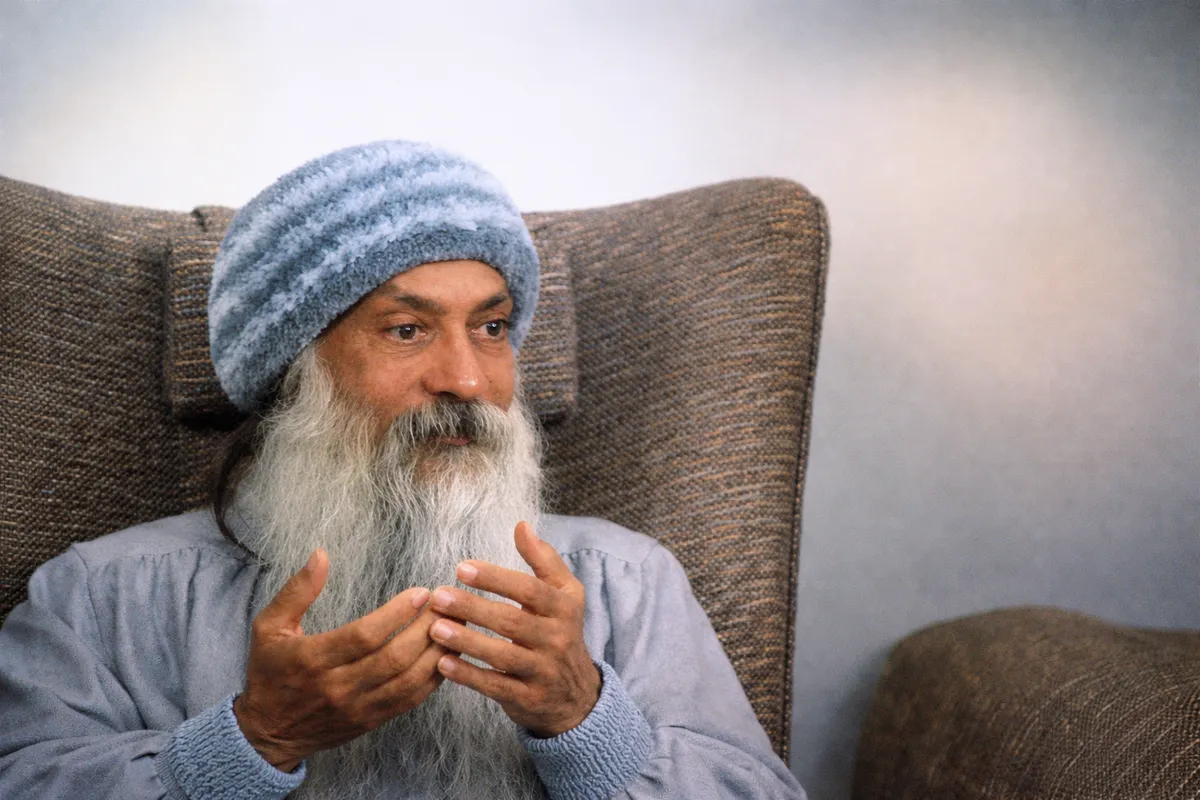
He grew up in a big family, saw lots of fights, and decided not to get married or start his own family.
From the Discourses
Passages where Osho speaks to this question — each links to the complete discourse.
Yesterday you talked about destroying the family. Did you ever have a family?
Everybody is born in a family. I was born in a family. And in India there are joint families, big families. In my family there must have been fifty to sixty people -- all the cousins, uncles, aunts, living together. I have seen the whole mess of it. In fact, those sixty people helped me not to create my own family. That experience was enough. If you are intelligent enough, you learn even from other people's mistakes. If you are not intelligent, then you don't learn even from your own mistakes. So I learned from my father's mistake, my mother's mistake, my uncles', my aunts'. It was a big family, and I saw the whole circus, the misery, the continuous conflict, fights about small things, meaningless. From my very childhood one thing became decisive in me, that I was not going to create a family of my own. I was…
Secondly, there are children, because when sannyasins come, a few sannyasins come with children. When they became sannyasins they were already mothers and fathers. Those children are here, but the commune is responsible. We remove the responsibility from father and mother. We make them free, unburdened. Their children are there, they can love them, they can live with them, they can go to them, they can call them, but they belong to the commune. If they don't care about their children, the children are not going to suffer in any way. The children have the whole commune of uncles, aunts, and they go on making friends with different kinds of people. This is a tremendous education and a great preparation for a rich life. It is an established fact that the boy loves his mother and the girl loves her father.
Question: OUR BELOVED MASTER, YAKUSAN ONCE ASKED HIS DISCIPLE, UNGAN, "I HEARD THAT YOU KNOW HOW TO DEAL WITH THE LIONS -- IS THAT TRUE?" UNGAN REPLIED, "YES, IT IS." YAKUSAN ASKED, "HOW MANY OF THEM DO YOU GET AND DEAL WITH?" "SIX," UNGAN REPLIED. YAKUSAN THEN SAID, "I ALSO KNOW HOW TO DEAL WITH THE LION." UNGAN ASKED, "HOW MANY DO you GET?" YAKUSAN REPLIED, "ONLY ONE." UNGAN THEN COMMENTED, "ONE IS SIX; SIX IS ONE." LATER ON, WHEN UNGAN VISITED ISAN, ISAN SAID, "I HAVE HEARD THAT WHEN YOU WERE WITH YAKUSAN, YOU HAD A CONVERSATION ABOUT GETTING AND DEALING WITH LIONS. IS THAT TRUE?" "YES, IT IS," REPLIED UNGAN. ISAN ASKED, "DO YOU CONTINUE TO DEAL WITH THEM, OR DO YOU SOMETIMES STOP DOING THAT?" UNGAN REPLIED, "WHEN I WANT TO, I DEAL WITH THEM; AND WHEN I WANT TO STOP, I STOP.
Osho, should one marry by the family’s choice or by one’s own?
It cannot be a “selection.” Before marriage what is needed is acquaintance, not choosing—deep acquaintance! If a year, two years, four years of knowing someone brings you to the point where you feel yes, living a lifetime together will be joyful and blissful, then it is neither a matter of “choice” nor of the family’s will. Then marriage is only a formality to be observed because you live in society, among others. If you are living in my commune, even that formality need not be observed. The marriage ceremony is maintained only to ensure the husband doesn’t run away tomorrow. You have to bring in the law—police, magistrates, courts—so that if today everything is fine but tomorrow he runs off, then what? What about the children? If you belong to my commune, Gyan Ranjan, then there is nothing to worry about. The way I see the world and the future,…
चौथा प्रश्न: ओशो, शादी घरवालों की मर्जी से करें या स्वयं के चुनाव से?
… विवाह के पूर्व परिचय चाहिए, चुनाव नहीं। गहरा परिचय चाहिए! अगर तुम्हारा वर्ष, दो वर्ष, चार वर्ष का परिचय तुम्हें इस जगह ले आए कि लगे कि हां, किसी के साथ जीवन भर रहना सुखद होगा, आनंदपूर्ण होगा, तो न तो यह चुनाव है और न घरवालों की मर्जी का सवाल है। फिर विवाह केवल एक औपचारिकता है जो निभा लेनी है, क्योंकि समाज में जीना है, औरों के साथ रहना है। अगर मेरे कम्यून में रहना हो, तब तो विवाह की औपचारिकता भी निभानी आवश्यक नहीं है। क्योंकि विवाह की औपचारिकता निभाई ही इसलिए जाती है, ताकि कल पति छोड़ कर न भाग जाए। कानून को बीच में रखना पड़ता है; पुलिसवाले, मजिस्ट्रेट, अदालत को बीच में लाना पड़ता है। ताकि आज तो ठीक है, लेकिन कल अगर भाग गए, तो फिर क्या होगा! …
But there are many women here in my commune, and that proves a very fundamental thing: that although I have loved so many women they are not jealous of each other. Q: HAVE YOU EVER COME CLOSE TO GETTING MARRIED? A: No, never. I have been against marriage from the very beginning, because that means cutting down your freedom. Getting attached legally to a woman or to a man, no. Freedom to me is the ultimate value There is nothing higher than freedom. It was difficult, because I was fighting from the very beginning. My parents were in difficulty, my family was in difficulty, but I told them absolutely clearly that I was not going to be married. They would have been perfectly happy if I had been going to be a celibate monk. I said, "No, I am not going to be a celibate monk either.