
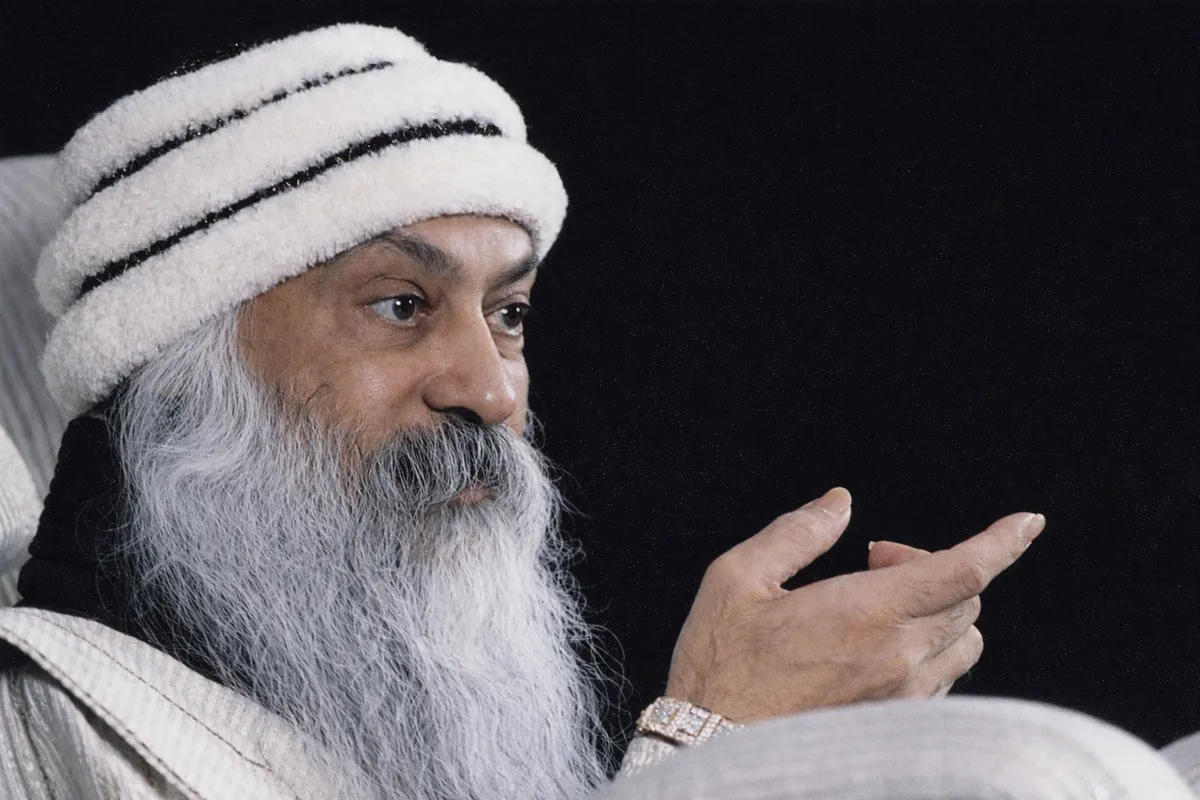
Self-respect here is just ego in disguise; when you look inside and see there’s no separate self to protect, letting go to life becomes easy.
From the Discourses
Passages where Osho speaks to this question — each links to the complete discourse.
I cannot surrender to god, and it is not my ego but self-respect. Am I wrong?
THERE IS NO SELF. Self is another name for the ego. And what do you mean by 'self-respect'? There is a quality of consciousness -- it can be called 'reverence' -- but it is always unaddressed. It is not for the self, not for the other. It is simply reverence for life. When it is addressed it is just a rationalization. And man is clever at finding beautiful words for ugly things. We can always hide our wounds and put flowers on them. And that's what you are doing -- and you are also aware of it. That's why you ask: AM I WRONG? You know you ARE wrong. And I am not saying don't respect life -- be full of respect for ALL life. Your life is included in it! You are not excluded from it. But it has to be reverence for all life. When it is only…
Question: OSHO, WHAT IS THE PLACE OF SURRENDER IN YOUR RELIGION? ... That is the meaning of respect. It is one of the most beautiful words in the English language. It does not mean what it has come to mean: honor. No -- respect simply means re-spect, to look again. That's the literal meaning of the word; there is no place for honor. Just look again, look back, look deep. "Spect" means honor. "Spect" means to see, look; "re" means again. And once you knew the real self Before you entered and became part of a society, a culture, a civilization, you knew it. It is not a coincidence that people go on thinking that their childhood was the most beautiful part of their life.
Osho, you said that if even a little thirst has arisen and even a little courage, surrender to God. But how can a surrender done out of fear lead to fearlessness?
Resolve is the effort of a miserly mind. Surrender is a wholly different matter. Resolve stands near the ego. And now and then a rare person has reached by resolve. One can arrive by resolve too; but in the last moment he must drop his immense ego—and that is very difficult. Once in a while some Mahavira succeeds; that is why I say it is right to call Mahavira by that name—for hardly anyone ever succeeds on that journey. It is very difficult. Difficult because first you build up the ego, refine it; you take everything into your own hands. And in the final moment, when all has ripened, when the ego has been fashioned in its subtlest form, hard as a diamond—so that it can cut through all things and nothing can cut through it—at that very moment you must surrender. At that moment you have to let go…
चौथा प्रश्न: ओशो, आपने कहा कि थोड़ी भी प्यास जगी हो और थोड़ा सा भी साहस हो तो प्रभु को समर्पण कर दो। लेकिन भय से किया गया समर्पण निर्भयता को कैसे उपलब्ध होगा?
संकल्प कंजूस चित्त की चेष्टा है। समर्पण बड़ी भिन्न बात है। संकल्प तो अहंकार के आस-पास खड़ा होता है। और संकल्प से कभी-कभी एकाध व्यक्ति पहुंच पाया है। पहुंच जाता है संकल्प से भी; लेकिन आखिरी क्षण में उसको अपने विराट अहंकार को गिराना पड़ता है। वह बहुत कठिन मामला है। कोई महावीर कभी सफल हो पाता है। इसलिए मैं कहता हूं, महावीर को महावीर नाम देना ठीक है। क्योंकि मुश्किल से कभी उस यात्रा में कोई सफल होता है। बड़ी कठिन है। कठिन इस लिहाज से है कि पहले तुम अहंकार को निर्मित करते हो, शुद्ध करते हो। सब अपने हाथ में ले लेते हो और आखिरी घड़ी में जब कि सब परिपक्व हो जाता है, अहंकार सूक्ष्मतम रूप से निर्मित हो जाता है, हीरे की तरह कठोर हो जाता है कि सारी दुनिया की चीजें काट दो और कोई चीज उसको न काट सके, उस क्षण फिर तुम्हें समर्पण करना पड़ता है। उस क्षण फिर तुम छोड़ देते हो अस्तित्व में। कोई बहुत, बहुत ही प्रज्ञावान पुरुष ऐसा कर पाएगा। अधिक तो मध्य में ही खो जाएंगे। अपने-अपने अहंकार का डेरा जमा लेंगे। …
Osho, what is surrender and how to do it to god? Please elucidate.
You are just living with rumours, and those rumours have passed through so many ignorant people that those rumours have become utter lies. Even if you hear it from a Buddha, the moment he has said anything and you have heard it, it is no more the same thing. He was saying something else, and you are BOUND TO hear something else. Even a Buddha, who knows the truth, cannot transfer it to you; it is untransferable. No verbal communication is possible. So what about your parents and the priests? Those who have not even known, they are teaching you what God is. And you go on carrying those stupid ideas about God. And you go on trying to surrender. In the first place, those Gods are false; in the second place, surrender is not something to be done. And this is where millions of people are caught: a false…
Osho, neither does surrender happen to me, nor do I have the power of resolve; I am entangled in between. You have created quite a predicament for me. As it is, I cannot even bear distance from you—what should I do? Unbidden, I prayed for the well-being of your cruelties; now my hands no longer rise, even after the act of prayer.
To abandon yourself to a river like a corpse requires a profound mastery of swimming. Only a great swimmer can truly let himself go into the stream. Because a great swimmer is free of fear. He knows: if need be, I can swim. If a difficulty arises, swimming is in my hands. The greater the swimmer, the more motionless he can leave himself; he does not even move hands and feet. “What is there to fear? My hands are with me, I am always here—if a moment comes, I will swim.” Such a moment does not haunt him. Tell one who does not know how to swim, “Jump into the river—give yourself up,” and he may jump in a moment of inspiration, in some joyous surge, excitement, intoxication—my song may seize him—and he jumps. The instant he jumps, he forgets what I said. Instantly his arms and legs will flail.…
पहला प्रश्न: ओशो, मुझसे न समर्पण होता है औैर न मुझमें संकल्प की शक्ति ही है; बीच में उलझा हूं। आपने तो मेरे लिए बड़ी झंझट खड़ी कर दी है। हाल यह है कि आपसे दूरी भी बरदाश्त नहीं होती, क्या करूं? बेइख्तियार मांग ली तेरे सितम की खैर उठते नहीं हैं हाथ अब दस्ते-दुआ के बाद।
मुर्दे की भांति नदी में छूट जाने के लिए तैरने की बड़ी गहरी कुशलता चाहिए। बड़ा तैराक ही अपने को छोड़ सकता है नदी में। क्योंकि बड़ा तैराक ही भय से मुक्त हो जाता है। वह जानता है कि तैर लेंगे जब जरूरत होगी। अगर कोई कठिनाई आ गई तो तैरना तो अपने पास है। जितना बड़ा तैराक हो, उतना ही अपने को निस्पंद छोड़ देता है। हाथ-पैर भी नहीं हिलाता। क्योंकि वह जानता है, डर क्या है! हाथ अपने पास हैं, मैं सदा मौजूद हूं--अगर कोई घड़ी ऐसी आई तो तैर लूंगा। लेकिन ऐसी घड़ी का भय उसे नहीं सताता। जिसने तैरना नहीं जाना, उससे मैं कहूं कि तू कूद जा नदी में, छोड़ दे अपने को, वह कूद भी जाये किसी प्रेरणा में, किसी उल्लास के क्षण में, उत्साह में, उत्तेजना में, किसी मदहोशी में, मेरी बात में पड़ जाये, मेरा गीत उसे पकड़ ले, नशे में आ जाये, कूद जाये--तो कूदते ही भूल जायेगा कि मैंने क्या कहा था। वह तत्क्षण हाथ-पैर फेंकने लगेगा। वह हाथ-पैर फेंकना अवश होगा। उसे रोक न सकेगा। क्योंकि रोकने का मतलब होगा: मौत। …