
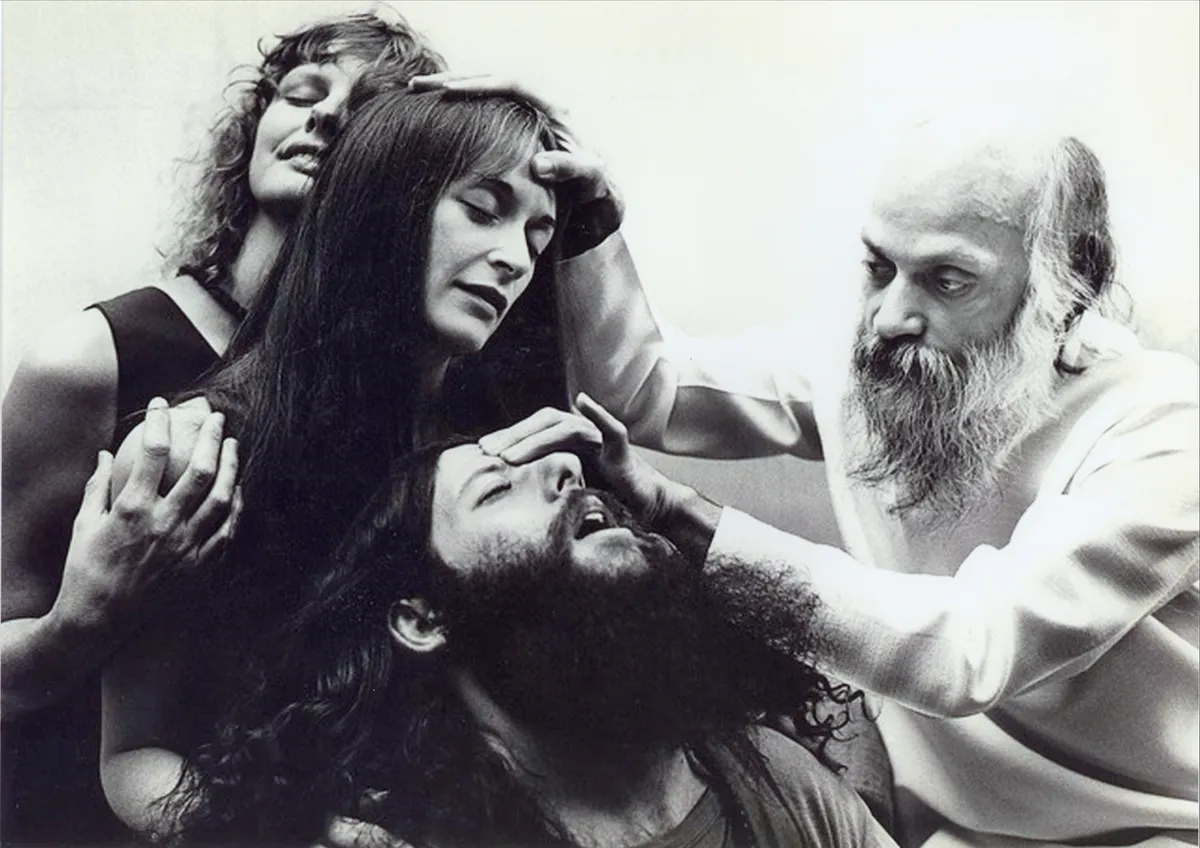
Osho's perspective on Work
When Osho Spoke About Work
Passages from the discourses where this theme comes alive.
Question: Maneesha's question: OUR BELOVED MASTER, COULD YOU TALK ABOUT THE DIFFERENCE BETWEEN A WORKAHOLIC AND SOMEONE WHO IS TOTAL IN THEIR WORK? Maneesha, the difference is very great. The workaholic is not total in his work. The workaholic is addicted to work, he cannot sit silently. He has to do something; whether it is needed or not, that is not the question. Now in Japan they are trying more and more for robots to work in the factories, because the robot can work twenty-four hours a day, with no strikes, no trouble with the labor unions, not constantly asking for a raise in the wages, no holidays. Robots are not religious anyway! But the workers are absolutely against it -- and the government is only asking them to take one day off in seven.
What if one becomes absorbed while doing work?
If you understand it rightly, being totally absorbed in an activity and being aware are two utterly different things. If you are completely absorbed in some work—utterly absorbed—you will become oblivious to the rest of the world. A man’s house has caught fire and he is running toward it; someone greets him on the way—he neither sees nor hears. In truth, he is absorbed in one thing: “My house is on fire,” and he is rushing there. His consciousness is absent everywhere else and present only there. Awareness is a totally different phenomenon. Awareness means the consciousness is equally present everywhere. The mind has not awakened at one center while falling asleep everywhere else. It is simply awake—whatever the center may be. We value absorption in life because our lack of absorption turns into clumsiness in action. For example, a man is doing some work but his mind is engaged…
प्रश्न: अगर जो कार्य करते समय तल्लीन हो?
अगर आप ठीक से समझिएगा, किसी कार्य में अगर आप पूरे तल्लीन हैं, पूरे तल्लीन हैं...। तल्लीनता बिलकुल दूसरी बात है और जागरूकता बिलकुल दूसरी बात है। अगर किसी कार्य में आप पूरे तल्लीन हैं तो आप शेष जगत के प्रति एकदम मूर्च्छित हो जाएंगे। एक आदमी के मकान में आग लग गई है और वह भागा चला जा रहा है। कोई उसे रास्ते में नमस्कार करता है उसको दिखाई नहीं पड़ता, उसे सुनाई नहीं पड़ता। असल में वह एक बात में तल्लीन है कि उसके मकान में आग लग गई। वह वहां भागा जा रहा है। अभी उसका चित्त सब जगह अनुपस्थित है, वहीं उपस्थित है। और जागरूकता बिलकुल दूसरी चीज है। जागरूकता आर्थिक चित्त सब जगह समानरूपेण उपस्थित है। चित्त किसी एक केंद्र्र पर जाग कर सब तरफ नहीं सो गया है। चित्त केवल जाग रहा है, चाहे कोई भी केंद्र हो। तल्लीनता का हम इसलिए मूल्य मानते हैं जीवन में कि हमारी गैर-तल्लीनता कार्य में अकुशलता बन जाती है। जैसे एक आदमी कोई काम कर रहा है और चित्त उसका और कहीं लगा हुआ है। इसको हम कहते हैं, यह तल्लीन नहीं है। …
Beloved Osho, since you have been speaking again this time, many of us feel that you are taking us into another phase of your work. Is this true?
Absolutely true. I had to give a three year gap and remain silent for so many reasons. One of the reasons relevant to your question is that I had been speaking on Jesus, on Krishna, on Buddha, on Mahavira. I was speaking on all other traditions of religion: Hassidism, Zen, Sufism. I had spoken on almost all important people who had contributed something to human consciousness: Lao Tzu, Chuang Tzu, Lieh Tzu, Bodhidharma, Bokuju, Socrates, Pythagoras, Zarathustra, Kabir, Shankara, Dadu, Milarepa, Marpa Nagarjuna, Vasubandhu. I covered almost the whole world. Wherever I found a man who has contributed to human consciousness, whether it was Greece -- Heraclitus, Diogenes, Dionysius -- or it was Tibet, or it was China, or it was Arabia, it did not matter to me. I was speaking on these people for a certain reason, a simple device. I had no people of my own. I had…
Beloved Osho, in the book dialogues with gurdjieff, george gurdjieff is said to have described the work as: "it is more than all words, less than all dreams. It is a terror to behold, a joy to experience. It is the connecting ends of a great and secret circle closing the gap twixt all and nothing, it is the work." beloved master, how would you define the work?
In the middle of the night, when he had filled the ditch completely, he was so full of energy as he had never been in his life, even in the early morning after a full, deep sleep. And Gurdjieff called everybody: "Breakfast is ready." He was a great cook. The people who lived with him had never known such a great cook, because he had learned the art from different tribes, different nomads, and he had such a big kitchen... full of strange, weird things that people had never seen. And then the breakfast was served and Gurdjieff for the first time in the whole day spoke to Bennett. "Have you learned anything or not? Man has one layer of superficial energy that he uses in day-to-day work, and he thinks this is all. If he exhausts it... which is really rare, unless you make an effort to exhaust it.…
Is Osho entering another phase of his work?
definitionWhat happens when a person dedicates two years to their own work before engaging with the world?
outcomeWhat is the hardest work?
definitionWhat is the spiritual significance of work?
definitionProfound Quotes on Work
Explore our structured collection of meaning-mapped quotes regarding Work.