
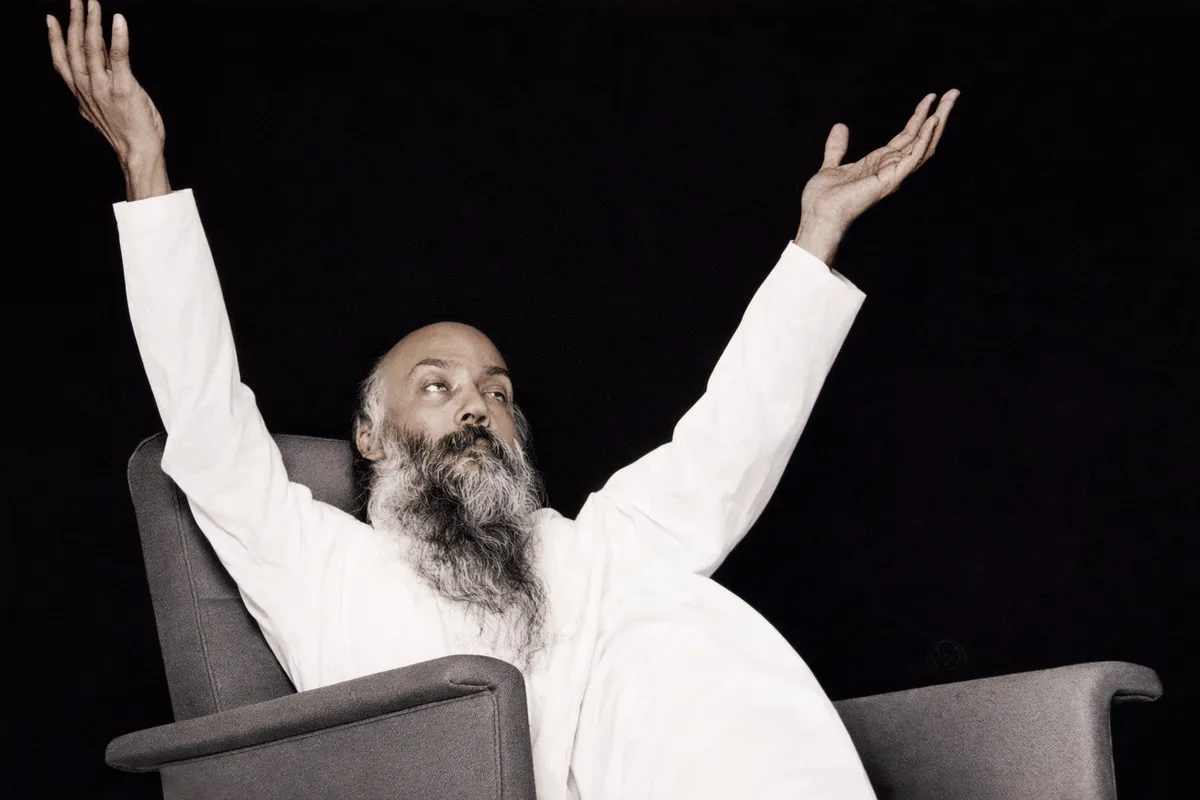
When you get totally into a task, you block out everything—even yourself—so the real art is to work while staying aware and centered.
From the Discourses
Passages where Osho speaks to this question — each links to the complete discourse.
What if one becomes absorbed while doing work?
If you understand it rightly, being totally absorbed in an activity and being aware are two utterly different things. If you are completely absorbed in some work—utterly absorbed—you will become oblivious to the rest of the world. A man’s house has caught fire and he is running toward it; someone greets him on the way—he neither sees nor hears. In truth, he is absorbed in one thing: “My house is on fire,” and he is rushing there. His consciousness is absent everywhere else and present only there. Awareness is a totally different phenomenon. Awareness means the consciousness is equally present everywhere. The mind has not awakened at one center while falling asleep everywhere else. It is simply awake—whatever the center may be. We value absorption in life because our lack of absorption turns into clumsiness in action. For example, a man is doing some work but his mind is engaged…
प्रश्न: अगर जो कार्य करते समय तल्लीन हो?
अगर आप ठीक से समझिएगा, किसी कार्य में अगर आप पूरे तल्लीन हैं, पूरे तल्लीन हैं...। तल्लीनता बिलकुल दूसरी बात है और जागरूकता बिलकुल दूसरी बात है। अगर किसी कार्य में आप पूरे तल्लीन हैं तो आप शेष जगत के प्रति एकदम मूर्च्छित हो जाएंगे। एक आदमी के मकान में आग लग गई है और वह भागा चला जा रहा है। कोई उसे रास्ते में नमस्कार करता है उसको दिखाई नहीं पड़ता, उसे सुनाई नहीं पड़ता। असल में वह एक बात में तल्लीन है कि उसके मकान में आग लग गई। वह वहां भागा जा रहा है। अभी उसका चित्त सब जगह अनुपस्थित है, वहीं उपस्थित है। और जागरूकता बिलकुल दूसरी चीज है। जागरूकता आर्थिक चित्त सब जगह समानरूपेण उपस्थित है। चित्त किसी एक केंद्र्र पर जाग कर सब तरफ नहीं सो गया है। चित्त केवल जाग रहा है, चाहे कोई भी केंद्र हो। तल्लीनता का हम इसलिए मूल्य मानते हैं जीवन में कि हमारी गैर-तल्लीनता कार्य में अकुशलता बन जाती है। जैसे एक आदमी कोई काम कर रहा है और चित्त उसका और कहीं लगा हुआ है। इसको हम कहते हैं, यह तल्लीन नहीं है। …
Osho, when one becomes fully aware and the feeling of nonattachment becomes complete—that is the whole thing. To be in the midst of the whole world... this is what is called jivan-mukta, the same reckoning... like the lotus in the mud.
Otherwise, troubles of the opposite kind arise. Remain in just that space. Otherwise you keep working and go on being miserable, thinking, “This work is giving me suffering.” The work is not giving you suffering; your mind is giving you suffering. So you drop this work and take up something else. But even after leaving the work, the mind remains the same. And as long as you live you will be doing something or other. There too it will give suffering. It will continue in the background, and you will not do the real thing. The real thing is that a distance should arise between the work and you.
प्रश्न: ओशो, पूर्ण सजग हो गया और असंग का भाव हो गया पूर्ण, यही तो सारी चीज है। जो सारे जगत के बीच में...इसको जीवन-मुक्त कह रहा है, वह वही हिसाब है।...जैसे कमल कीचड़ में है।
और नहीं तो उलटी परेशानियां होती हैं। बस उसी भाव में। और नहीं तो आप काम भी कर रहे हैं और दुखी हो रहे हैं कि यह काम मुझे दुख दे रहा है। काम दुख नहीं दे रहा आपको, आपका मन दुख दे रहा है। तो इधर काम को छोड़ो, यह करो। और काम को छोड़ कर मन तो वही रहेगा। तो कुछ तो करोगे आप जीओगे जब तक। वह वहां दुख देगा। वह पीछे जारी रहेगा और असली बात आप करोगे नहीं। असली बात यह है कि काम और आपके बीच में फासला हो जाए।
Mahavira has called apramad—vigilance, awareness, continuous wakefulness—the basis of practice. A friend asks: how can we bring this awareness into our conduct while doing our tasks—in the office, in the shop, while working? If attention remains on awareness, how will the work get done? While engaged in work, what is the place of awareness, and can this itself be a sadhana?
Take attention also as delight. Do not make it a restlessness. Let it not become a burden on your head that “I must work attentively.” Do not load it with strain and effort; let it grow lightly, support it. Whenever the remembrance arises, do it consciously. If you forget, do not worry. When remembrance returns, begin again to do it consciously. If you decide, “Now I will do my work consciously,” you will not be able to do it today itself; it may take years. To keep awareness even for a moment is difficult. You will decide to walk consciously; you will not be able to take even two steps before awareness has gone elsewhere and the feet have started walking elsewhere. Do not be anxious about that; do not repent. Heedlessness is the habit of countless lives; there is no reason to be distressed. We ourselves have cultivated unawareness—whom…
महावीर ने अप्रमाद को साधना का आधार कहा है, होश को, सतत जागृति को। एक मित्र ने पूछा है कि जो होश के बारे में कहा गया है वह हम अपने काम-काज में, ऑफिस में, दुकान में कार्य करते समय कैसे आचरण में लाएं? होश में रहने पर ध्यान जाए तो काम कैसे हो? काम में होते हुए होश का क्या स्थान है और क्या यह साधना हो सकती है?
ध्यान को भी आनंद समझें। इसको भी बेचैनी मत बनाएं। यह आपके सिर पर एक बोझ न हो जाए कि मुझे ध्यानपूर्वक ही काम करना है। इसको चेष्टा और प्रयत्न का बोझ न दें, हलके-हलके इसे विकसित होने दें, इसको सहारा दें। जब भी खयाल आ जाए, तो होशपूर्वक करें। भूल जाए, तो चिंता न लें। जब खयाल आ जाए, फिर होशपूर्वक करने लगें। अगर आपने तय किया है कि अब मैं काम अपना होशपूर्वक करूंगा, तो आप कर पाएंगे आज ही, ऐसा नहीं है; वर्षों लग जाएंगे। क्षण भर भी होश रखना मुश्किल है। तय करेंगे कि होशपूर्वक चलूंगा, दो कदम नहीं उठा पाएंगे और होश कहीं और चला जाएगा, कदम कहीं और चलने लगेंगे। …
Beloved Osho, you tell us to be aware of everything -- which means to be a witness to everything, every act. When I decide to be aware in work, I forget about awareness, and when I become aware that I was not aware. I feel guilty; I feel that I have made a mistake. Could you please explain?
Manish Bharti, it is one of the basic problems for anybody who is trying to be aware while at work -- because work demands that you should forget yourself completely. You should be involved in it so deeply... as if you are absent. Unless such total involvement is there, the work remains superficial. All that is great, created by man -- in painting, in poetry, in architecture, in sculpture -- in any dimension of life -- needs you to be totally involved. And if you are trying to be aware at the same time, your work will never be first rate, because you will not be in it. So awareness while you are working needs a tremendous training and discipline, and one has to start from very simple actions. For example, walking: you can walk, and you can be aware that you are walking -- each step can be full…
Question: Maneesha's question: OUR BELOVED MASTER, COULD YOU TALK ABOUT THE DIFFERENCE BETWEEN A WORKAHOLIC AND SOMEONE WHO IS TOTAL IN THEIR WORK? Maneesha, the difference is very great. The workaholic is not total in his work. The workaholic is addicted to work, he cannot sit silently. He has to do something; whether it is needed or not, that is not the question. Now in Japan they are trying more and more for robots to work in the factories, because the robot can work twenty-four hours a day, with no strikes, no trouble with the labor unions, not constantly asking for a raise in the wages, no holidays. Robots are not religious anyway! But the workers are absolutely against it -- and the government is only asking them to take one day off in seven.