
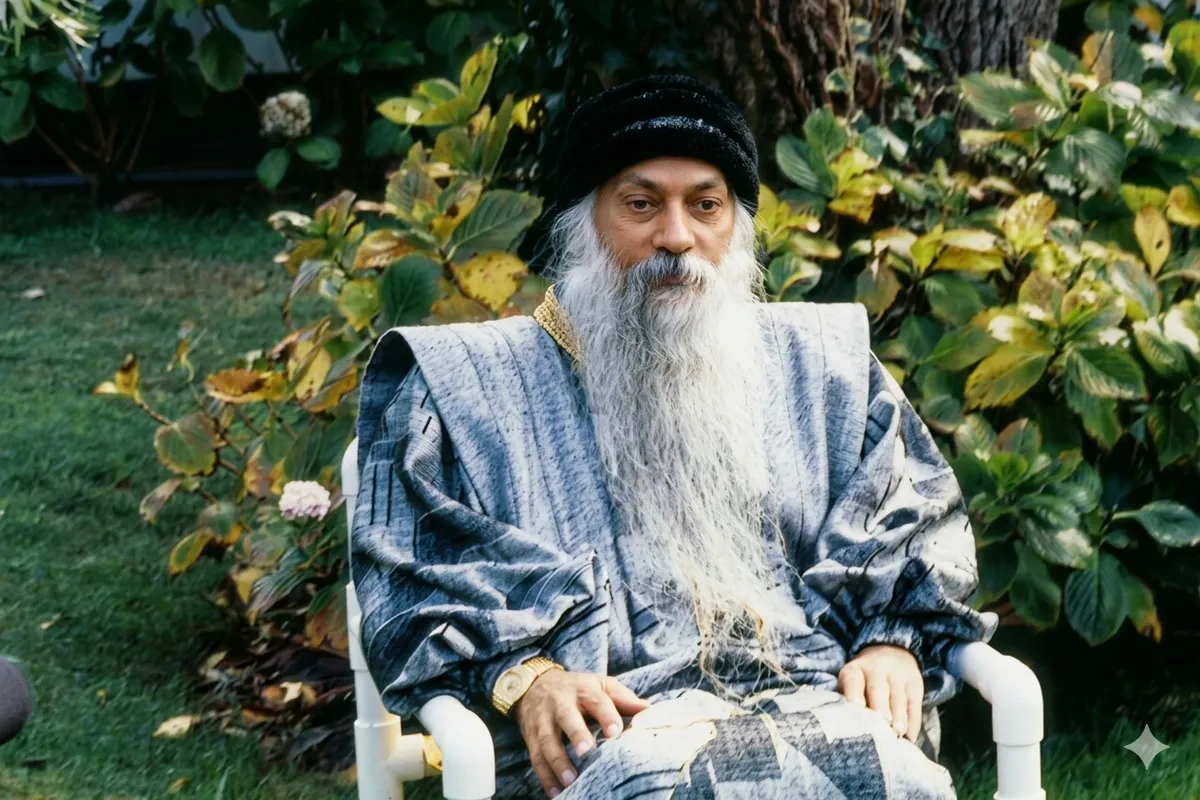
Don’t chase rules—grow real love inside, and your actions will naturally be kind and harmless.
From the Discourses
Passages where Osho speaks to this question — each links to the complete discourse.
Question: BELOVED OSHO, CAN YOU SAY SOMETHING ABOUT VIRTUE? ... Out of awareness whatever you do is virtue according to me. And out of unawareness whatever you do is sin according to me. And according to me, your sins are not going to take you to hell. Your sins immediately give you hell -- here, just now. And your virtues are not going to give you an eternity of paradise. Your virtues give you joy, blissfulness, the moment you act with full awareness. The punishment and the reward is immediate: the reward follows your action. But it depends where your action will lead you. It can be unconscious action, then hell herenow. It has nothing to do with geography; it is something to do with your psychology. Acting consciously, you are in paradise wherever you are. Once you have learned, you will not ask, "What is virtue?
In the same context I ask, Osho, what is sin and what is virtue?
If the inner lamp of awareness is lit, then whatever actions happen are virtue. If the inner lamp is extinguished, then whatever actions happen are sin. Understand this! No act in itself is sin or virtue. Sin and virtue depend on the doer. No act is intrinsically sin or virtue. Generally we believe that acts are good or bad—this act is bad, that act is good. That is not the case. A person whose inner lamp is out cannot truly do a good act—it is impossible. It may look as if he is doing good. He can imitate the actions of those whose lamps are lit. But even in imitation his motive will be contrary. If he builds a temple, it won’t be for the Divine; it will be for his own name or his father’s—he will get the name inscribed. If he gives charity, he will be anxious whether…
इसी संदर्भ में पूछा है कि ओशो, पाप क्या है और पुण्य क्या है?
भीतर दीया जला हो चैतन्य का, तो जो कर्म होते हैं वे पुण्य हैं। भीतर दीया बुझा हो, तो जो कर्म होते हैं वे पाप हैं। समझ लेना आप! कोई कर्म न तो पाप होता है, न पुण्य होता है। पुण्य और पाप करने वाले पर निर्भर होते हैं। कोई कर्म पाप और पुण्य नहीं होता। आमतौर से हम यही मानते हैं कि कर्म पुण्य और पाप होते हैं। यह काम बुरा है और वह काम अच्छा है। यह बात नहीं है। जिस आदमी के भीतर का दीया बुझा है वह कोई अच्छा काम कर ही नहीं सकता। यह असंभव है। दिख सकता है कि अच्छा काम कर रहा है। जिनके भीतर दीये जले रहे हैं उनके कर्मों का अनुकरण कर सकता है। लेकिन अनुकरण में भी वासना उसकी विपरीत होगी। अगर वह मंदिर बनाएगा, तो वह परमात्मा का नहीं होगा, अपने पिता का होगा, उनका नाम लिखवा देगा। अगर वह किसी को दान देगा, तो फिकर में होगा कि अखबारनवीस, जर्नलिस्ट आस-पास हैं या नहीं। वे खबर छापते हैं या नहीं छापते। वह दान प्रेम और करुणा नहीं होगी, वह भी अहंकार का प्रकाशन होगा। अगर वह किसी की सेवा करेगा, तो वह सेवा सेवा नहीं होगी। …
A friend has asked: Osho, what is the difference between sin and virtue? And as long as the mind is filled with sin, how can there be faith, devotion, feeling? How will prayer happen while the mind is full of sin? So first let the mind be filled with virtue; then prayer will happen!
It sounds right. It seems reasonable. Yet it is not right—and it is full of unawareness. It sounds right to say, “As long as the mind is full of sin, how can there be prayer!” But that is like a physician saying, “As long as you are sick, how can I give you medicine! First get well and healthy, and then take the medicine.” But once you are well, why would you need medicine? If you decide to pray only after you’ve dropped all sin, you will never get the chance to pray. As long as there is sin, you won’t pray. And when there is no sin left, why pray? What would be the meaning of prayer then? Prayer is the medicine. Therefore, one has to pray while still a sinner. And another thing: how will sin go? It cannot go without prayer. Those who try to remove sin…
एक मित्र ने पूछा है कि ओशो, पाप और पुण्य का भेद क्या है? और जब तक मन पाप से भरा है, तब तक श्रद्धा, भक्ति, भाव कैसे होगा? प्रार्थना कैसे होगी, जब तक मन पाप से भरा है? तो पहले मन पुण्य से भरे, फिर प्रार्थना होगी!
ठीक लगता है कि जब तक मन पाप से भरा है, तो प्रार्थना कैसे होगी! यह तो ऐसे ही हुआ कि कोई चिकित्सक कहे कि जब तक तुम बीमार हो, जब तक मैं औषधि कैसे दूंगा! पहले तुम ठीक हो जाओ, स्वस्थ हो जाओ, फिर औषधि ले लेना। लेकिन जब ठीक हो जाओ, तो औषधि की जरूरत क्या होगी? अगर पाप छोड़ने पर प्रार्थना करने का आपने तय किया है, तो आपको कभी प्रार्थना करने का मौका नहीं आएगा। जब तक पाप है, आप प्रार्थना न करोगे। और जब पाप ही न रह जाएगा, तो प्रार्थना किसलिए करोगे? फिर प्रार्थना का अर्थ क्या है?
Osho, you say the same thing in countless ways. But when I listen to you, it feels as if I am hearing it for the first time. And I feel so much joy that I don’t feel like going back home. What should I do—what can I do—so that I can just keep listening to you!
You will feel as if you have been made to rise out of season, before time—as if you were not yet to go and yet had to go. And if you go in that way, your home will become even more desolate than before. I do not want to make your home desolate; I want to make your home a temple. I want that when you go home, your home’s new form is revealed. I do not want to tear you away from home, from the world, from family life. That is the newness of my sannyas: I do not want to sever you from the world; I want to join you to the world in such a way that your connection with the world becomes a connection with the Divine. Let the world no longer be a barrier between you and the Divine; let it become a means. If…
पहला प्रश्न: ओशो, आप एक ही बात कहते हैं अनेक-अनेक ढंगों से। पर जब आपको सुनता हूं तो उस समय यही लगता है कि पहली बार सुन रहा हूं। और इतना आनंद मिलता है कि वापस घर लौटकर जाने का जी नहीं करता। क्या करूं, मैं क्या करूं कि आपको सुनता ही रहूं!
… ऐसा लगेगा जैसे अभी जाना न था और जाना पड़ा। और अगर ऐसे तुम गये, तो घर और भी उदास हो जाएगा। जितना पहले था, उससे भी ज्यादा। मैं तुम्हारे घर को उदास नहीं करना चाहता। मैं तुम्हारे घर को मंदिर बनाना चाहता हूं। मैं चाहता हूं कि तुम जब घर जाओ, तो तुम्हारे घर का अभिनवरूप प्रकट हो। मैं तुम्हें घर से, संसार से, गृहस्थी से तोड़ नहीं लेना चाहता। वही मेरे संन्यास का अभिनवपन है कि मैं तुम्हें संसार सेे तोड़ नहीं लेना चाहता। …
The real virtue has nothing to do with so-called morality. There is one very profound and pregnant statement of Socrates: he says 'Knowledge is virtue.' By knowledge he means wisdom, knowing, because his whole emphasis was 'Know thyself.' That's what I mean by being conscious, because it is only consciousness that makes you capable of knowing yourself. And the moment you have known yourself you cannot do anything harmful to anybody. It is simply impossible. You cannot be destructive. It is like a man who has eyes, how can you think that he will try to pass through the wall? He as eyes so he knows where the door is -- he will pass through the door. But the blind man can try. He will knock all around, and he can even try to get out through the wall or from the window.