
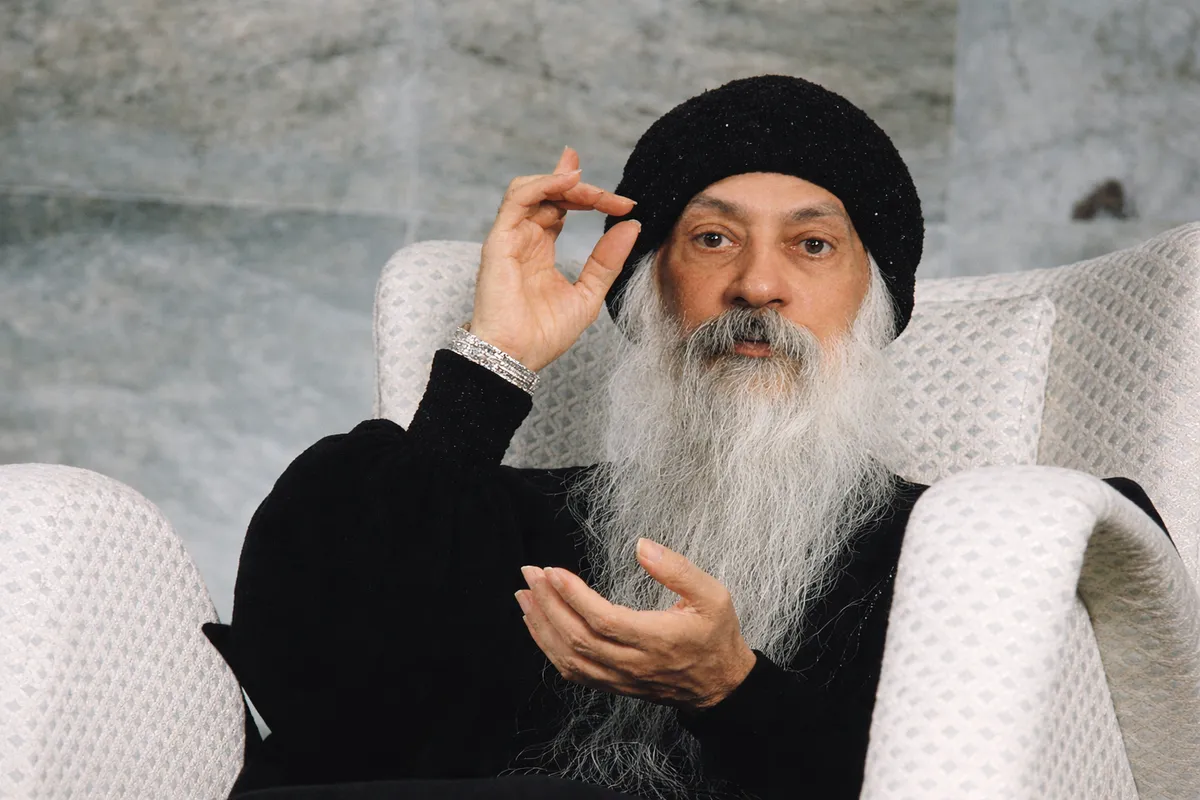
Osho's perspective on Vedas
When Osho Spoke About Vedas
Passages from the discourses where this theme comes alive.
There is a very unique thing in the Vedas. “What is all this?”—the seer has asked.
“Perhaps the Divine who made it knows—or who knows, maybe even he does not!” This is something astonishing. God! The Vedic seer says: “What is all this?” “Perhaps—perhaps the One who made it knows; or who knows, maybe even He does not!” They must have been very courageous people. The gist is: even God may not know. In truth, whatever becomes known turns trivial. Once it is known, what remains? To know is to define. Existence has never been defined. Has anyone ever said what it is? That is why Buddha fell silent. Ask him, “Is there God?”—he is silent. “Is there a soul?”—he is silent. That, precisely, was Buddha’s answer! He says: Stop this prattle about soul and God. Who has known? Wake up! Drop the worry about knowing. So there is, first, the race of the doer—that is the race of ego. Then there is the race for…
वेदों में एक बड़ी अनूठी बात है। ‘यह सब क्या है?’--ऋषि ने पूछा है।
… शायद, परमात्मा जानता हो जिसने यह सब बनाया, या कौन जाने वह भी न जानता हो!’ बड़े हिम्मतवर लोग रहे होंगे। इसका सार अर्थ हुआ कि परमात्मा को भी पता नहीं है। असल में जिस चीज का पता हो जाये, वह व्यर्थ हो जाती है। पता ही हो गया तो फिर क्या बचा? पता चल गया तो परिभाषा हो गयी। इस अस्तित्व की अब तक कोई परिभाषा नहीं हो सकी। कोई कह सका, क्या है? इसलिए तो बुद्ध चुप रह गये। जब तुम उनसे पूछो ईश्वर है? वे चुप रह जाते हैं। आत्मा है? वे चुप रह जाते हैं। यह ठीक-ठीक उत्तर दिया बुद्ध ने! वे कहते हैं: यह बकवास बंद करो आत्मा, ईश्वर की! कौन जान पाया? जागो! जानने की चिंता छोड़ो।
I spoke a little about essence-knowledge. It does not mean scholarly information. Essence-knowledge means the direct, personal experience of truth—your own. Ouspensky, a great Russian thinker and mathematician, went to the mystic Gurdjieff. He said, “I have come to ask you something.” Gurdjieff handed him a paper: “First write down what you actually know. Then ask me what you don’t know. If you already know, what is the need to ask? Write first what you know—we will not discuss that at all.” Ouspensky was a prolific author. Before meeting Gurdjieff he had written a remarkable book—one of the three great books of the world. In the West it is hard to find its equal. He had written Tertium Organum. And sincerely, without ego, he had written there that two great books had been written before: Aristotle’s Organon—the first principle; Bacon’s Novum Organum—the new principle; and I write the third—Tertium Organum.
तत्व-ज्ञान के संबंध में थोड़ी बात मैंने आपसे कही। तत्व-ज्ञान से अर्थ शास्त्रीय ज्ञान नहीं है। तत्व-ज्ञान से अर्थ है, सत्य का निजी अनुभव, अपना अनुभव। आस्पेंस्की रूस का एक बहुत बड़ा विचारक, गणितज्ञ, एक फकीर गुरजिएफ के पास गया। उसने गुरजिएफ से कहा कि मैं आपसे कुछ पूछने आया हूं। गुरजिएफ ने उसे एक कागज दे दिया उठाकर और कहा कि इस कागज पर पहले तुम लिख दो; जो-जो तुम जानते हो, वह तुम लिख दो। फिर तुम जो नहीं जानते, वह मुझसे पूछना। अगर तुम पहले से ही जानते हो, तो पूछने की झंझट की कोई जरूरत नहीं है। तो पहले तुम लिख दो, जो-जो तुम जानते हो। उसकी हम चर्चा ही नहीं करेंगे; उसे हम उठाएंगे ही नहीं। आस्पेंस्की बड़ा लेखक था। और गुरजिएफ से मिलने के पहले उसने एक बहुत अदभुत किताब लिखी थी, जो दुनिया की तीन बड़ी किताबों में एक है। पश्चिम में तो उस किताब का जोड़ खोजना बहुत मुश्किल है। उसने एक किताब लिखी थी, टर्शियम आर्गानम। …
Question: The first question: Osho, this verse too is from the Mundaka Upanishad: “Vedānta-vijñāna sunishcitārthāḥ sannyāsa-yogād yatayaḥ śuddha-sattvāḥ te brahmalokeṣu parānta-kāle parāmṛtāḥ parimucyanti sarve. Meaning: “Those who, through Vedanta and science (knowledge of nature), have well ascertained the meaning, and who through sannyas and yoga have become of pure sattva—these earnest seekers devoted to Brahman, upon dying, reach Brahma-loka and are liberated. Please be compassionate and explain this sutra. ... And it had to be so, because what are the Vedas? Open them anywhere and you’ll be surprised these words are called religion. Ordinary desires: someone prays for a bigger harvest; someone begs Indra for more rain; someone wants wealth; someone wants his cows’ udders to overflow with milk—and, not only that, his enemy’s cows’ udders to dry up! “Let it rain on my field—and not on my neighbor’s. And this you call spirituality?
And the sum of all that has been known and collected by that knowing is called Veda. What Brahman has known is Veda; and that by which Brahman is known is Vedanta. Now by what will this Brahman be known? Who will know it? In truth, the very language of ‘knowing’ has to be dropped, because knowing is always of the other. What would it mean to ‘know’ oneself? How will you know that which you are? Who will know it? From which angle? From what direction? Therefore, whatever we ‘know’ regarding the self becomes alien by the very act of knowing. In truth, the being of the self is beyond the grasp of knowledge.
What is the essence of the Vedas?
definitionProfound Quotes on Vedas
Explore our structured collection of meaning-mapped quotes regarding Vedas.