
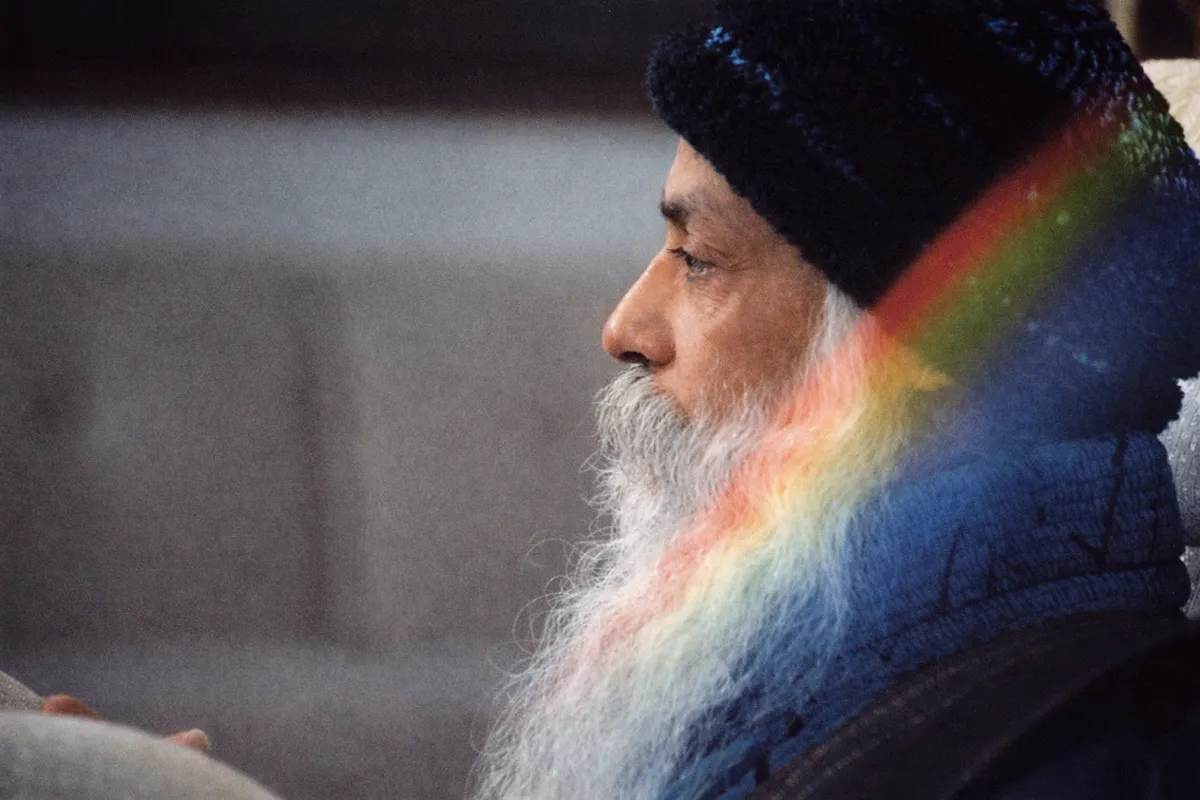
The Vedas are like helpful maps drawn with colors (gunas), but the real land (truth) has no color and can’t fit into any map.
From the Discourses
Passages where Osho speaks to this question — each links to the complete discourse.
Osho, the creation that runs on the three gunas was made by God. God has placed the tamas guna in human nature—what purpose does God have behind it?
Have you ever watched a tightrope walker? He is never still. You might say, “Why doesn’t he stand still?” If he stood still, he would immediately fall and die. Why doesn’t the acrobat stay steady? Because he is continuously balancing. When you see him lean to the left, don’t be mistaken: he leans left only when there is a danger of falling to the right. He leans right when there is a danger of falling to the left. He is balancing all the time. When the fear of falling to the right arises, he shifts his weight to the left so balance is restored. When he has saved himself from the right and the danger arises on the left, he shifts to the other side to save himself. And nature is working below. If the acrobat doesn’t balance, he falls to the ground, bones break. He cannot then complain to…
प्रश्न: ओशो, तीनों गुणों से चलने वाली सृष्टि ईश्वर ने बनाई। तमस गुण मनुष्य की प्रकृति में ईश्वर ने दिया, उसके पीछे क्या उद्देश्य ईश्वर का है?
… नट पूरे वक्त बैलेंस करता रहता है। और जब आपको दिखता है, अब बाएं झुक रहा है, तो आप गलती में मत पड़ जाना। बाएं झुकता ही तब है, जब दाएं गिरने का डर पैदा होता है। दाएं तब झुकता है, जब बाएं गिरने का डर पैदा होता है। वह बैलेंस कर रहा है पूरे वक्त। जब दाएं गिरने का डर पैदा होता है, वह वजन को बाएं ले जाता है, ताकि बैलेंस हो जाए। जब दाएं से बच जाता है, बाएं गिरने का डर पैदा होता है, तब उलटी तरफ बैलेंस ले जाता है कि बच जाए। और प्रकृति नीचे काम कर रही है। नट अगर बैलेंस न करे, तो जमीन पर गिरे, हड्डी-पसली टूट जाए। फिर प्रकृति से यह नहीं कह सकता कि तूने मेरी हड्डी-पसली तोड़ी! प्रकृति कहेगी, हमें कोई मतलब नहीं; तुम अपनी रस्सी पर बैलेंस करते रहो, हमें कोई मतलब नहीं।
They seem repressive. But their aphorisms stand on the principles of the three gunas. They are saying: the question is not that she is your daughter. Fundamentally she is a woman and you are a man. And hormones know neither daughter nor mother nor father nor sister. Hormones have no morality. If a father remains long in seclusion with his daughter, gradually the daughter remains only a woman, the father only a man. The natural attractions of both may begin. This can be stopped only when the witness has awakened. But in how many has the witness awakened? So Manu’s saying is profound, grounded in Sankhya. Sankhya is a unique explorer. Its discovery is deep: within you are two elements—prakriti and purusha. Purusha is your consciousness; prakriti is the organization of your body and mind. All actions come from nature; no action issues from consciousness.
… लेकिन उनके सूत्र त्रिगुणों के ऊपर आधारित हैं। वे यह कह रहे हैं, सवाल यह नहीं है कि वह लड़की है तुम्हारी। गहरे में तो वह स्त्री है और तुम पुरुष हो। और हार्मोन न लड़की को जानते हैं, न मां को जानते हैं, न पिता को जानते हैं, न बहन को जानते हैं। हार्मोन की कोई नैतिकता नहीं है। अगर पिता भी पुत्री के साथ एकांत में बहुत दिन हो, तो धीरे-धीरे लड़की स्त्री रह जाएगी, पिता पुरुष रह जाएगा। और उन दोनों की प्रकृति के जो खिंचाव हैं, वे शुरू हो जाएंगे। यह तभी रुक सकता है, जब साक्षी जग गया हो। लेकिन साक्षी कितने लोगों का जगा है? तो मनु की बात भी बड़ी गहरी है, पर सांख्य के सूत्रों पर खड़ी है। सांख्य बड़ा अनूठा खोजी है। सांख्य की खोज गहरी है। खोज का सार यह है कि आपके भीतर दो तत्व हैं, एक प्रकृति और पुरुष। पुरुष तो आपकी चेतना है और प्रकृति आपकी देह और मन की संघटना है। …