
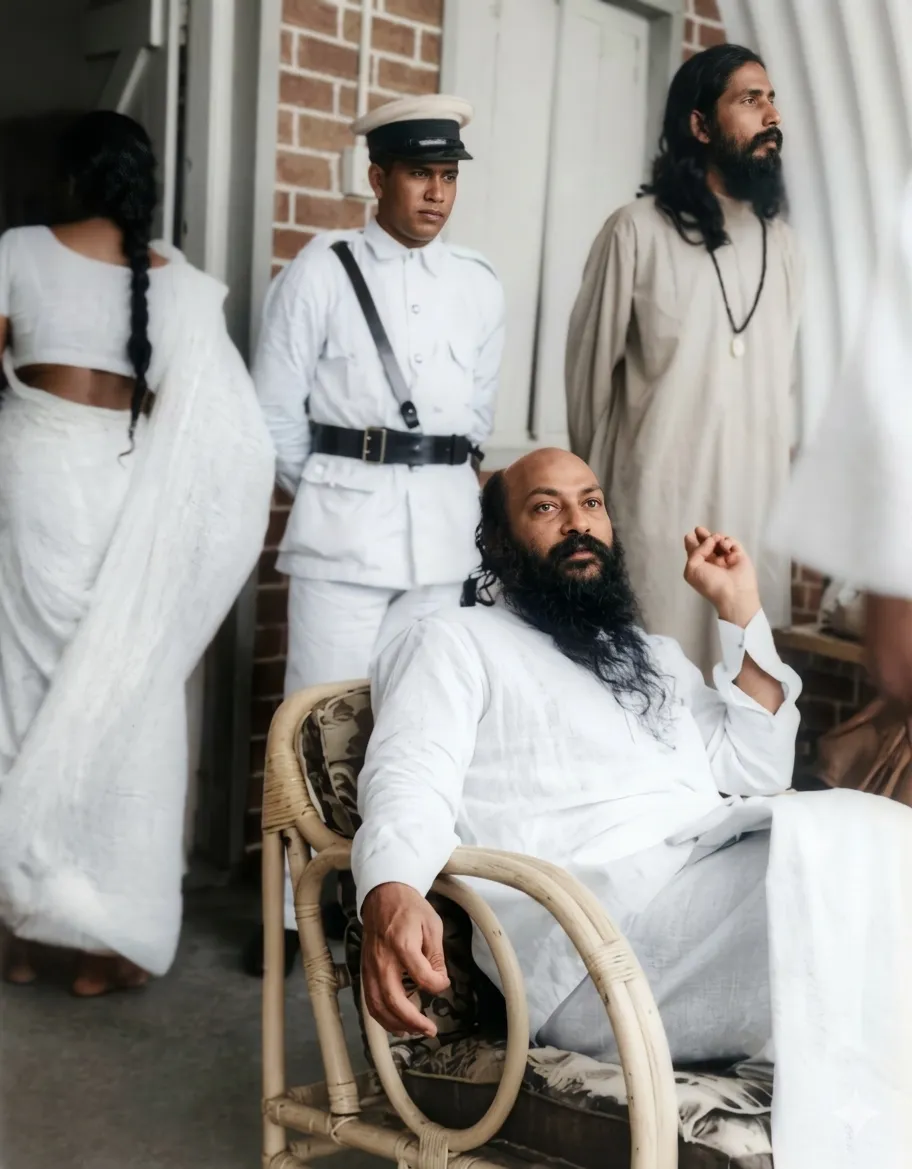
Osho's perspective on Gunas
When Osho Spoke About Gunas
Passages from the discourses where this theme comes alive.
Osho, the creation that runs on the three gunas was made by God. God has placed the tamas guna in human nature—what purpose does God have behind it?
Have you ever watched a tightrope walker? He is never still. You might say, “Why doesn’t he stand still?” If he stood still, he would immediately fall and die. Why doesn’t the acrobat stay steady? Because he is continuously balancing. When you see him lean to the left, don’t be mistaken: he leans left only when there is a danger of falling to the right. He leans right when there is a danger of falling to the left. He is balancing all the time. When the fear of falling to the right arises, he shifts his weight to the left so balance is restored. When he has saved himself from the right and the danger arises on the left, he shifts to the other side to save himself. And nature is working below. If the acrobat doesn’t balance, he falls to the ground, bones break. He cannot then complain to…
प्रश्न: ओशो, तीनों गुणों से चलने वाली सृष्टि ईश्वर ने बनाई। तमस गुण मनुष्य की प्रकृति में ईश्वर ने दिया, उसके पीछे क्या उद्देश्य ईश्वर का है?
… नट पूरे वक्त बैलेंस करता रहता है। और जब आपको दिखता है, अब बाएं झुक रहा है, तो आप गलती में मत पड़ जाना। बाएं झुकता ही तब है, जब दाएं गिरने का डर पैदा होता है। दाएं तब झुकता है, जब बाएं गिरने का डर पैदा होता है। वह बैलेंस कर रहा है पूरे वक्त। जब दाएं गिरने का डर पैदा होता है, वह वजन को बाएं ले जाता है, ताकि बैलेंस हो जाए। जब दाएं से बच जाता है, बाएं गिरने का डर पैदा होता है, तब उलटी तरफ बैलेंस ले जाता है कि बच जाए। और प्रकृति नीचे काम कर रही है। नट अगर बैलेंस न करे, तो जमीन पर गिरे, हड्डी-पसली टूट जाए। फिर प्रकृति से यह नहीं कह सकता कि तूने मेरी हड्डी-पसली तोड़ी! प्रकृति कहेगी, हमें कोई मतलब नहीं; तुम अपनी रस्सी पर बैलेंस करते रहो, हमें कोई मतलब नहीं।
Osho, yesterday you said that jealousy is included in respect. I have immense respect for you, but the jealousy inherent in it keeps poisoning it, and I feel guilt and pain. Does reverence transcend this poison-laced respect?
It needs a little explaining—it's a delicate point. Whenever you respect someone, you do so because you see in that person something you do not have. You respect because you glimpse in the other something you would also like to possess. A beggar respects an emperor because he, too, longs to be an emperor. So on the one hand he respects, and inside he also envies. Because he is not yet an emperor but wants to be. You have attained what he wants to attain. He respects you as skillful, successful: “I stand far back in the line; you have gone ahead to where I should have been.” So you are powerful, clever, intelligent, strong—he respects you. But inside a fire of jealousy also burns—if he gets the chance, he would like to be in your place and push you aside. And if the beggar gets that chance, he will…
तीसरा प्रश्न: ओशो, आपने कल कहा, आदर में ईर्ष्या सम्मिलित है। आपके प्रति मुझमें अपार आदर है, लेकिन उसमें निहित ईर्ष्या उसमें जहर घोलती रहती है और मैं ग्लानि और पीड़ा का अनुभव करता हूं। क्या श्रद्धा इस विष-भरे आदर का अतिक्रमण करती है?
भिखारी सम्राट का आदर करता है, क्योंकि उसकी भी आकांक्षा है कि सम्राट हो। तो एक तरफ आदर भी करता है, भीतर ईर्ष्या भी करता है। क्योंकि सम्राट अभी वह है नहीं, सम्राट होना चाहता है। तुम हो गए हो, तुमने वह पा लिया है जो वह पाना चाहता है। इसलिए तुम्हें आदर भी करता है कि तुम कुशल हो, सफल हो, मैं पंक्ति में बहुत पीछे खड़ा हूं, तुम आगे पहुंच गए हो, तुम उस जगह पहुंच गए हो जहां मुझे होना चाहिए था। इसलिए तुम शक्तिशाली हो, होशियार हो, बुद्धिमान हो, बलशाली हो, तुम्हारा आदर करता हूं। लेकिन एक भीतर ईर्ष्या की आग भी जलती है--अगर मुझे मौका मिले तो उस जगह मैं होना चाहूंगा, तुम्हें हटाना चाहूंगा। और जब मौका मिल जाएगा इस भिखारी को तो यह सम्राट को हटा कर धक्का दे देगा, सिंहासन पर बैठ जाएगा।
Tamas means inertia. Tamas means stopping. Tamas means to be held. Tamas is the binding force. Without tamas, things would keep moving and never stop. You throw a stone; if there were no tamas in the world, no restraining force, no obstruction, the stone would go on, on—how would it stop? Tamas is the obstructing energy. When you throw the stone, you give it the force of rajas. Hence your arm aches; energy left your hand. You lost something in throwing. And to the extent you gave energy, to that extent the stone goes far. As the energy ends, tamas pulls it down. What Newton called gravitation is a local application, a form of tamas. Tamas has many forms; gravitation is one. Tamas is the force that draws downward. By which you fall into hell—that is tamas. When you steal, tamas; when you lie, tamas.
तम का अर्थ है, आलस्य। तम का अर्थ है, ठहरना। तम का अर्थ है, रुकना। तम बांधने वाली शक्ति है। अगर तम न हो, तो चीजें चलती ही जाएंगी और रुक न सकेंगी। तुम एक पत्थर उठाकर फेंकते हो, अगर तम न हो जगत में, कुछ रोकने की शक्ति न हो, अवरोध न हो जगत में, तो पत्थर फिर चलता ही जाएगा, चलता ही जाएगा, रुकेगा कैसे? तम है अवरोधक ऊर्जा। तो तुम फेंकते हो पत्थर को; जब तुम फेंकते हो, तो तुम उसे रज की शक्ति देते हो। इसलिए तुम्हारा हाथ दुखता है; शक्ति हाथ से गई। तुमने कुछ गंवाया पत्थर को फेंकने में। और जितनी शक्ति तुमने दी, जितने जोर से फेंका, जितना गंवाया, जितनी ऊर्जा दे दी पत्थर को, उतनी दूर पत्थर जाता है। जैसे ही ऊर्जा खतम हो जाती है, तम की शक्ति उसे नीचे खींच लेती है। जिसको न्यूटन ने ग्रेविटेशन कहा है, वह तम का ही एक स्थानीय उपयोग है, तम का ही एक रूप है। तम के और बहुत रूप हैं; लेकिन जिसको न्यूटन ने गुरुत्वाकर्षण कहा.। क्योंकि वह बैठा है बगीचे में और एक फल को उसने गिरते देखा। …
Osho, which guna-dominant seeker do you call a sannyasin? Does the predominance of any one guna begin as soon as one takes sannyas?
Sannyas has nothing to do with the gunas. Sannyas is related to nirguna, the quality-less. Sannyas is an inner state of feeling. It is the art of non-grasping. You do not cling to anything. You remain without holding on. Grasping is what makes a householder. You will build houses all around; you will cling to something. You will not be able to live without supports. You will need some prop, some security for the future, some wealth—be it the wealth of merit, of good deeds, of sattva. A sannyasin means: I will build no inner house; I will not hoard any inner wealth; I will gather no possessions; I will not think of the future. I will live in this very moment—and live as consciousness. And I will know only this much: I am a witness; an observer; a seer. Sannyas is a state beyond the gunas. Until that arises,…
तीसरा प्रश्न: ओशो, आप किस गुण-प्रधान वाले साधक को संन्यस्त कहते हैं? क्या संन्यास लेते ही किसी एक गुण की प्रधानता होने लगती है?
… निर्गुणता से संन्यास का संबंध है। संन्यास भीतर की भाव-दशा है। न पकड़ने की कला का नाम संन्यास है। नहीं पकड़ेंगे कुछ भी। बिना पकड़े रहेंगे। पकड़ने का नाम गृहस्थ है। घर बनाएंगे चारों तरफ। कुछ पकड़ेंगे। बिना सहारे नहीं जी सकेंगे। कोई आलंबन चाहिए। भविष्य की सुरक्षा चाहिए। संपदा चाहिए कुछ! चाहे वह संपदा पुण्य की हो, शुभ कर्मों की हो, सत्व की हो। संन्यस्त का अर्थ है, नहीं कोई घर बनाएंगे भीतर; नहीं कोई संपदा भीतर इकट्ठी करेंगे; कोई परिग्रह न जुटाएंगे; भविष्य की सोचेंगे ही नहीं। इस क्षण जीएंगे। …
Profound Quotes on Gunas
Explore our structured collection of meaning-mapped quotes regarding Gunas.