
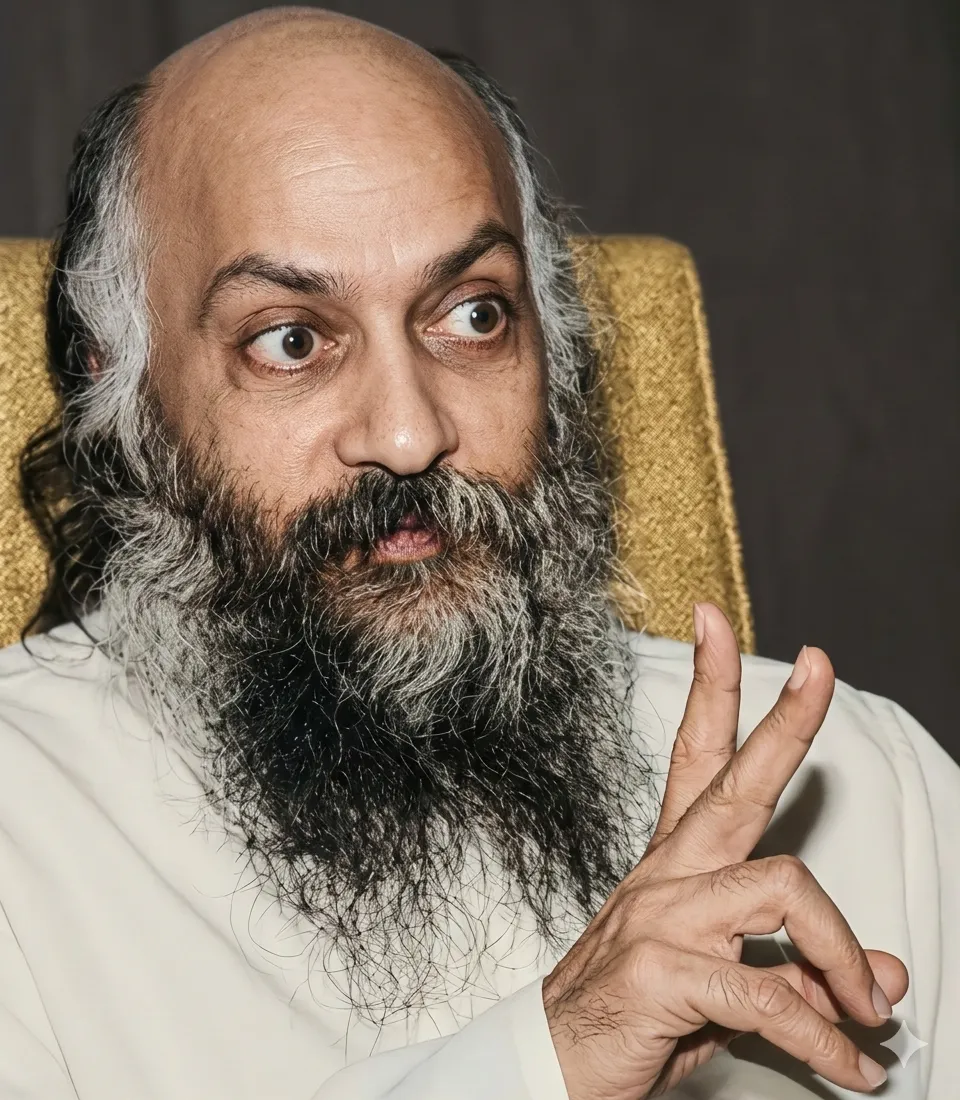
Osho's perspective on Transcendence
When Osho Spoke About Transcendence
Passages from the discourses where this theme comes alive.
Can a disciple transcend form and be in tune with the essence of the creator?
When you touch the hand of somebody you love, it is not only a touch of the skin, something is touched which is beyond the skin, behind the skin. Some pulse, some vibe, simply jumps from one hand to another, something of the spiritual. Look into the eyes of somebody that you love and you are not looking only into the eyes -- something deeper opens, something abysmal opens. By and by the body starts disappearing. You are getting into the spiritual. But the body is the door. It is exactly like a temple. You enter a temple... what do you mean by the word 'temple'? The door, the walls -- do you mean that? Of course, the door and the walls are not the temple, the temple is the emptiness inside. That's where you go. But those doors and those walls protect that emptiness, that shrine. If those walls…
Question: does transcendence come with the opening of the sahasrar?
No, transcendence is beyond the opening. But enlightenment has two connotations. One, the dying mind - the ending mind, the mind that is going to die, the mind that has come to its peak, the mind that has come to its last - conceives of the enlightenment. But a barrier has come and now the mind will not go beyond this. The mind knows that it is ending, and with its ending the mind also knows the end of suffering; the mind also knows the end of division; the mind also knows the end of the conflict that was there. All this ends and the mind conceives of this as enlightenment, but it is still the mind that is conceiving of it. So this is enlightenment conceived of by the mind. When the mind has gone, then the real enlightenment comes. Now you have transcended, but you cannot talk about…
Another friend has asked that: saints have always talked about transcendence, of going upwards, whereas lao tzu talks of going downwards -- why?
Life is misty. If you feel that you will achieve happiness by loving someone, you will never be happy. Although there is joy in loving but this joy is for him only who drowns himself in love and does not worry about the bliss. He who desires bliss from love, does love but his attention is all on the bliss thereof. Then he finds himself holding the beloved's hand but does not find bliss in it. He will never find it also. And yet those who say there is bliss in love are absolutely correct. Actually love and bliss are not correlated. There is no causal link between them. It is not as if you heat water and it turns to vapour. The deeper you go into existence, the lesser the causality becomes; and the more spontaneous and natural are the results attained. All that is deep and profound in…
Another friend has asked: Osho, what is the relationship between the method of meditation and jati-smaran (recollection of past lives)?
But the one who becomes skilled in this—who can fully awaken any day’s memory up to the age of five—will find that the memories begin to awaken completely. And you should test it. As today passes, note down some events and lock them up. After two years, try to recall today. Most of it will have been forgotten. Then remember—and after remembering, break the lock and compare whether what you recalled matches what you had written. You will be amazed—astonished—that besides what you wrote, many more details have come back which you did not even note at the time. They will all be there in memory. Buddha called this alaya-vijnana. There is a corner of the human mind he called the storehouse of consciousness. Like a junk room in the house where we keep all the odds and ends, there is a storehouse that collects memories—where everything from birth after…
एक और मित्र ने पूछा है कि ओशो, ध्यान की विधि और जाति-स्मरण में क्या संबंध है?
लेकिन जो व्यक्ति इसमें समर्थ हो जाएगा, पांच वर्ष की उम्र तक की किसी भी दिन की स्मृति को पूरा जगाने लगेगा...और वह पूरी जगने लगती है। और फिर उसको इस तरह जांच कर लेनी चाहिए। जैसे आज का दिन गुजर रहा है, तो आज के दिन की कुछ बातें नोट करके ताले में बंद कर दें। दो साल बाद आज के दिन को याद करें। वह सब खो जाएगा आज का दिन। और तब स्मरण करें, और स्मरण करके फिर ताला तोड़ें, और फिर मेल करें कि वह बात मेल खा गई कि नहीं। और आप हैरान होंगे--आप हैरान होंगे कि जितनी आपने लिखी थीं, उससे बहुत ज्यादा बातें और भी याद आई हैं जो कि आप उस दिन भी नोट नहीं कर पाए थे। वे तो सब बातें याद आ ही जाएंगी। इसको बुद्ध ने नाम दिया है, आलय-विज्ञान। मनुष्य के मन का एक कोना है, जिसको उन्होंने आलय-विज्ञान कहा है। आलय-विज्ञान का मतलब होता है, स्टोर हाउस आफ कांशसनेस। जैसे घर में एक कबाड़खाना होता है, जहां हम सब बेकार हो गई चीजों को डालते चले जाते हैं। …
What does it mean to transcend sex?
definitionWhy do saints talk about transcendence as going upwards while Lao Tzu speaks of going downwards?
definitionProfound Quotes on Transcendence
Explore our structured collection of meaning-mapped quotes regarding Transcendence.