
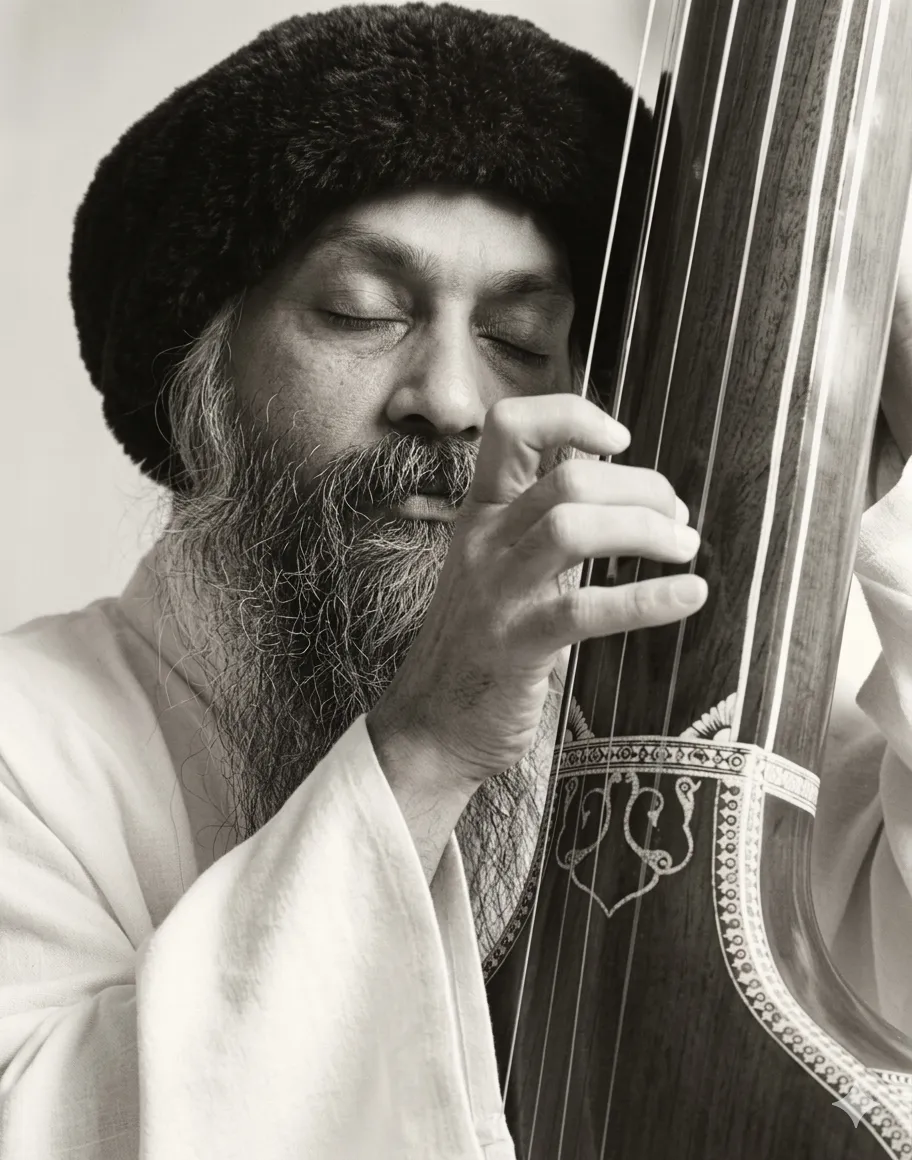
Osho's perspective on Nonduality
When Osho Spoke About Nonduality
Passages from the discourses where this theme comes alive.
Osho, if the truth of life is nonduality, then why is there duality?
One world, shaped into the visible. One imagining, merely possible. One world, incessantly eloquent. One solitude, soundless. One unbroken surge of movement. One unmoving, waveless stillness. Two readings, one poem. There are not two. There are two readings—the poem is one. Truth is one. Look while half-asleep and the world appears. Look awake, and the Divine appears. The world and the Divine are not two different things. The sleeping person, when he looked for the Divine, saw the world; and the awakened person, when he looked at the world, saw the Divine. The awakened one says: the world is not; the Divine is. The sleeping one says: where is the Divine? There is only the world. These are two perspectives; the truth is one. Two readings, one poem!
पांचवां प्रश्न: ओशो, जीवन का सत्य यदि अद्वैत है, तो फिर द्वैत क्यों है?
एक जगत रूपायित प्रत्यक्ष एक कल्पना संभाव्य एक दुनिया सतत मुखर एक एकांत निस्स्वर एक अविराम गति उमंग एक अचल निस्तरंग दो पाठ, एक ही काव्य। दो नहीं है। दो पाठ हैं--काव्य एक ही है। सत्य तो एक ही है। सोये-सोये देखो तो संसार मालूम पड़ता है। जाग कर देखो, परमात्मा मालूम पड़ता है। संसार और परमात्मा ऐसी दो चीजें नहीं हैं। सोये हुए आदमी ने जब परमात्मा को देखा तो संसार देखा और जागे हुए आदमी ने जब संसार देखा तो परमात्मा को देखा। जागा हुआ आदमी कहता है: संसार नहीं है, परमात्मा है। सोया हुआ आदमी कहता है: कहां है परमात्मा? संसार ही संसार है।
Osho, from the exposition of Lao Tzu’s nondual philosophy it is clear that he had attained supreme knowing. Then why is it that only a handful in the world have taken his vision of life as their guiding light? Is this very lack of acceptance not a harsh criticism of his standpoint? And does the wide adoption of Aristotle not prove the excellence of his science? Please throw light on this!
These statements of Lao Tzu are among the finest ever uttered by man. He stands on the last frontier where nothing more can be said—beyond is silence. On that ultimate boundary he says a few things. Only when someone reaches there can he understand; if he does not, he cannot. In that, there is no fault of Lao Tzu. And there are some things you will not know until they become part of your own experience. A small child—if you tell him things that are not part of his experience—will hear like a deaf person; he will forget. They will not even be imprinted on his memory, because only that is imprinted which matches experience. Our experience must resonate somewhere. What Lao Tzu says does not match our experience anywhere. That his book survives at all—is that not something! His words do not meet our experience anywhere. Lao Tzu says:…
प्रश्न: ओशो, लाओत्से के अद्वैत मूलक दर्शन की व्याख्या से पता चलता है कि वह परम ज्ञान को उपलब्ध हो चुका था। फिर क्या कारण है कि संसार के इने-गिने लोगों ने ही उसके जीवन-दर्शन को अपना मार्ग-दर्शक बनाया? क्या उसकी यह विफलता ही उसके दृष्टिकोण की कटु आलोचना नहीं है? और क्या अरस्तू का अपनाया जाना उसके विज्ञान की उत्कृष्टता का प्रमाण नहीं है? कृपया इस पर प्रकाश डालें!
ये जो लाओत्से के वक्तव्य हैं, ये श्रेष्ठतम वक्तव्यों में से कुछ हैं, जो मनुष्य ने कभी भी दिए हैं। बहुत आखिरी जो कहा जा सकता है, जिसके आगे कहने का कोई उपाय ही नहीं बचता, उस बाउंड्री लैंड पर, उस सीमांत पर लड़खड़ाता हुआ आदमी है लाओत्से, जिसके पार निःशब्द है। बस आखिरी सीमा पर वह कुछ कह रहा है। तो वहां तक जब कोई पहुंचता है, तो समझ में आता है; नहीं पहुंचता, तो नहीं समझ में आता है। उसमें लाओत्से का कसूर नहीं है। फिर कुछ बातें हैं, जो तब तक आपको पता नहीं चलेंगी, जब तक आपके अनुभव का हिस्सा न बन जाएं। एक छोटा बच्चा है। उससे हम कुछ ऐसी बातें करें, जो उसके अनुभव का हिस्सा नहीं हैं। सुन लेगा, बहरे की तरह; भूल जाएगा। वे उसकी स्मृति में भी टंकेंगी नहीं। क्योंकि स्मृति में वही टंक सकता है, जो अनुभव से मेल खा जाए। भूल जाएगा। हमारा अनुभव भी तो कहीं मेल खाना चाहिए! अब लाओत्से जो भी कहता है, हमारा अनुभव कहीं भी मेल नहीं खाता। बस लाओत्से की किताब बची है, यही क्या कम है! …
Osho, why has this silent experience of the Nameless been given dualistic names like Heaven and Earth, or consciousness and matter? Why has nonduality not been expressed?
Expression can only be of duality; nonduality remains inexpressible. So, at the most, in speaking, what can be done is two—in speech. The nearest to truth that speech can come is two—in speech. Outside speaking, only one remains. But language cannot say anything without breaking it into two. If Lao Tzu is speaking, writing, he is committing the minimum mistake possible. Nothing more accurate can be done with words. And even if we want to deny this, we will still have to use words. Then we say “nondual”—not two. Yet to say “not two” we still use the two. Even to say “not,” one has to say it. The two will follow us. As long as we make the effort to speak, the two will follow us. Leave speaking, and the one remains. You may say, “Why don’t we just say ‘one’?” But we don’t notice what happens. The moment…
प्रश्न: ओशो, अनाम की इस मौन अनुभूति को स्वर्ग और पृथ्वी या चेतना व पदार्थ, ऐसा द्वैतमूलक नाम क्यों दिया गया है? अद्वैत की अभिव्यक्ति क्यों नहीं की गई है?
अभिव्यक्ति द्वैत की ही हो सकती है; अद्वैत अनभिव्यक्त रह जाता है। तो जो अधिकतम किया जा सकता है, वह दो--बोलने में। निकटतम जो सत्य के है, वह दो--बोलने में। बोलने के बाहर तो एक ही रह जाता है। लेकिन भाषा किसी भी चीज को दो में तोड़े बिना नहीं बोल सकती है। लाओत्से बोल रहा है, लिख रहा है, तो जो न्यूनतम भूल हो सकती है, वह कर रहा है। इससे ज्यादा ठीक बात नहीं हो सकती। और अगर हमें इसे भी इनकार करना हो, तो भी शब्द का ही उपयोग करेंगे। तो हम कहेंगे अद्वैत, दो नहीं। लेकिन फिर भी हमें दो का तो उपयोग करना ही पड़ेगा। नहीं कहने के लिए भी कहना पड़ेगा, दो नहीं। वह दो तो हमारा पीछा करेगा ही। जब तक हम बोलने की चेष्टा करेंगे, दो हमारा पीछा करेगा ही। बोलना छोड़ें, तो एक रह जाता है।
Osho, Sahajo, who has realized nonduality, says, “Practice devotion without desire.” But then the question arises: how can the devotee and God remain separate? Kindly clarify.
Practice devotion without desire! Nishkama bhakti—desireless devotion. So devotion can be of two kinds: one with desire, one without desire. With desire means: some demand. Without desire means: no demand. Without desire means: the joy is in devotion itself. You dance and sing; dance, kirtan, bhajan are themselves the goal. You sing because singing is bliss. You dance because dancing is bliss. There is no reward beyond the dance. After dancing we will not wait before God saying, “We danced so long; now give us a prize, now let us go home.” A devotee’s dance is not the dance of a courtesan, who dances while waiting for a payoff. A devotee’s dance is the dance of existence—there is nothing further to ask for. The dance is the final moment of joy, ahobhava—a sense of wonder. So desireless devotion means: devotion itself is bliss. Devotion with desire means: devotion is a…
चौथा प्रश्न: ओशो, अद्वैत को उपलब्ध सहजो कहती है: ‘भक्ति करै निहकाम।’ पर प्रश्न उठता है कि भक्त और भगवान अलग कैसे रहे? कृपापूर्वक इसे स्पष्ट करें।
भक्ति करै निहकाम! निष्काम भक्ति। तो भक्ति दो तरह की हो सकती है। एक सकाम, एक निष्काम। सकाम का अर्थ है: कोई मांग। निष्काम का अर्थ है: कोई मांग नहीं। निष्काम का अर्थ है: भक्ति में ही आनंद है। नाचते हैं, गीत गाते हैं, नर्तन, कीर्तन, भजन अपने आप में ही लक्ष्य है। गीत गाते हैं, गीत गाने में मजा है इसलिए। नाचते हैं, नाचने में मजा है इसलिए। नाचने के पार कोई पुरस्कार नहीं है। नाचने के बाद परमात्मा से हम प्रतीक्षा न करेंगे कि इतनी देर नाचे अब पुरस्कार मिल जाए, अब घर जाएं। भक्त का नृत्य कोई नर्तकी का नृत्य नहीं है, जो नाच रही है और राह देख रही है, कुछ मिल जाए। भक्त का नृत्य अस्तित्व का नृत्य है, जो कुछ मांगने को है ही नहीं आगे। नृत्य आखिरी घड़ी है आनंद की, अहोभाव है।
Why is Lao Tzu's vision of life not widely accepted despite his attainment of supreme knowing?
outcomeProfound Quotes on Nonduality
Explore our structured collection of meaning-mapped quotes regarding Nonduality.