
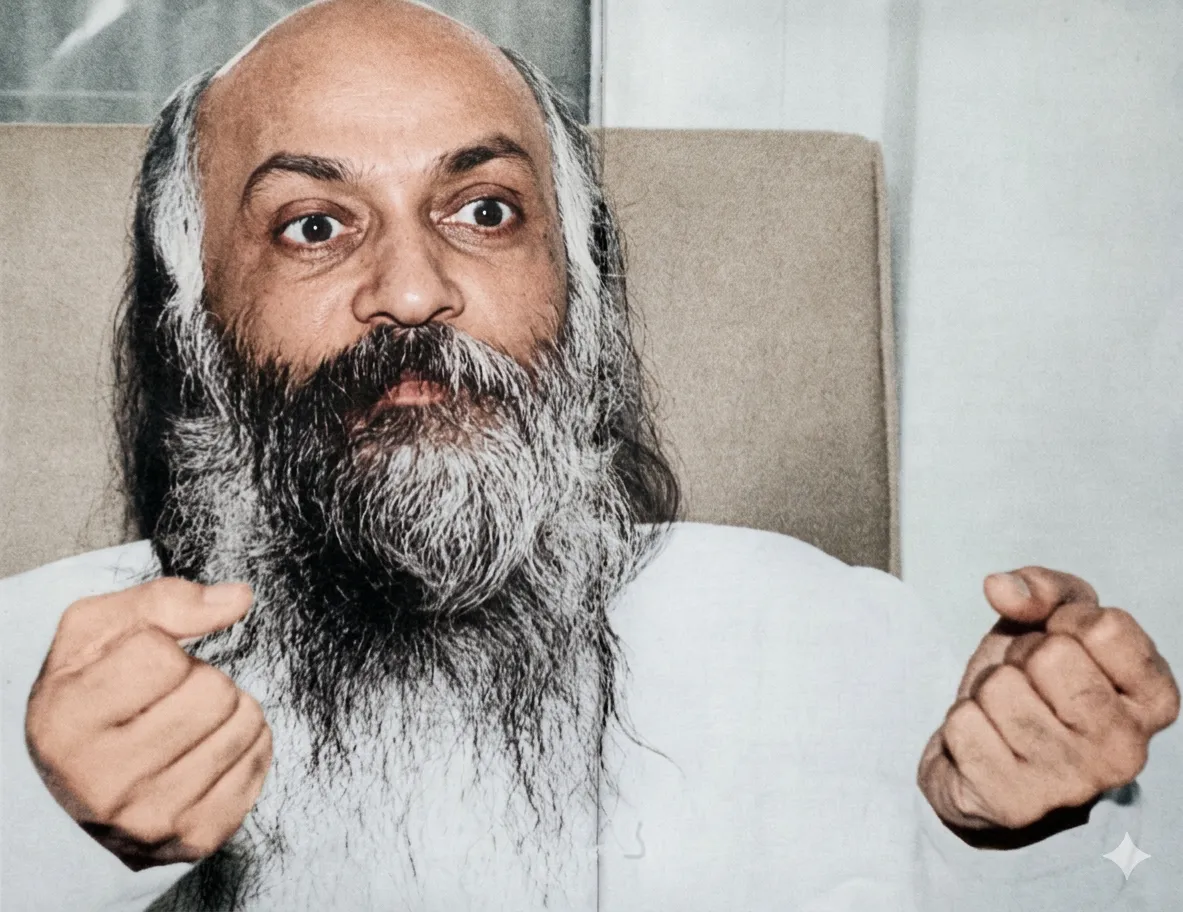
You change when you fully go through something until it feels completely ‘enough,’ and then you naturally turn around.
From the Discourses
Passages where Osho speaks to this question — each links to the complete discourse.
Question: Osho, to me the present state of world affairs appears illusory. Eminent scholars from different walks of life offer various themes for the transformation of life. For instance, religious leaders affirm that God or religion alone is omnipotent and can transform life and provide heaven. Sociologists, politicians, educationists and moralists believe that only better forms can create a better society. Naturalists say that understanding nature will bring transformation. Whereas psychologists and psychopathologists believe that psychoanalysis, tranquilizers, sedatives or brainwashing agents can transform life, etc., etc. But to me, sir, all this appears to be merely a partial transformation. Would you suggest what total and spontaneous transformation is? ... As you say: clothes are fine, houses are fine, roads are fine; all kinds of instruments have been developed by which man’s senses have become a hundred million times more mobile.
वह जो आपने कहा, कपड़े ठीक हो गए हैं, मकान ठीक हो गए हैं, सड़कें ठीक हो गई हैं, सब तरह के साधन विकसित हो गए हैं जिससे मनुष्य की सब इंद्रियां करोड़ गुना गतिमान हो गई हैं। आखिर पैर ही है जो स्पुतनिक में गतिमान हो गया है। और हाथ ही हैं जो तारों तक पहुंच गए हैं। और कान ही हैं, जो रेडियो बन गया है। और वाणी ही है, जो आज सारे जगत में सुनी जा सकती है। सारी व्यवस्था कर ली है आदमी के सुख की। लेकिन आदमी कहीं खोया हुआ मालूम पड़ता है, जिसके सुख का इंतजाम किया है उसका पता नहीं चल रहा है कि वह कहां है! इंतजाम पूरा हो गया है और इंतजाम में हम इतने व्यस्त थे कि हम भूल ही गए थे कि जिसके लिए इंतजाम किया है, जिस मेहमान के लिए घर सजाया है, सोफे लगाए हैं, चित्र लटकाएं हैं, संगीत बजाया है, फूल लगाए हैं, सुगंध छिड़की है, हमेशा आयोजन में इतने व्यस्त थे कि हम भूल ही गए हैं कि वह मेहमान कहां है। अब जब आयोजन पूरा हो गया है तो खोज शुरू हुई है कि वह मेहमान कहां है, वह अतिथि कहां है? उसका कोई पता नहीं चलता। …
Osho, when we are reborn, where is the accounting kept? What remains?
We are all bundles of habits. If you want to change these habits, resolve is needed. And the beginning of resolve is this: that it dawns on you that they can be changed. If you think they cannot be changed, your resolve will die completely. A German Jew, Frankl, during the last world war was imprisoned in a great camp. He has written—he has written very astonishing things—in his memoirs. Because he is a psychologist, he kept observing what was happening. December was approaching; the festival days were near. All the prisoners hoped that at least around Christmas there would be release; that around Christmas Hitler would show mercy and people would be freed. Frankl writes: until Christmas, however many tortures the prisoners were given, no one died. People remained ill, but there was a hope—Christmas is approaching. With that hope, there was strength in their life-breath. He writes: the…
पूछा है कि ओशो, जब हम पुनर्जन्म लेते हैं, तो हिसाब-किताब कहां रहता है? क्या रहता है?
… इन आदतों को बदलना हो तो संकल्प की जरूरत है। और संकल्प की शुरुआत इससे होती है कि आपको यह खयाल में आ जाए कि ये बदली जा सकती हैं। अगर आपको यह खयाल है कि ये बदली ही नहीं जा सकतीं तो आपका संकल्प बिलकुल मर जाएगा। एक जर्मन यहूदी फ्रैंकल पिछले महायुद्ध के वक्त जर्मनी के एक बड़े कारागृह में बंद था। उसने लिखा है--बड़ी हैरानी की बातें लिखी हैं--उसने अपने संस्मरणों में लिखा है। क्योंकि वह एक मनसविद है, वह निरीक्षण करता रहा, क्या हो रहा है। दिसंबर करीब आ रहा था। त्योहार के दिन करीब आ रहे थे। और सभी कैदियों को यह आशा थी कि कम से कम क्रिसमस के करीब छुटकारा हो जाएगा। क्रिसमस के करीब हिटलर दया करेगा और लोग छोड़ दिए जाएंगे। फ्रैंकल ने लिखा है कि क्रिसमस तक कितनी ही तकलीफें दी गईं कैदियों को, कोई नहीं मरा। लोग बीमार रहे, लेकिन एक आशा थी--क्रिसमस करीब आ रहा है। …
Beloved Osho, I always want a total change in my life because I feel so discontented, so limited, so frustrated. When I heard you saying, "come closer," it touched my heart deeply. I saw that I am always managing my life reasonably and out of my mind, that I live a life full of lies and go on postponing being really alive. I decided to stay here with you longer than I intended to, in spite of all reasons and problems that may come. But I don't feel at ease, and I don't know if it is not again something coming from my mind. Will you please say something about the miracle of transformation and h
The first thing to remember is, never ask for the impossible. Begin slowly, bit by bit, step by step. Just by walking step by step, you can cover ten thousand miles easily. But if you start thinking from the very beginning that "I want to cross ten thousand miles" your legs may start wavering, your heart may start feeling tremendously afraid. Your mind will say, "You are asking too much; it is unreasonable. You are a small human being. Ten thousand miles... just walking one step each time -- because nobody can walk two steps at one time. Ten thousand miles looks too big." Make small goals. You are asking for total change. You don't see the impossibility of it at this point. At some other point it will not be impossible, but at this point it will be impossible to ask for a total change, because there will be…
Osho, just now you said that lust—more lust—means a greater distance from the Divine; and elsewhere you say that transformation happens only at the peak of lust. Please clarify.
But we cannot muster any courage. Hence the difficulty of those in the middle: they continue to believe both sides. They read the Gita in the morning and say, “Lust is the enemy,” and then spend their days and nights fantasizing about lust. “Krishna says so,” they say—but the heart says, “Lust is the friend.” So again they read the Gita in the morning, then live in lust for twenty-four hours, then read the Gita again. It becomes a routine. They live in lust and, by reading against lust, they also lighten their minds. This is a clever trick. Thus they do double work: they live in lust, and they also keep assuring themselves, “I am not a bad man—I read the Gita daily; lust is the enemy.” “I am a good man—only the time hasn’t come yet; the Lord’s grace has not yet descended; past-life karmas are obstructing; the…
प्रश्न: ओशो, अभी आपने कहा कि वासना, अधिक वासना का अर्थ है, परमात्मा से अधिक दूरी; और दूसरी जगह आप कहते हैं कि वासना की चरम ऊंचाइयों पर ही रूपांतरण होता है। कृपया इसे स्पष्ट करें।
लेकिन हम, हम कोई हिम्मत नहीं जुटा पाते। इसलिए बीच के आदमियों की कठिनाई है; वे दोनों बातें मानते रहते हैं। इधर रोज गीता भी पढ़ लेते हैं और कहते हैं कि वासना वैरी है, और दिन-रात वासना को सोचकर सोचते भी हैं कि होता है। कहते तो हैं कृष्ण, पता नहीं, चित्त तो यही कहता है कि वासना ही मित्र है। इसलिए फिर सुबह गीता पढ़ लेते हैं, फिर चौबीस घंटे वासना में जीते हैं, फिर सुबह गीता पढ़ लेते हैं। फिर उनकी यह नियमित आदत हो जाती है। वासना में भी जीते हैं, वासना के खिलाफ पढ़कर अपने मन को भी हलका कर लेते हैं। यह बड़ी तरकीब है चालाक, कनिंग! इस भांति वे दोहरा काम करते हैं। इस भांति वे वासना में भी जीते रहते हैं और अपने मन को भी समझाते रहते हैं कि मैं कोई बुरा आदमी नहीं हूं, रोज गीता पढ़ता हूं, वासना वैरी है। आदमी तो अच्छा हूं, जरा समय नहीं आया; अभी प्रभु की कृपा नहीं है; अभी पिछले जन्मों के कर्म बाधा डाल रहे हैं; अभी स्थिति नहीं बनी, इस तरह समझाते। …
Osho, yesterday you said that jealousy is included in respect. I have immense respect for you, but the jealousy inherent in it keeps poisoning it, and I feel guilt and pain. Does reverence transcend this poison-laced respect?
It needs a little explaining—it's a delicate point. Whenever you respect someone, you do so because you see in that person something you do not have. You respect because you glimpse in the other something you would also like to possess. A beggar respects an emperor because he, too, longs to be an emperor. So on the one hand he respects, and inside he also envies. Because he is not yet an emperor but wants to be. You have attained what he wants to attain. He respects you as skillful, successful: “I stand far back in the line; you have gone ahead to where I should have been.” So you are powerful, clever, intelligent, strong—he respects you. But inside a fire of jealousy also burns—if he gets the chance, he would like to be in your place and push you aside. And if the beggar gets that chance, he will…
तीसरा प्रश्न: ओशो, आपने कल कहा, आदर में ईर्ष्या सम्मिलित है। आपके प्रति मुझमें अपार आदर है, लेकिन उसमें निहित ईर्ष्या उसमें जहर घोलती रहती है और मैं ग्लानि और पीड़ा का अनुभव करता हूं। क्या श्रद्धा इस विष-भरे आदर का अतिक्रमण करती है?
भिखारी सम्राट का आदर करता है, क्योंकि उसकी भी आकांक्षा है कि सम्राट हो। तो एक तरफ आदर भी करता है, भीतर ईर्ष्या भी करता है। क्योंकि सम्राट अभी वह है नहीं, सम्राट होना चाहता है। तुम हो गए हो, तुमने वह पा लिया है जो वह पाना चाहता है। इसलिए तुम्हें आदर भी करता है कि तुम कुशल हो, सफल हो, मैं पंक्ति में बहुत पीछे खड़ा हूं, तुम आगे पहुंच गए हो, तुम उस जगह पहुंच गए हो जहां मुझे होना चाहिए था। इसलिए तुम शक्तिशाली हो, होशियार हो, बुद्धिमान हो, बलशाली हो, तुम्हारा आदर करता हूं। लेकिन एक भीतर ईर्ष्या की आग भी जलती है--अगर मुझे मौका मिले तो उस जगह मैं होना चाहूंगा, तुम्हें हटाना चाहूंगा। और जब मौका मिल जाएगा इस भिखारी को तो यह सम्राट को हटा कर धक्का दे देगा, सिंहासन पर बैठ जाएगा।