
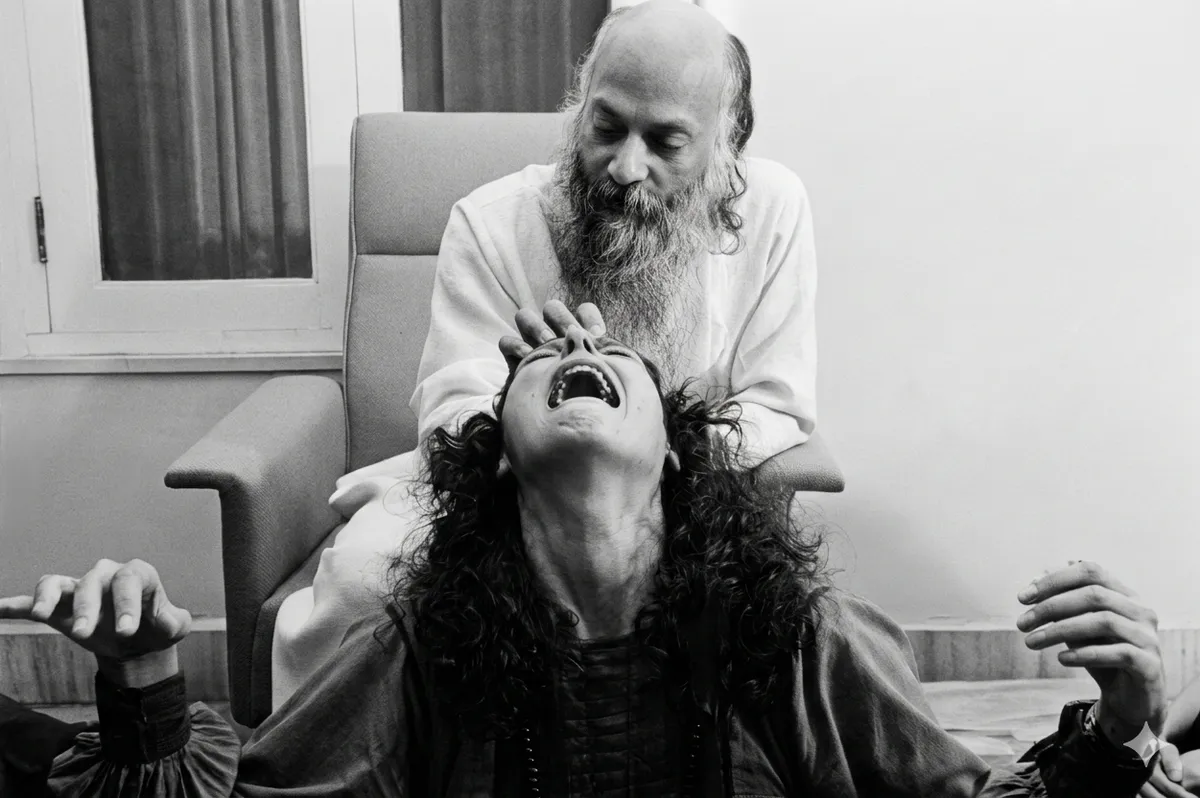
Osho's perspective on Buddha Psychology
When Osho Spoke About Buddha Psychology
Passages from the discourses where this theme comes alive.
Beloved Osho, what do you mean by "the psychology of the buddhas?" how is it different from the present psychology that prevails in the world?
It has to be understood; the people who came to Sigmund Freud, the founder of modern psychology, were all sick people -- obviously, otherwise why should they come to the psychoanalyst? They were seriously sick, their minds were falling apart. Sigmund Freud came in contact only with sick people -- that gave him the impression that man himself is sick. In a way he is logical because everybody he examined, everybody he analyzed, everybody he treated was sick. And these were high-class people, bourgeois -- professors, scientists, very rich people -- because a psychoanalyst's time is the costliest thing in the world today. All these people were basically living an insane life, but because everybody else is also living the same insane life you don't become aware of it. If Sigmund Freud denied that there is any possibility of a soul in man he cannot be blamed. He never came…
Beloved master, what is the psychology of the buddhas? It sounds like a science only for enlightened beings who need to pull, push, seduce, hit or kiss their disciples at the right moment, so that they don't wobble, get stuck or fall into traps. Can you please reveal some of your findings of the past thirty years?
Traditionally there are one hundred and eight methods of meditation. I have gone through all those methods -- not just by reading them; I have tried every method. My search was to find what is the essential core of all those one hundred and eight methods, because there is bound to be something essential. And my experience is that the essential of all meditations is the art of witnessing. And then I created my own methods because I had found the essential core. Those one hundred and eight methods have become, in a way, out of date. They were created by different masters for different kinds of people, to transform different minds. The contemporary mind did not yet exist; the contemporary mind needs new methods. The methods will differ only in non-essentials. The essential core, the very soul of the method, is going to be the same. This silence is…
'there is a new "fourth force" in psychology -- transpersonal psychology -- which seeks to explore the needs and aspirations that go beyond self-actualisation and humanistic psychology.' so says assagioli. Are 'transpersonal psychology' and your 'psycho-logy of the buddhas' synonymous?
Now what has Assagioli done? He has put that flower together again. That flower which had been pulled apart by Freud has been put together by Assagioli -- he calls it psycho-synthesis. But this flower is dead, it is not that unity which existed before Freud analysed it. Assagioli presupposes Freud -- without Freud there can be no Assagioli, remember this. If Freud had not existed there would have been no Assagioli. Freud does half the work and the other half is done by Assagioli. Freud dissects, Assagioli unites. But in the dissection the primal unity has disappeared. No, you can put it together but it will never be the same thing again. The flower cannot become alive again. Just by putting it together -- you can put it together very cleverly, you can glue it together with the best glue, invisible glue -- but still it will not be…
Question: BELOVED OSHO, ONCE YOU DESCRIBED YOUR WORK AS A SEARCH FOR THE PSYCHOLOGY OF THE BUDDHAS. YOU EXPLAINED THAT FREUD ESTABLISHED ONLY A PSYCHOLOGY OF PATHOLOGY. THEN CAME MASLOV, JANOV, ASSAGIOLI, PERLS AND THE PEOPLE WHO ELABORATED ON THE PSYCHOLOGY OF HEALTH. YOU ADDED THAT YOUR WORK WAS GOING FURTHER -- TRYING TO ESTABLISH A PSYCHOLOGY OF THE AWAKENED ONE, A PSYCHOLOGY OF THE BUDDHAS. YOU SAID THAT YOU WERE STUDYING US IN ORDER TO FIND OUT WHICH ARE THE DIFFICULTIES THAT A SEEKER FINDS ON THE PATH TOWARDS THE REALIZATION OF THE SELF, TOWARDS HIS OWN AWAKENING. NOW, YOU'VE BEEN STUDYING US FOR FIFTEEN YEARS, AND I WOULD LIKE YOU TO GIVE US SOME HINTS ON WHAT YOU FIND IN YOUR LIVING EXPERIMENT. ... Nijinsky, one of the greatest dancers of all the ages, died in a madhouse.
Profound Quotes on Buddha Psychology
Explore our structured collection of meaning-mapped quotes regarding Buddha Psychology.