
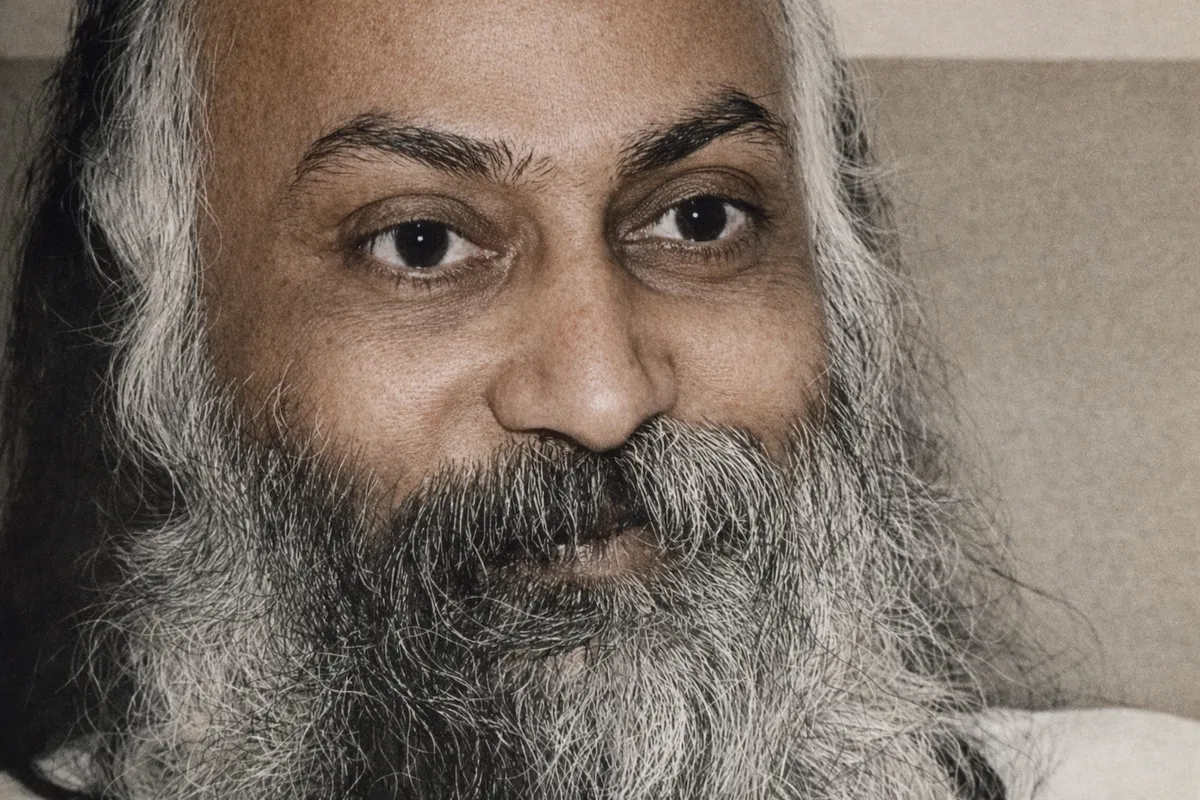
Sigmund Freud appears in Osho's discourses as a genuine pioneer with a fatal ceiling. Osho credited him with forcing humanity to face the unconscious, sex, and repression honestly — discoveries Osho noted the East had made millennia earlier — yet judged psychoanalysis a futile therapy: endless analysis of the mind from within the mind, blind to the meditative dimension that alone goes beyond it. He wanted a 'psychology of the buddhas' where Freud had built a psychology of pathology.
The passages below stake out that double verdict, each linked to the full discourse it comes from.
From the Discourses
Passages where Osho speaks on freud — each links to the complete discourse.
Osho, as I read your books and hear your discourses you seem to misquote and take out of context the words of sigmund freud. What is your point, Osho? I don't understand the trickery involved.
In a small southern Louisiana country town, the teacher of the one-room school was giving the lesson of the day on American history. Asking questions to 'dis little girl and 'dat little boy and 'dis little boy and 'dat little girl, she came to 'dis little boy named Beaudreaux, and she says, "Beaudreaux, who signed the Declaration of Independence -- uh?" Without batting an eye, Beaudreaux says, "Teacha, me -- I don't know. And that ain't all, I don't give a damn to know!" Upset with Beaudreaux's reply, the teacher instructed him to bring his father to school with him the next day. When Beaudreaux's father arrived the next day, the teacher asked him to sit at the back of the room and just observe. Continuing with the history lesson of the previous day, the teacher proceeded asking questions to 'dis little girl and 'dat little boy and 'dis little…
Osho, what is the relationship between meditation and patience?
If you sit to meditate to remove mental restlessness, you will keep looking back again and again: “Has it gone yet?” And the irony is that when you begin to meditate, restlessness will increase. Because what has been repressed will start surfacing; catharsis will begin. The rubbish you have kept hidden within and never allowed to express—meditation will break open those doors too. It will clean the house. Dust piled up for years, for births, will rise again; there will be gusts and storms. For a while even the little peace you had will be lost. Then you will panic: “I came for peace, and even what I had is gone.” Without patience, you could even become unhinged, because meditation brings such a great storm. The disease is not from a day or two; it’s from lifetimes. Meditation will break through all the layers to reach your innermost core. In…
दूसरा प्रश्न: ओशो, ध्यान और धैर्य में क्या संबंध है?
अगर मन की अशांति को मिटाने के लिए तुम ध्यान करने बैठे हो, तो तुम बार-बार लौटकर देखोगे, अब तक मिटी नहीं! और मजा तो यह है कि जब ध्यान शुरू करोगे, तो अशांति बढ़ेगी। क्योंकि जो दबी पड़ी है, वह भी प्रकट होगी। जो सदा-सदा से दबाई है, उसका भी रेचन शुरू होगा, कैथार्सिस होगी। जो कूड़ा-करकट भीतर छिपाकर बैठे रहे हो, प्रकट नहीं किया है, ध्यान उन द्वारों को भी तोड़ेगा। घर की सफाई करेगा। वर्षों की जमी धूल, जन्मों की जमी धूल उठेगी फिर से, अंधड़-तूफान होंगे। कुछ देर तो थोड़ी-बहुत जो शांति तुम्हारे पास थी, वह भी खो जाएगी। …
Osho, of that which is indescribable—by speaking of it, why would a Shandilya place a stone before humanity?
And if the choice is between God and these wandering ones—let no injustice be done to these wanderers. That is why Shandilya speaks. That is why Buddha had to speak. It is their great compassion. They have not placed stones in your way; they have given the key to turn those stones into steps. And at least do not be unjust to Shandilya by making such a charge. For Shandilya is not telling you to drop affection; he is saying, purify affection—stone becomes a step. Shandilya is not telling you to drop love; he is saying, love can become a step—purify it, it becomes devotion, and you will rise. Shandilya is not telling you to renounce the world; he is saying, do not hate the world—otherwise that very hatred will become the obstacle. Shandilya does not preach dispassion-as-aversion, asceticism, grim austerity—he is opening the doors of the temple of love.…
दूसरा प्रश्न: ओशो, जो वर्णनातीत है, उसे कह कर क्यों कोई शांडिल्य मनुष्यता के सामने एक पत्थर धर देता है?
और अगर परमात्मा और इन भटकते हुए लोगों के बीच चुनाव करना है, इनके साथ अन्याय न हो, इन भटकते लोगों के साथ अन्याय न हो, इसलिए शांडिल्य बोलते हैं। इसलिए बुद्ध को बोलना पड़ा। यह उनकी महाकरुणा है। तुम्हारे मार्ग में पत्थर नहीं रखे हैं, तुम्हारे मार्ग में जो पत्थर पड़े हैं, उनको कैसे तुम सीढ़ियां बना लो, इसके सूत्र दिए हैं। और कम से कम शांडिल्य के साथ तो तुम इस तरह की बात कह कर अन्याय मत करो। क्योंकि शांडिल्य तो तुमसे नहीं कह रहे हैं कि स्नेह छोड़ दो; कह रहे हैं, स्नेह को शुद्ध कर लो, पत्थर है, सीढ़ी बन जाएगा। शांडिल्य तो नहीं कह रहे हैं कि प्रेम छोड़ दो; शांडिल्य कह रहे हैं, प्रेम सीढ़ी बन सकता है, शुद्ध कर लो, श्रद्धा बन जाएगा, ऊपर चढ़ जाओगे। शांडिल्य तो नहीं कह रहे हैं संसार छोड़ दो; शांडिल्य तो कह रहे हैं, द्वेष करो ही मत संसार से, अन्यथा वही बाधा हो जाएगी। शांडिल्य तो विराग का, वैराग्य का, तप का, तपश्चर्या का कोई उपदेश नहीं दे रहे हैं, शांडिल्य तो द्वार खोल रहे हैं प्रेम के मंदिर के, और तुम कहते हो मार्ग में पत्थर...!
Osho, the psychologist Sigmund Freud spoke of the death-drive, Thanatos. Yesterday you spoke of jiveshana, Eros. Do you call Freud’s notion a spiritual aberration of the modern age? Kindly explain.
The third discovery is India’s. It is this: we are neither life nor death; these two are our legs. Duality appears such only when we fail to see the third. If the third becomes visible… synthesis. Understand it so: the notion of Eros, the life-drive, is the thesis. Then Thanatos, the death-drive, is the antithesis. If only the two remain, there will only be conflict; resolution becomes difficult. Had Freud lived a little longer—he did not—or in some next birth searched further, the synthesis, the dialogue, might have happened too: the final harmony, when he would have grasped the witness. He was on the right path; the destination was still incomplete, but the way was not wrong. The goal had not yet arrived; the journey was unfinished, but the direction was right. From life he had reached death; now only one move remained: to transcend both life and death. Astavakra…
पहला प्रश्न: ओशो, मनोवैज्ञानिक सिग्मंड फ्रायड ने मृत्यु-एषणा, थानाटोस की चर्चा की। आपने कल जीवेषणा, ईरोस की चर्चा की। फ्रायड की धारणा को क्या आप आधुनिक युग की आध्यात्मिक विकृति कहते हैं? कृपा करके हमें समझाएं।
तीसरी खोज भारत की है। वह भारत की खोज यह है कि न तो हम जीवन हैं और न हम मृत्यु हैं; ये दोनों हमारे पैर हैं। द्वंद्व इसलिए मालूम होता है, अगर हम तीसरे को न देख पाएं। अगर तीसरा दिखाई पड़ जाए...सिंथीसिस। ऐसा समझो, ईरोस की धारणा, जीवेषणा की धारणा है: थीसिस, एक वाद, एक सिद्धांत। फिर थानाटोस, मृत्यु-एषणा की धारणा है: प्रतिवाद, एंटी-थीसिस। अगर दो ही रहें तो विवाद ही होगा; हल होना मुश्किल हो जाएगा। फ्रायड अगर थोड़े दिन और जीता--नहीं जीया, किसी अगले जन्म में, कहीं और खोजबीन करते--सिंथीसिस, संवाद भी घटित होगा; वह समन्वय की अंतिम दशा भी घटित होगी, जब वह साक्षी को भी पकड़ लेगा। वह ठीक रास्ते पर था; मंजिल अभी अधूरी थी, मगर रास्ता गलत न था। अभी मंजिल आई न थी, यात्रा अधूरी थी; लेकिन मार्ग ठीक था, दिशा ठीक थी। जीवन से मृत्यु पर पहुंचा था; अब एक ही उपाय बचा था कि जीवन और मृत्यु दोनों का अतिक्रमण कर जाता।
Read 1 more passages on freud
Osho, I don't accept your criticism of sigmund freud. Do you accept a sannyasin who sometimes says no to what you say? I am not less neurotic than freud, but I think that I can become creative only if I learn to accept the neurotic part of myself. What do you say to this?
WHO HAS CRITICIZED SIGMUND FREUD? I was simply stating a few facts! To state a fact is not a criticism. If I call a blind man a blind man, I may be rude but I am not criticizing. I may be blunt, I may not be polite, but I am not criticizing. Freud was neurotic, and there are a thousand and one facts supporting this. Just look into Freud's biographies and you will come across those facts yourself. He was a homosexual. He wrote such stupid homosexual letters to a man that later on he asked the man again and again to destroy those letters, because when he became famous he was afraid that some day or other those letters would come to public notice. The major part of those letters was destroyed, but a few somehow survived. His whole life he was condemning homosexuality, and he had deep homosexual…
Understanding Osho's Reading of Freud
The threads that run through his discourses on freud.
What Psychoanalysis Brings: Almost Nothing
Asked what the revelation of the unconscious gave humanity, Osho answered without ceremony — and pointed at the founder's own terror of death as the measure of the method.
Almost nothing. Psychoanalysis is a futile exercise because it changes nothing: it does not create a new man, it does not bring peace to you. In fact even the founders of psychoanalysis like Sigmund Freud were so much afraid of death that you cannot believe it. No normal being is so afraid of death. The founder of psychoanalysis was so afraid that even the word "death" was not to be pronounced in front of him -- it was taboo. It was not to be talked about. Three times it had happened that somebody mentioned death and Sigmund Freud fell in a swoon, in a fit, became unconscious.The Path of the Mystic, Chapter 1, Question 5 →
A Psychology of Pathology
Osho positioned his own work as the step past Freud's: beyond the sick mind and even the healthy mind lies the dimension Western psychology has not touched.
The first thing: all the psychologies are of the mind. The psychology of the Buddhas will be of the no-mind.Light on the Path, Chapter 17, Question 1 →
Repression Doesn't Work — Mahavira Knew
Asked whether Freud's great conclusion was known before him, Osho answered that every liberated one has known it — Freud only found modern words for it.
Absolutely. There is no other way. Whenever a person has become free, it has never been through repression. Whenever freedom has happened, it has happened through awakening. It’s another matter that in those days the language was not clear, the expression not so refined.Mahaveer Meri Drishti Mein, Chapter 10, Question 42 →
Bringing the Underground to the Surface
Osho's clearest summary of what Freud saw truly: repression does not destroy anger, sex, or greed — it sends them underground, where they grow stronger.
But repression makes you false. It is not by repression that anger, sex, greed are destroyed, no. They are there -- just the labels are changed. They go into the unconscious, they start working from there: they go underground. And, of course, when they are underground, they are more powerful. The whole psychoanalytic movement tries to bring what is underground to the surface.The Tantra Vision Vol 2, Chapter 8, Question 4 →
Questions Osho Answered on Freud
1 questions in the library — the most sought-after:
Don’t cling to what Freud said—Osho uses such quotes only to wake you up, not to teach psychology.
Frequently Asked
Yes — he ranked Freud among the west's most consequential minds for dragging sex and the unconscious out of Victorian denial, and he used Freudian insights about repression constantly. His criticism was of the ceiling, not the foundation: psychoanalysis understands the illness but has no door to transcendence.
It never leaves the mind. Analysis rearranges the furniture of thought — trading one content for another over years on the couch — while witnessing steps out of the room altogether. In short: analysis studies the dreams; meditation wakes the dreamer.
A third psychology: beyond Freud's psychology of pathology and the humanists' psychology of health, a science of the awakened state — mapping how a seeker moves from mind to no-mind. Osho saw his work with disciples as an experiment toward it.