
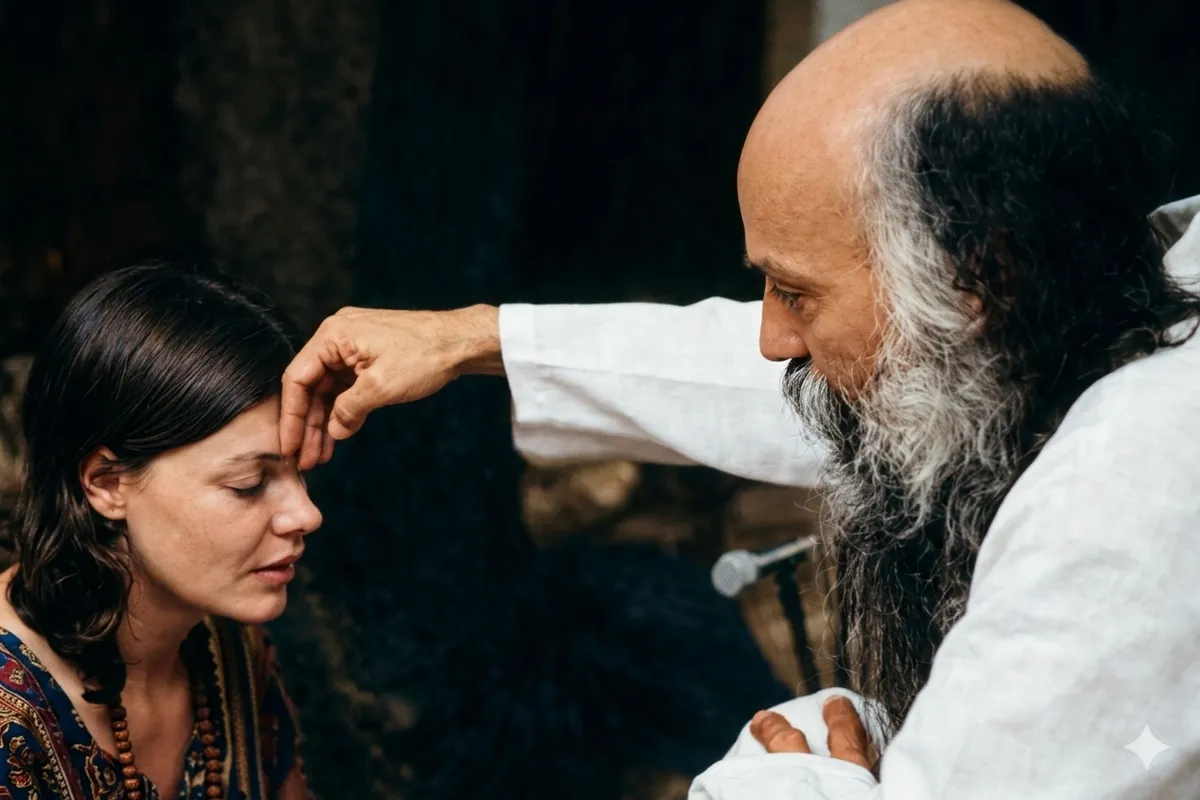
You can’t make a living truth by gluing ideas together; real wholeness comes from inner understanding, not mixing philosophies.
From the Discourses
Passages where Osho speaks to this question — each links to the complete discourse.
Osho, a part of my earlier question remained to be taken up. It is this: by combining Shankara’s supermoralism and Tilak’s activism, do you think the Gita would be complete? Because the supra-morality you speak of is what Shankara speaks of, not Tilak. Tilak is intensely moralistic. And the engagement you speak of is what Tilak speaks of; Shankara does not—he follows the path of renunciation (nivritti-marga).
A dead sum is only the complete total of its parts. A living whole is a little more than its parts. Consider yourself: if we calculate all the constituents of your body—how much iron, copper, aluminum, salt, water, phosphorus—we could list it all. In a human body, at best there are only a few rupees’ worth of materials; most of it—perhaps ninety percent—is just water. If we were to put all this on paper, add it up, the sum would be complete. But you would not be in it. Everything would be there—except you. Because you are a living person, something more than that sum. You are within the sum, yet you are not the sum. The total can be complete, and yet you will be absent. Krishna’s life-vision is an organic unity. A thousand commentaries have been written on its many facets. Ramanuja says one thing, Shankara another, Nimbarka…
ओशो, मेरे पूर्व प्रश्र्न का एक अंश बाकी रहा लेने से। वह यह कि शंकर का सुपरामॉरलिज्म और तिलक का एक्टिविज्म, दोनों को मिलाने से क्या आप मानते हैं कि गीता पूरी हो जाएगी? क्योंकि जिस अति-नैतिकता की बात आप करते हैं, उसकी बात शंकर करते हैं, तिलक नहीं। तिलक घोर नैतिकवादी हैं। और जिस प्रवृत्ति की बात आप करते हैं, उसकी बात तिलक करते हैं, शंकर नहीं, वह निवृत्तिमार्गी हैं।
मृत जोड़ अपने अंशों का पूरा जोड़ होता है। जीवंत जोड़ अपने अंशों से थोड़ा ज्यादा होता है। जीवंत जोड़ का मतलब है, जैसे आप हैं, अगर आपके शरीर के हम सारे अंगों का हिसाब-किताब कर लें कि कितना लोहा है आपके भीतर, कितना तांबा है आपके भीतर, कितना अल्युमिनियम है आपके भीतर, कितना नमक है, कितना पानी है, कितना फास्फोरस है, कितना क्या है वह हम सब जोड़ कर निकाल लें, तो एक आदमी के भीतर मुश्किल से तीन-चार रुपये का सामान होता है। इससे ज्यादा नहीं होता। ज्यादा हिस्सा, कोई नब्बे हिस्सा तो पानी ही होता है। जिसका दाम लगाना फिलहाल ठीक नहीं। बाकी जो एल्युमिनियम, फास्फोरस, लोहा इत्यादि सब होता है मिला-जुला कर, वह कोई तीन और चार रुपये, पांच और चार रुपये के बीच में होता है। यह सारा अगर हम एक कागज पर रख लें, सब, और इसको जोड़ दें, तो जोड़ तो हो जाएगा, लेकिन आप उसमें बिलकुल नहीं होंगे; आप भर नहीं होंगे, और सब होगा। क्योंकि आप एक जीवंत व्यक्ति थे, जो इस जोड़ से ज्यादा थे। इस जोड़ के भीतर थे, लेकिन जोड़ ही नहीं थे। इस जोड़ के भीतर मौजूद थे, लेकिन जोड़ ही नहीं थे। यह जोड़ पूरा हो जाएगा और आप नहीं होंगे।
Questioner: a part of my question remains unanswered. Do you think the geeta will be complete if shankara's supra-moralism and tilak's activism are made into one piece? Because the supra-rationality that you speak about is echoed by shankara, not tilak; the latter is out and out a moralist. On the other hand tilak, not shankara echoes your positivism, your dynamism. Shankara is for renunciation.
Putting different parts together is a mechanical process, it cannot be organic. We can break up a machine into its parts and remake it by putting the parts together again. But we cannot do the same with a live, organic body. Please bear in mind this fundamental difference between organic unity and mechanical togetherness. While a mechanical combination is equal to the totality of parts, an organic unity is much more than the sum total of its parts. For example. if we make a list of all the ingredients that make up a human body -- like iron, copper, sodium, aluminum, phosphorus and the rest of it, they will be worth four to five rupees, not more, Nine-tenths of a human body is water, which does not cost anything at the moment. And the rest of these things are available in the market. If however, you put them all together…
Osho, a very small question: you just said that a person is partly introvert and partly extrovert. Does this mean that one will have to practice both Sankhya and Yoga together?
But no one properly understood this truth: the Gita is a consideration of all the paths. And when Krishna speaks of one path, he becomes so absorbed and one with it that he says, “This is the ultimate; this alone is the ultimate.” When that proves useless for Arjuna, he speaks of the next path; then again he says to Arjuna, “This alone is the ultimate; this is the absolute; this is the complete truth.” Because Krishna wants Arjuna to choose it. And since Arjuna is already indecisive, if Krishna were to speak in the language of syadvada—“perhaps this is right, perhaps that is right”—then choice would become impossible for Arjuna. If Krishna were to say, “That is also right, this is also right; for some that is right, for others this; sometimes that, sometimes this,” then for Arjuna—caught as he is in indecision, in anxiety, with no path in…
प्रश्न: ओशो, एक बहुत ही छोटा-सा प्रश्न है, आपने अभी-अभी कहा कि व्यक्ति कुछ अंतर्मुखी है और कुछ बहिर्मुखी है। इसका अर्थ क्या यह है कि व्यक्ति को सांख्य और योग दोनों की साधना साथ-साथ करनी पड़ेगी?
लेकिन कोई भी इस सत्य को ठीक से नहीं समझ पाया कि गीता समस्त मार्गों का विचार है। और जब एक मार्ग की कृष्ण बात करते हैं, तो उस मार्ग से वे इतने लीन और एक हो जाते हैं कि वे कहते हैं, परम है, यही परम है। जब अर्जुन पर वह व्यर्थ हो जाता है, तब वे दूसरे मार्ग की बात करते हैं। तब वे अर्जुन से फिर कहते हैं, यही परम है, दिस इज़ दि अल्टिमेट, यही सत्य है पूर्ण। …
Question: Osho, from Krishna’s personality, his flute, his Radha, his rasa-leela up to the Sudarshan Chakra, we’ve had the chance to learn so much. Today we are eager to hear, from your own lips, a new form of Krishna. We would like you to present your thoughts on Krishna’s sadhana, his philosophy, and the worship associated with him, so that we may come to know another aspect of Krishna. Krishna dispelled the delusion of only one Arjuna; here we are all Arjunas, all beset by delusion, and you alone are authorized to dispel the delusion of us all. In the last five days you described Krishna—the butter-thief and the dancer of the rasa—as the center of the fullness of vast life, or of the fullness of yoga.
Question: QUESTIONER: YOU SAID YESTERDAY THAT KRISHNA IS MAKING A JOKE WHEN HE SAYS, "SURRENDER TO ME, ABANDONING ALL OTHER DUTIES," AND THAT "I WILL COME FOR THE ESTABLISHMENT OF RIGHTEOUSNESS AND FOR THE PROTECTION OF THE RIGHTEOUS AND FOR THE DESTRUCTION OF THE UNRIGHTEOUS." HOWEVER, IT SEEMS TO ME THAT WHILE THE KRISHNA OF THE GEETA IS NOT GIVEN TO JOKING, PERHAPS THE KRISHNA OF THE BHAGWAD IS. BUT BECAUSE OF OUR UNCRITICAL ATTITUDE WE MIX UP THE TWO KRISHNAS AND TAKE HIM FOR ONE, AND THEN WE TEND TO THINK THAT THE KRISHNA OF THE GEETA IS JOKING TOO. WE HAVE TO BE CLEAR, WHEN WE TALK ABOUT THE KRISHNA OF THE GEETA, THAT HE HAPPENED SOME TWO THOUSAND YEARS BEFORE THE KRISHNA OF THE BHAGWAD, AND THAT THEY ARE CLEARLY TWO DIFFERENT PERSONS.