
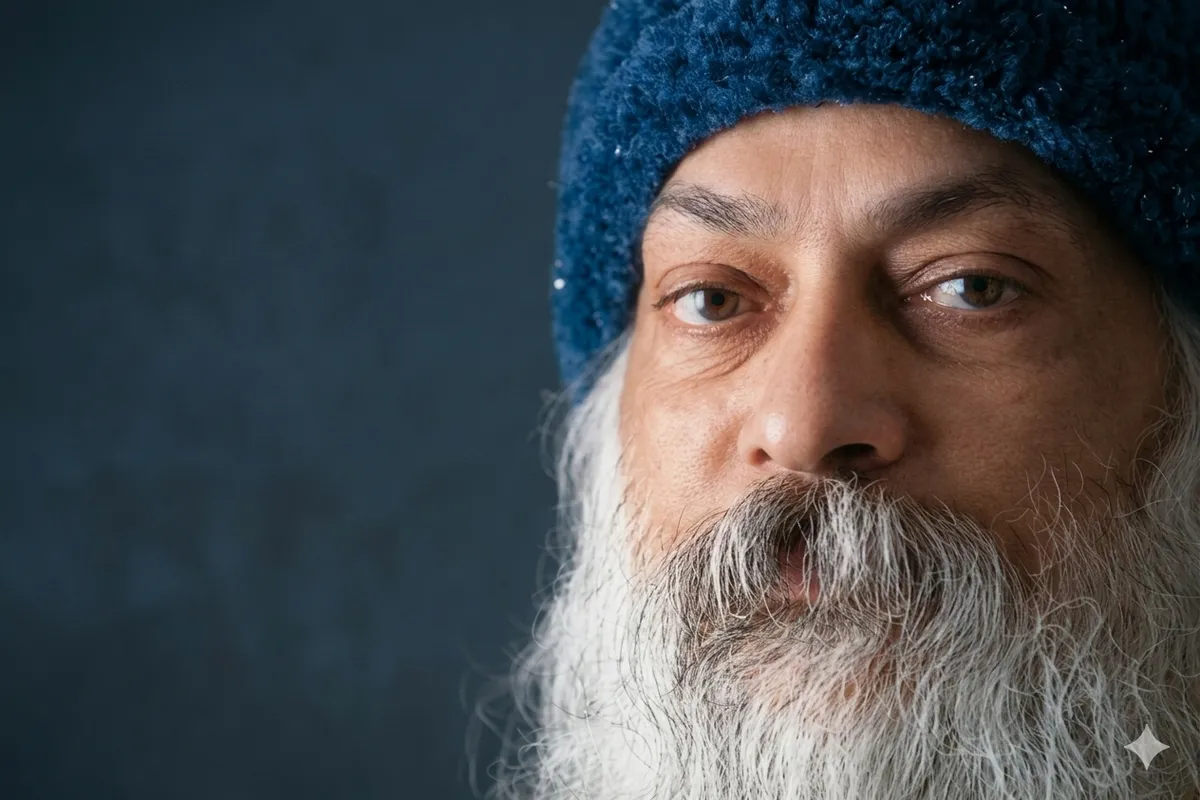
You’ll hear what the cat or Buddha says only when you’re tuned like them on the inside—truly open, not just hearing words.
From the Discourses
Passages where Osho speaks to this question — each links to the complete discourse.
You said a cat is as aware as a buddha. But why is a cat not willing to give a discourse every morning like you?
Cats are always willing -- but you have to be ready to be mice. Cats can speak only to mice. Become rats, and cats will deliver discourses. They always will, but the whole point is of your being receptive at that level. Trees are speaking: become a tree and you understand. Birds are speaking: become a bird and you understand. And you cannot understand me if you don't become a buddha. I am delivering the discourse but don't be deceived by it, don't think that you are understanding it also. I am talking -- that is certain. But are you hearing me? That is not so certain. You appear to listen to me, but that's more or less appearance. Sometimes I talk for one and a half hours, but rarely you listen -- sometimes for a single second or two seconds or three seconds, then again you are fast asleep.…
Osho, for forty years continuously Buddha gave discourses and sermons, and it is said that he did not speak a single word. Likewise, you too have been speaking and giving discourses for twenty years, and it could be said that you do not speak a single word. Is this true?
There is a sweet story about Mahavira. The Jains, in their rigidity, clung to the letter and missed the essence. The story is that Mahavira never spoke, and yet people heard. This is a difficult matter: Mahavira did not speak, yet people heard. Mahavira did not speak in any language that the ears can hear. The Jains say his speech is soundless—nishabd. There are no words in it. Yet people heard—those who could. If they too became wordless, sat near Mahavira in silence, they heard. Therefore there is another story in Mahavira’s life, important to note: wild animals heard him, gods of the sky came to listen, birds and beasts came, ghosts and spirits were present. The Jains have great difficulty explaining how birds and beasts can hear. Certainly, if Mahavira spoke in a language, then even among humans only those who knew that tongue could understand. If I am…
Beloved Osho, lord buddha kept on discoursing and giving sermons continuously for forty years, yet it is said that he never spoke a single word. The same way you are discoursing and giving sermons continuously for the past twenty years and it can be said that you do not speak even a single word. Is it true?
Sometime visit a madhouse: the doctor there seems to be crazier than the patients. The patients are mad without worries, but this poor man has to suffer the madness of so many of them. In treating all these mad people, the psychologists themselves reach to the same stage of madness. The qualities travel through the words too. So an intelligent person will listen only to the words that are coming out of an inner emptiness, an inner peace, that are born in the inner depths. If the words are coming from an inner dis-ease, then close your ears -- it is better to be deaf to them. This will protect you. And likewise, don't look at the wrong -- because by looking at it, it is entering you. And don't touch the meaningless, because the very touch of it will affect you. But we are not aware of all this.…
When you wake up in the morning and you hear the birds sing and you smell the air, do you never think, "I want just to enjoy that, and I don't feel like giving a lecture"?
But there are people who really don't want to listen; they have some investment in not listening. There are people who come to listen, and yet don't want to listen. They cannot miss listening, and they cannot allow it either. When they are not here they feel that they are missing something, they should have been here. When they are here they become stiff, they become afraid, they become scared. If they listen too much, if they go into it too much, maybe they will not be able to return. This is how they go on hanging; they remain in a limbo. I have heard.... Mulla Nasruddin inserted a classified in a local newspaper offering a one-hundred-rupee reward for the return, with no questions asked, of his wife's pet cat. "That's a mighty big reward for a cat -- and in India!" observed the clerk, accepting the advertisement. "Not for…
Nansen found two groups of monks squabbling over the ownership of a cat. Nansen went to the kitchen and brought back a chopper. He picked up the cat and said to the monks, "if any of you can say a good word, you can save the cat." not a word was said, so nansen cut the cat in two and gave half to each group. When joshu returned that evening, nansen told him what had happened. Joshu said nothing. He just put his sandals on his head and walked out. Nansen said, "if you had been there, you could have saved the cat."
Mahavira and Buddha both insisted on nonviolence. The basic reason for not fighting is that once you stop fighting the ego cannot exist. Ego exists in fight; it is a consequence of fight. The more you fight the more ego exists. If you alone remained on the earth, nobody to fight with, would you have an ego? You would not have an ego. The other is needed to create it; the other is a must. Ego is a relationship, it is not in you. Remember, the ego is not in you, it is not located within you. It is always located within you and the other -- somewhere in between, where fight exists. There are two types of relationship: one is of fight, fear, hatred -- this creates ego -- the other is of love, compassion, sympathy. These are the two types of relationship. Wherever love is, fight ceases, ego…