
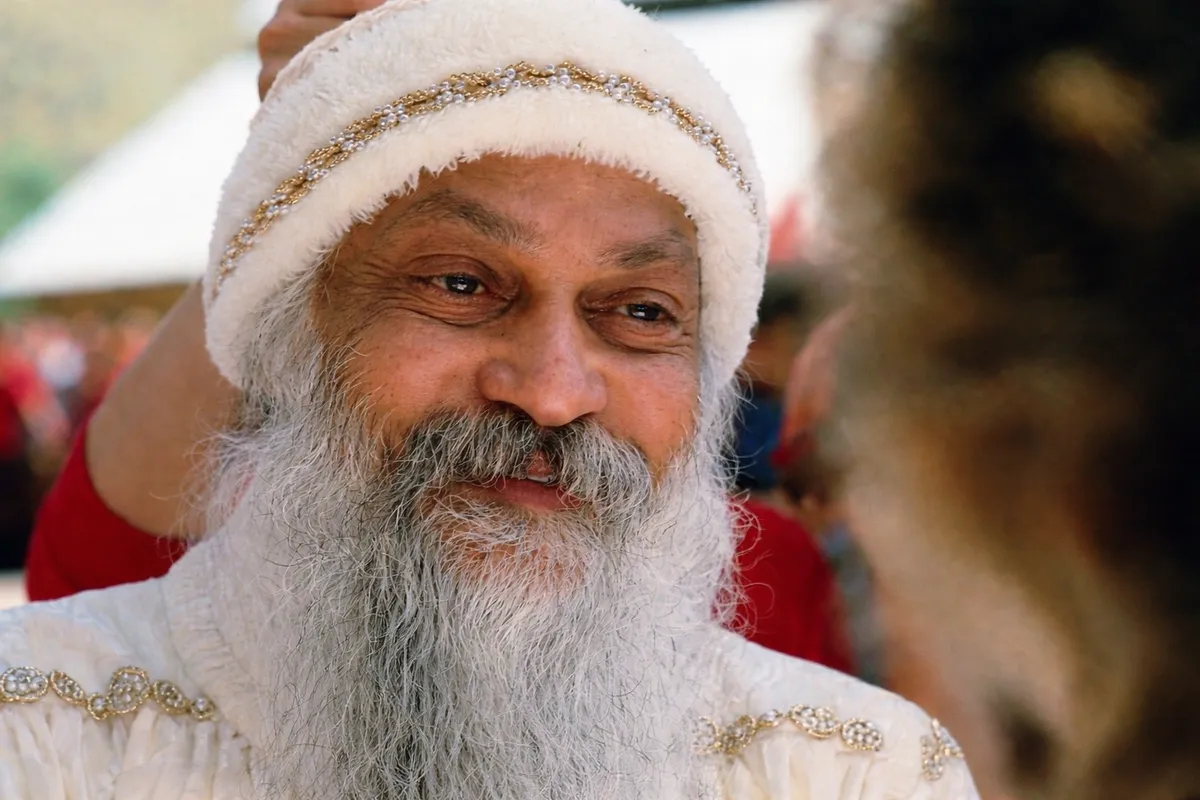
According to Osho, awareness and harmony unite when you practice active meditation: remain a silent witness to thoughts and actions without identification, beginning with daily periods of watching the mind and extending this clarity into every deed. As inner silence accompanies outer movement, attention stays unbroken, actions become seamless - like Gandhi's spinning - and life turns into continuous meditation where awareness guides action, producing effortless harmony.
Quietly watch your thoughts and actions without getting caught in them, and keep that gentle watching as you do things so everything flows together.
From the Discourses
Passages where Osho speaks to this question — each links to the complete discourse.
Osho, you say that if there is awareness, then how are the two to be brought into harmony?
That is precisely the practice of active meditation: awareness. Awareness is the very means of going into emptiness in relation to all actions, to the movements of the mind as well. For example, if you lie there for half an hour—what will you do? In that half hour, whatever thoughts are moving in your mind, you are to be simply aware of them. Simply a witness—what else will you do? Just become a witness. Keep silently watching; let them move. But obstacles arise in our seeing. We become absorbed. We fail to remain a witness. We don’t even notice when we have become one with those very thoughts. That sense of awareness fades; a kind of stupor, a moorchha, comes in. A thought comes, a memory arises, and we stop being the watcher. We become part of that thought and of its flow. That is moorchha. And the opposite is…
In the beginning you will find only darkness or absurd, irrelevant thoughts, dreams floating here and there. It will look like a chaos but go on watching, go on looking. We are not worried about what you are seeing. Our whole effort is to see. Remember, the emphasis is on seeing, not on the seen, so it does not matter what you see. Thoughts, desires, memories, dreams -- it doesn't matter what you are seeing. Everything is just an opportunity to make the inner eye function. So remember the emphasis otherwise people become tired; they think 'What is the point? We don't see any light, we don't see god, we don't see the soul we don't see this, we don't see that. Just ordinary thoughts are there so what is the point? They have missed the whole message.
Mahavira has called apramad—vigilance, awareness, continuous wakefulness—the basis of practice. A friend asks: how can we bring this awareness into our conduct while doing our tasks—in the office, in the shop, while working? If attention remains on awareness, how will the work get done? While engaged in work, what is the place of awareness, and can this itself be a sadhana?
Take attention also as delight. Do not make it a restlessness. Let it not become a burden on your head that “I must work attentively.” Do not load it with strain and effort; let it grow lightly, support it. Whenever the remembrance arises, do it consciously. If you forget, do not worry. When remembrance returns, begin again to do it consciously. If you decide, “Now I will do my work consciously,” you will not be able to do it today itself; it may take years. To keep awareness even for a moment is difficult. You will decide to walk consciously; you will not be able to take even two steps before awareness has gone elsewhere and the feet have started walking elsewhere. Do not be anxious about that; do not repent. Heedlessness is the habit of countless lives; there is no reason to be distressed. We ourselves have cultivated unawareness—whom…
It is only in deep meditation that one discovers this simple fact, that we are not the body and the mind; we are awareness, consciousness. We are the witness of the whole game. Once you have known that witness you have tasted something of the nectar. This is the nectar alchemists were in search of. Peace is not something that can be cultivated from the outside. Many people cultivate it from the outside, then they have a peaceful outside, but it is only an appearance. Deep down they are just the opposite, they are sitting on a volcano. It can erupt at any moment. So, I am not in favor of cultivating peace as a facade. Peace should be an inner worth, not an outer cultivation; only then it is true, only then it is liberating. And the inner peace comes only as a by-product of meditation.
[And to remind the next sannyasin of that promise Osho gave him the name Akash -- sky!] Mind is a very small thing, it is like a prison cell. And everybody is imprisoned in his own mind: in his prejudices, creeds, dogmas, religions, philosophies -- political and spiritual. Everybody is living in a very small dark cell. The cell is made of conditionings. Meditation means unconditioning the mind and never allowing it to be reconditioned. Otherwise it is very easy to move from one dark cell to another dark cell. A Hindu can become a Christian; that is very easy, there is no conversion. Instead of worshipping Krishna he starts worshipping Christ. In fact linguists say that the word 'Christ' comes from the word 'Krishna'; they are not different words, their root is the same. So you have changed from one cell to another. A Christian can become a Hindu.